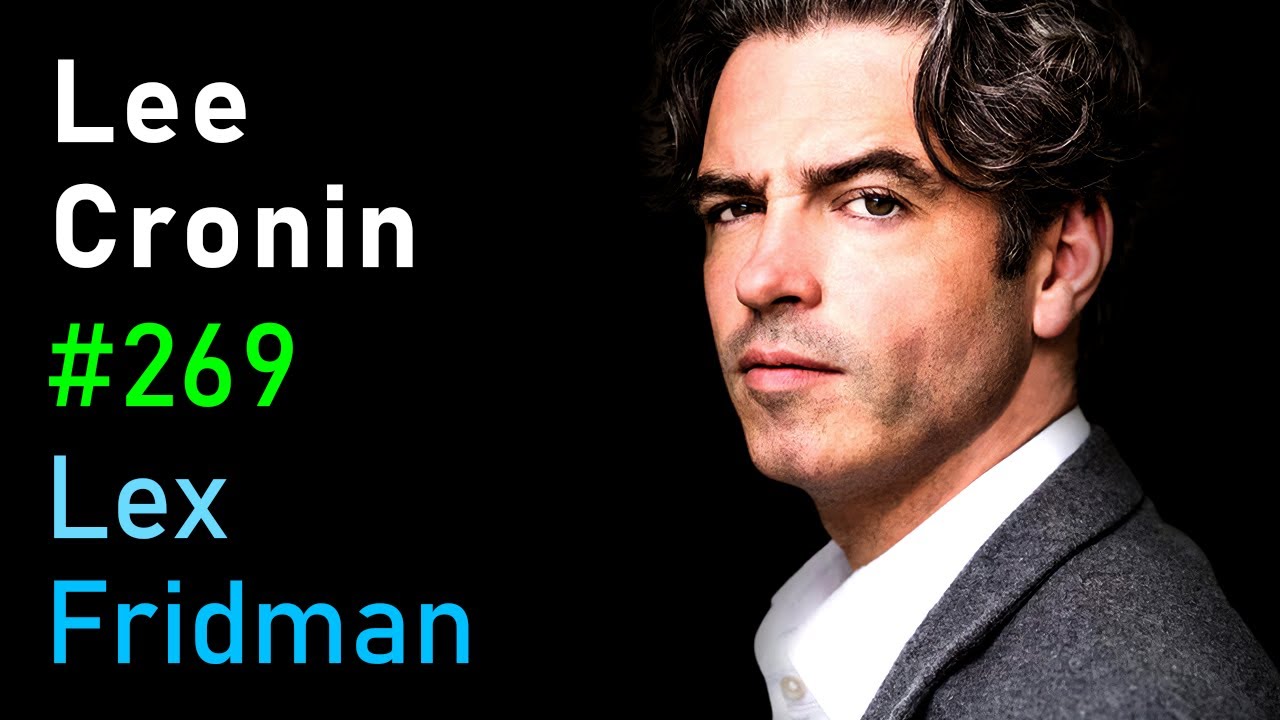
Lee Cronin: Controversial Nature Paper on Evolution of Life and Universe
Detailed Insights
How the conversation moved
The host introduces the episode with a focus on Lee Cronin's controversial Nature paper, which proposes assembly theory as a framework for understanding the complexity of life and the universe. Cronin begins by explaining the assembly index, a measure of complexity based on the minimum steps required to recreate an object. This index, he argues, can be applied across various domains, from biology to technology, providing a new lens through which to view evolution and selection processes.
Cronin's main argument centers on the limitations of physics in explaining life's emergence, suggesting that a disconnect exists between physics and biology. He presents evidence from his assembly theory, which posits that complex objects' assembly is contingent on prior work done in the causal chain. This theory challenges the notion that life can arise solely from physical laws, emphasizing the need for interdisciplinary approaches to understanding life's origins.
Despite the compelling nature of Cronin's arguments, the conversation lacks significant pushback from the host. However, Cronin himself pushes back against conventional wisdom, particularly the idea that physics alone can account for life's emergence. He also challenges deterministic views of the universe, arguing that time is fundamental and creativity arises from the universe's non-deterministic nature. This self-pushback adds depth to the discussion, though it leaves some areas, like the practical applications of assembly theory, underexplored.
The conversation concludes with Cronin's bold claim that the probability of AGI doom is 0%, emphasizing the unique nature of human intelligence and decision-making. This assertion, along with his views on time and creativity, suggests a paradigm shift in understanding intelligence and life's role in the universe. While the discussion opens new avenues for exploration, it also leaves open questions about the broader implications of assembly theory and its potential impact on fields beyond biology and physics.
Surprising moments
Topics Covered
Memorable Quotes
Still open
Unresolved by the end of the conversation
- Cronin questioned whether the assembly theory could be practically applied to detect life on Mars, leaving its feasibility open for future exploration.
- The conversation leaves open the question of how assembly theory might integrate with existing biological and physical theories to provide a comprehensive understanding of life's origins.
Jargon glossary
Concepts
References & Resources
For the specialist
What a senior practitioner would find new
- Assembly theory's assembly index provides a new metric for molecular complexity, challenging traditional complexity measures by focusing on causal chains.
- Cronin's method for detecting life on Mars using mass spectrometry and assembly theory offers a practical astrobiological tool.
- Cronin's assertion that time is fundamental challenges deterministic views and suggests a new philosophical perspective on creativity and novelty.
Ask this episode Premium
Ask any question about this episode — get an answer grounded in the transcript.
Available with Premium. $9.99/month, cancel anytime.
Upgrade to chatRelated episodes
Other Lex conversations that overlap with this one.
Cite this episode
For papers, blog posts, anywhere.
AI-generated summary · last refreshed 2026-05-29 04:19:30 · how we make these
Quotes are matched verbatim against the source transcript; references are checked to resolve to real URLs. Even so, AI can misread structure or attribute claims imperfectly. If you spot an error, please let us know.