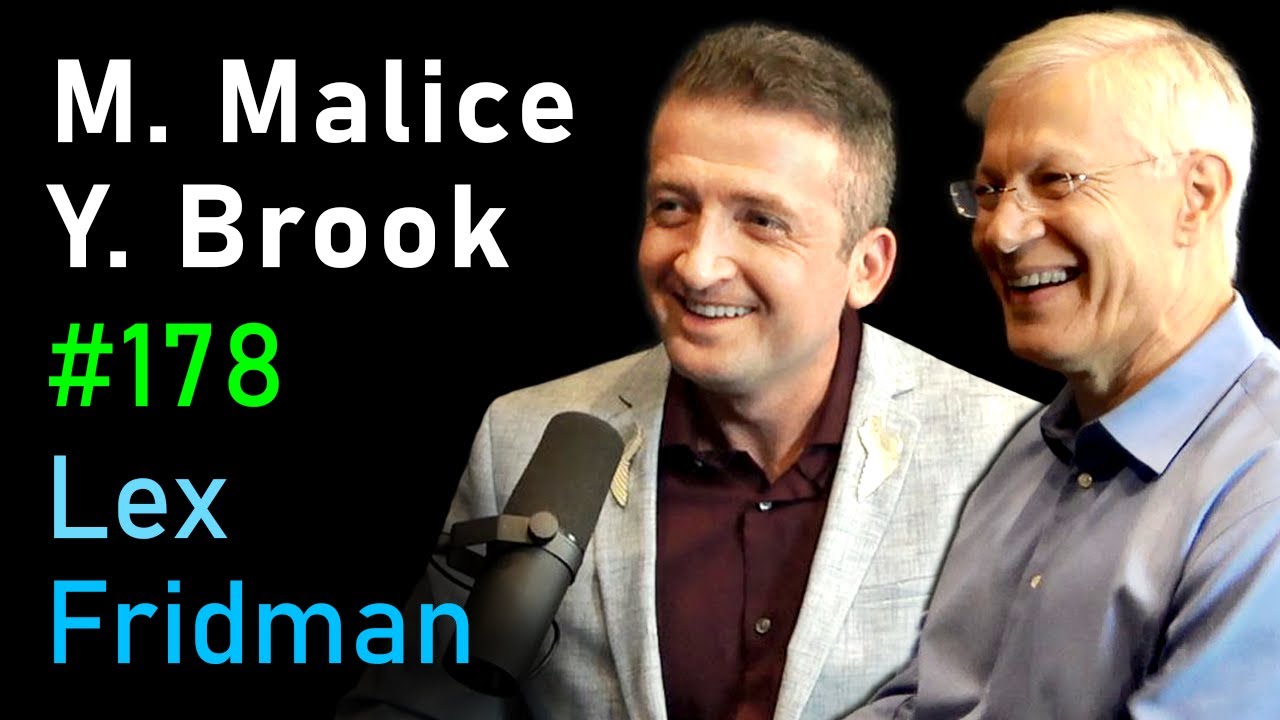
Episodes / Nationalism Debate: Yaron Brook and Yoram Hazony
Nationalism Debate: Yaron Brook and Yoram Hazony
05-28-26▶ 2h 58m📖 7 min read
Core Takeaways
Yoram Hazony argues that nationalism allows for independent nations to experiment with governance, contrasting with imperialist ideologies.
Why it matters
This perspective suggests that nationalism can foster innovation and prevent the homogenization of global governance.
Yaron Brook criticizes Kant's philosophy as detaching reason from reality, advocating for a rationalist approach grounded in empirical evidence.
▶ 12:34
Why it matters
Brook's critique highlights the importance of integrating empirical evidence in philosophical reasoning, impacting how societies derive principles for human flourishing.
Why it matters
This framing underscores the foundational values of American governance, influencing contemporary interpretations of individual rights.
Brook and Hazony debate the role of tradition and history in shaping political and moral understanding, with Hazony emphasizing conservatism's reliance on historical context.
▶ 2:45
Why it matters
Understanding the balance between tradition and innovation informs current political strategies and ideological conflicts.
Detailed Insights
Conservatism vs. Individualism
+
•
Conservatism is about recovering and restoring tradition to maintain a nation.
•
Liberalism and Marxism are universal theories, while conservatism varies by nation.
•
The essential idea of conservatism involves the importance of time and history.
Rationalism vs. Empiricism
+
•
Kant is viewed as the anti-Enlightenment philosopher.
•
Reason should integrate facts from history to derive universal principles.
•
Trial and error in politics can lead to significant human costs.
American vs. French Revolutions
+
•
Burke supports the Polish Revolution but opposes the French Revolution.
•
The American Constitution was influenced by traditional British systems.
•
Jefferson and Paine represented a rationalist revolutionary perspective.
Nationalism and Global Governance
+
•
Nationalism allows independent nations to experiment with governance.
•
The Bible presents a conception of independent nations resisting empires.
•
Hitler's ideology was imperialist, detesting independent nation-states.
How the conversation moved
The conversation begins with Yaron Brook and Yoram Hazony debating the definitions and implications of conservatism versus individualism. Hazony frames conservatism as the recovery and restoration of tradition, emphasizing the importance of historical context in shaping political and moral understanding. In contrast, Brook leans towards individualism, challenging the necessity of tradition in defining a nation's identity. This sets the stage for a broader discussion on the philosophical underpinnings of their respective views, particularly focusing on how historical context influences modern political ideologies.
Brook criticizes Kant's philosophy, arguing that it detaches reason from reality and history, which he sees as detrimental to deriving universal principles for human flourishing. He posits that a rationalist approach, grounded in empirical evidence, is essential for understanding and improving societal structures. Hazony, on the other hand, emphasizes the role of tradition and historical experience in informing political decisions, suggesting that conservatism provides a framework for understanding reality through the lens of historical continuity.
The tension between the two perspectives becomes apparent when discussing the American and French Revolutions. Brook frames the American Revolution as a rejection of Rousseau's philosophy, emphasizing individual rights and rationalist principles. Hazony counters by highlighting the importance of tradition and historical context in shaping the American Constitution, suggesting that the Founding Fathers' reliance on British systems reflects a conservative approach. This debate underscores the fundamental differences in how each views the role of history and tradition in political theory.
The conversation concludes with a discussion on nationalism and global governance, where Hazony argues that nationalism allows for independent nations to experiment with governance, contrasting with imperialist ideologies. Brook and Hazony both acknowledge the complexities of balancing individual freedom with collective identity, but they diverge on the mechanisms for achieving human flourishing. While Brook advocates for a rationalist, individualist approach, Hazony emphasizes the importance of tradition and community in preserving societal values.
Surprising moments
Yaron Brook
Yaron Brook criticizes Kant as the destroyer of good Enlightenment thinking, advocating for rationalism grounded in empirical evidence.
Yoram Hazony argues that nationalism allows for governance experimentation, contrasting with imperialist ideologies.
Yaron Brook
Yaron Brook frames the American Revolution as a rejection of Rousseau's philosophy, emphasizing individual rights.
Topics Covered
Conservatism vs. IndividualismRationalism vs. EmpiricismAmerican vs. French RevolutionsNationalism and Global Governance
Memorable Quotes
"Conservatism is not like liberalism or Marxism. Liberalism and Marxism are both kind of universal theories, and they claim to be able to tell you what's good for human beings at all times and all places." — Yoram Hazony
"Both are false. Both of those views, in my view, are false." — Yaron Brook
"Burke is against the French Revolution because he thinks that there are actually tried and true things that work, things that work for human flourishing and freedom included as a very important part of human flourishing." — Yaron Brook
"The Bible, which is the source of our image, our conception of a world of independent nations that are not constantly trying to conquer one another, the source of that is the Bible." — Yoram Hazony
"Love is conditional. It's not unconditional. Love is conditioned on the value that's presented to you." — Yoram Hazony
Still open
Unresolved by the end of the conversation
What are the implications of nationalism on global governance and international relations, as discussed by Yoram Hazony?
How does Yaron Brook reconcile individualism with the need for societal cohesion and governance?
Jargon glossary
nationalism
A political ideology that emphasizes the interests and culture of a particular nation, often in opposition to foreign influence.
individualism
A social theory advocating the liberty, rights, or independent action of individuals.
conservatism
A political philosophy promoting traditional institutions and practices.
rationalism
A philosophy that emphasizes reason as the primary source of knowledge.
empiricism
A theory that states knowledge comes only or primarily from sensory experience.
Yoram Hazony argues that nationalism allows nations to experiment with governance systems, contrasting with imperialist ideologies that seek homogenization.
Yaron Brook critiques Kant as detaching reason from reality, advocating for a rationalist approach that integrates empirical evidence into philosophical reasoning.
Ask this episode
Deep
A preview of how Deep chat answers, grounded in this episode with citations and timestamps:
AI-generated summary
· last refreshed
2026-06-06 00:13:32
· how we make these
Quotes are matched verbatim against the source transcript; references are checked to resolve to real URLs. Even so, AI can misread structure or attribute claims imperfectly. If you spot an error, please let us know.
Report an inaccuracy →
Free weekly summary · one Lex Fridman episode, every Friday.