Skip to content
TLexDR
Episodes / Charles Isbell: Computing, Interactive AI, and Race in Ameri...

Charles Isbell: Computing, Interactive AI, and Race in America

05-28-26 ▶ 2h 23m 📖 5 min read
Core Takeaways
Charles Isbell can predict human behavior with 93% accuracy using simple statistics, highlighting predictability in human actions. ▶ 2:00
Why it matters This predictability challenges the notion of human uniqueness and could inform AI development in behavior prediction.
Isbell argues that AI can bridge social divides by fostering shared understanding, though this requires overcoming language barriers between groups. ▶ 15:30
Why it matters AI's potential to bridge divides depends on addressing fundamental communication challenges, impacting societal cohesion.
The evolution of hip hop reflects cultural shifts, with sampling and DJing as foundational elements, yet modern rap often lacks lyrical depth. ▶ 30:00
Why it matters Understanding hip hop's evolution offers insights into cultural dynamics and the impact of commercial pressures on artistic expression.
Computing's dynamic nature stems from its ability to treat models, languages, and machines as equivalent, influencing various fields beyond tech. ▶ 45:00
Why it matters Computing's interdisciplinary influence necessitates a shift in education towards computational thinking, affecting future innovation.
Isbell's experiences with race at Georgia Tech and MIT highlight the challenges and insights of being a minority in predominantly white institutions. ▶ 1:00:00
Why it matters These experiences underscore the importance of diversity in academia and the systemic barriers minorities face.

Detailed Insights

Human Predictability
+
Isbell achieves 93% accuracy in predicting actions using simple statistics.
Behavioral predictability challenges the notion of human uniqueness.
AI could leverage this predictability for behavior modeling.
AI and Social Understanding
+
AI can help bridge divides by fostering shared understanding.
Language barriers between groups pose a significant challenge.
Empathy and shared experiences are crucial for AI's success in this area.
Hip Hop's Evolution
+
Sampling and DJing are foundational to hip hop.
Modern rap often lacks the lyrical depth of earlier artists.
Cultural shifts influence hip hop's development.
Computing's Interdisciplinary Impact
+
Computing equates models, languages, and machines.
This dynamic nature influences fields beyond technology.
A shift towards computational thinking is needed in education.
Race and Academia
+
Isbell's experiences at Georgia Tech and MIT highlight racial challenges.
Diversity in academia remains a systemic issue.
These experiences provide insights into minority challenges in education.

How the conversation moved

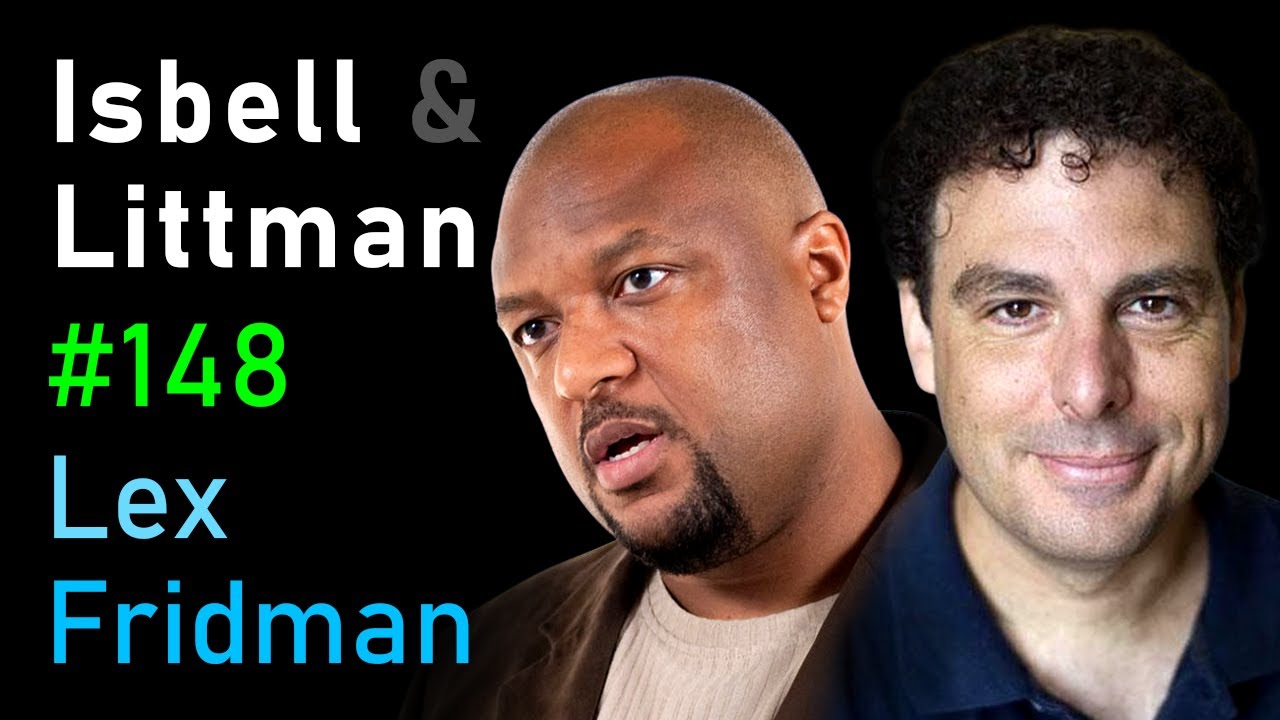
Lex Fridman opens the discussion by framing the conversation around the intersection of computing, artificial intelligence, and race, with Charles Isbell providing insights from his diverse experiences. Isbell begins by discussing his ability to predict human behavior using simple statistical methods, achieving high accuracy in predicting actions. This sets the stage for exploring the broader implications of predictability in human behavior, particularly in the context of AI development. The conversation then transitions to the potential of AI to bridge social divides by fostering shared understanding, though Isbell notes the challenges posed by language barriers between different groups.

Isbell argues that human behavior is more predictable than people like to admit, citing his own experiments with statistical methods that achieve up to 99% accuracy in predicting clusters of actions. He suggests that this predictability could be leveraged by AI to model behavior more effectively, challenging the notion of human uniqueness. The discussion then shifts to the potential for AI to help break down social silos, though Isbell acknowledges the difficulty in creating a shared understanding between groups that often develop their own languages and meanings during discussions. This highlights the complexity of using AI to foster empathy and understanding across social divides.

Lex challenges Isbell's view by suggesting that outlier behaviors are what define humanity, prompting Isbell to argue that most behaviors cluster closely together, with only a small percentage of individuals exhibiting significant differences. This moment of tension underscores the debate over the role of predictability in defining human behavior and the potential for AI to model such behavior. Lex also pushes back on the idea that people may not be interested in finding common ground, suggesting that human nature would lead them to enjoy commonalities once discovered. This highlights the philosophical underpinnings of using AI to bridge social divides.

The conversation ultimately pivots to Isbell's personal experiences with race, particularly his time at Georgia Tech and MIT, where he navigated predominantly white institutions as a minority. This personal narrative provides context for the broader discussion on diversity and inclusion in academia, emphasizing the systemic barriers that minorities face. Isbell's reflections on race and computing education underscore the importance of diversity in fostering innovation and understanding, leaving open questions about how best to address these challenges in the future. The discussion concludes with a call for a shift in educational focus towards computational thinking, highlighting its interdisciplinary impact.

Surprising moments

Charles Isbell
Isbell claims 93% accuracy in predicting human actions using simple statistics, challenging the notion of human unpredictability.
Share this quote X Bluesky LinkedIn Email Download card
Charles Isbell
Isbell argues that most human behaviors cluster closely together, countering the idea that outlier behaviors define humanity.
Lex Fridman
Lex suggests that human nature will lead people to enjoy commonalities once discovered, pushing back on Isbell's view of social divides.

Topics Covered

Human Predictability AI and Social Understanding Hip Hop's Evolution Computing's Interdisciplinary Impact Race and Academia

Memorable Quotes

"It turns out you can get 93% accuracy just by doing something very simple and stupid and just counting statistics." — Charles Isbell
"People are easily predictable and people hate when you tell them that they're easily predictable, but they are." — Charles Isbell
"With computing, I think it's somewhat different. Everyone doesn't have to learn how to code, but everyone needs to learn how to think in the way that you can be precise." — Charles Isbell

Still open

Unresolved by the end of the conversation

  • Isbell reflects on the challenge of creating a shared understanding between groups with different languages and meanings.
  • The conversation leaves open how AI can effectively foster empathy and understanding across social divides.

Jargon glossary

Jackie Robinson syndrome
The pressure on minority pioneers to succeed to pave the way for others.
computational thinking
The ability to describe problems in an executable manner, crucial for interdisciplinary impact.

References & Resources

Fast, Cheap, and Out of Control by Rod Brooks video
It Takes a Nation of Millions to Hold Us Back by Public Enemy other
The Art of Computer Programming by Donald Knuth book

For the specialist

What a senior practitioner would find new

  • Isbell's predictive model achieves 99% accuracy on action clusters, indicating strong behavioral correlations among similar actions.
  • The concept of 'Jackie Robinson syndrome' highlights the pressure on minority pioneers to succeed to pave the way for others.
  • Computing's equivalence of models, languages, and machines underscores its dynamic nature, influencing fields beyond traditional tech.

Ask this episode Deep

A preview of how Deep chat answers, grounded in this episode with citations and timestamps:

Cite this episode

For papers, blog posts, anywhere.

Copied!

Related episodes

Where to go next from this conversation.

AI-generated summary · last refreshed 2026-06-06 22:00:47 · how we make these

Quotes are matched verbatim against the source transcript; references are checked to resolve to real URLs. Even so, AI can misread structure or attribute claims imperfectly. If you spot an error, please let us know.

Report an inaccuracy →