Skip to content
TLexDR
Episodes / Chris Lattner: Compilers, LLVM, Swift, TPU, and ML Accelerat...

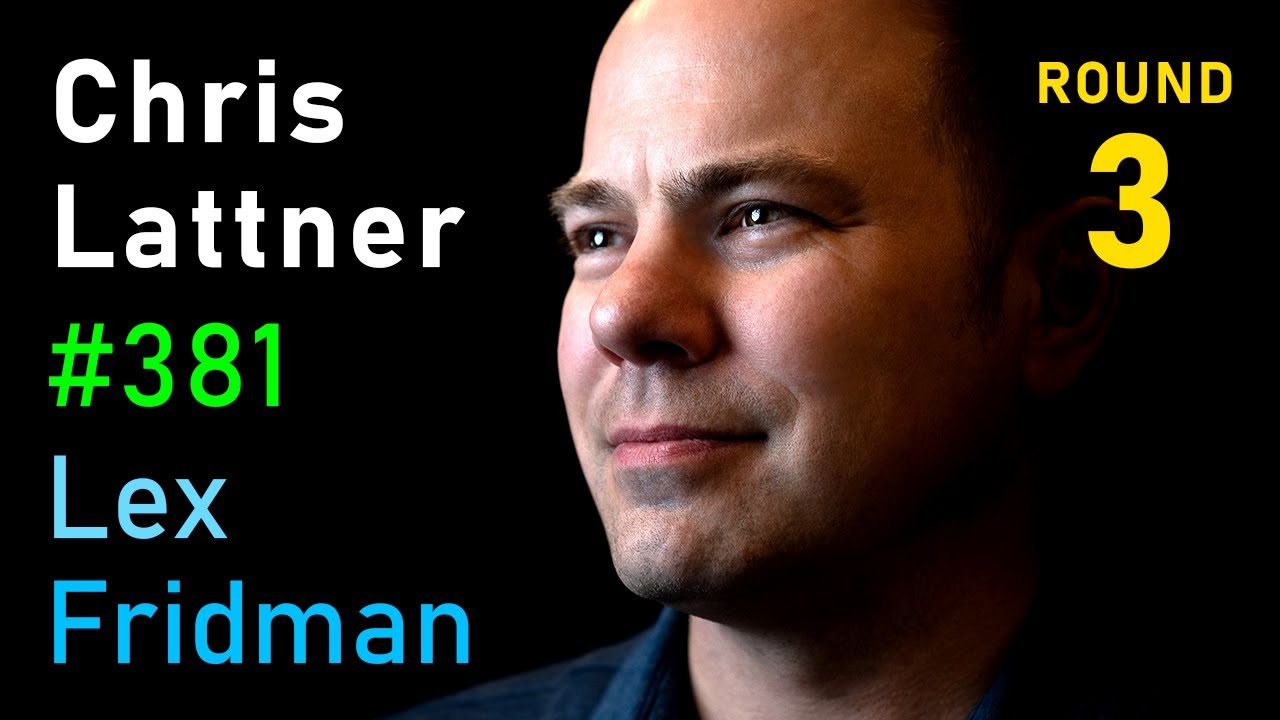
Chris Lattner: Compilers, LLVM, Swift, TPU, and ML Accelerators

05-28-26 ▶ 1h 13m 📖 2 min read
Core Takeaways
LLVM's modular design allows for easy replacement of subsystems, unlike GCC, making it more adaptable for tech companies like Google and Apple.
Why it matters This adaptability has made LLVM a preferred choice for major tech companies, fostering innovation and collaboration.
Swift's development addressed Objective-C's memory safety issues, offering both static and dynamic compilation for flexibility.
Why it matters Swift's flexibility and safety make it a versatile choice for modern software development, enhancing both performance and security.
Google's third-generation TPUs achieve 100 petaflops in a liquid-cooled box, illustrating hardware-software co-design.
Why it matters This performance leap in TPUs demonstrates the potential of co-designed systems to revolutionize machine learning capabilities.
MLIR aims to unify various compiler systems in machine learning, promoting code reuse and industry collaboration.
Why it matters MLIR's unification efforts could streamline machine learning development, reducing fragmentation and increasing efficiency.

Detailed Insights

Compilers and LLVM
+
LLVM's modular design allows for easy subsystem replacement, unlike GCC.
LLVM's community includes major tech companies collaborating on shared infrastructure.
Compilers like LLVM standardize optimization and code generation processes.
Swift Programming Language
+
Swift addresses Objective-C's memory safety issues with a new language design.
Swift supports both static and dynamic compilation, offering flexibility.
Swift's design enables beginners to learn easily while offering advanced features.
Machine Learning and Hardware Innovations
+
Google's TPUs achieve 100 petaflops, showcasing hardware-software co-design.
MLIR aims to unify compiler systems in machine learning for better collaboration.
Swift for TensorFlow adds language features to optimize machine learning processes.

How the conversation moved

Lex Fridman opens the conversation by framing the significance of compilers in modern computing, particularly focusing on LLVM's role in optimizing code across various hardware platforms. Chris Lattner, the guest, initially frames LLVM as a modular and adaptable infrastructure that has become a cornerstone for major tech companies like Google and Apple. He emphasizes the community-driven nature of LLVM, which contrasts with the more rigid and less adaptable GCC. This sets the stage for a deeper dive into the technical intricacies of compilers and their evolution.

Lattner's main argument centers around the flexibility and modularity of LLVM, which allows for easy replacement of subsystems and fosters collaboration among tech giants. He provides concrete evidence by discussing LLVM's adoption by companies like Sony for graphics compilation and its impact on compiler design standards. He also highlights the evolution of Swift, developed to address Objective-C's limitations, particularly its memory safety issues. Swift's design incorporates both static and dynamic compilation, offering flexibility and safety.

Despite the depth of the discussion, Lex does not challenge Lattner's framing of LLVM and Swift's superiority over older systems like GCC and Objective-C. The conversation lacks explicit pushback, though a reasonable counterpoint could be whether the modularity of LLVM might introduce complexity that could hinder performance in certain scenarios. However, this potential tension remains unexplored, leaving the conversation heavily weighted towards Lattner's perspective on the benefits of LLVM and Swift.

The conversation pivots towards the advancements in machine learning hardware, particularly Google's TPU innovations and the role of Swift in optimizing machine learning processes. Lattner discusses the significance of MLIR in unifying compiler systems, promoting code reuse and collaboration across the industry. The episode concludes with reflections on leadership and the balance between short-term execution and long-term vision, leaving open questions about the future direction of compiler and machine learning technology.

Surprising moments

Chris Lattner
Chris Lattner reveals that LLVM is now older than GCC was when LLVM started, highlighting its longevity and community-driven development.
Share this quote X Bluesky LinkedIn Email Download card
Chris Lattner
Lattner discusses Google's third-generation TPUs achieving 100 petaflops, showcasing the power of hardware-software co-design.

Topics Covered

Compilers and LLVM Swift Programming Language Machine Learning and Hardware Innovations

Memorable Quotes

"The way I look at this is you have a two-sided problem of you have humans that need to write code and then you have machines that need to run the program that the human wrote." — Chris Lattner
"LLVM is almost 20 years old, which is hard to believe. Somebody pointed out to me recently that LLVM is now older than GCC was when LLVM started, right?" — said_on_episode
"The open sourcing of TensorFlow was a seminal moment in the history of software because here's this large company releasing a very large code base that's open sourcing." — said_on_episode

Still open

Unresolved by the end of the conversation

  • Lex asked about the balance between short-term execution and long-term vision in leadership, which Chris discussed but left open-ended.

Jargon glossary

LLVM
A modular compiler infrastructure that standardizes optimization and code generation for various programming languages.
Clang
The front-end parser for languages like C and C++, working with LLVM to optimize code.
Swift
A programming language developed by Apple to address Objective-C's memory safety issues, offering both static and dynamic compilation.
TPU
Tensor Processing Unit, a type of hardware accelerator designed by Google for machine learning tasks.
MLIR
Multi-Level Intermediate Representation, a compiler framework aimed at unifying various systems in machine learning.

References & Resources

Compilers: Principles, Techniques, and Tools by Alfred V. Aho, Monica S. Lam, Ravi Sethi, Jeffrey D. Ullman book
The Swift Programming Language by Apple book
TensorFlow by Google other
MLIR by Google other
The Dragon Book by Alfred V. Aho, Monica S. Lam, Ravi Sethi, Jeffrey D. Ullman book

For the specialist

What a senior practitioner would find new

  • LLVM's modularity allows tech companies to easily adapt and innovate, unlike the rigid structure of GCC.
  • Swift's dual compilation approach offers unique flexibility, accommodating both static and dynamic environments.
  • Google's TPUs highlight the potential of hardware-software co-design, achieving unprecedented performance levels.
  • MLIR's goal of unifying compiler systems could significantly streamline machine learning development processes.

Ask this episode Deep

A preview of how Deep chat answers, grounded in this episode with citations and timestamps:

Cite this episode

For papers, blog posts, anywhere.

Copied!

Related episodes

Where to go next from this conversation.

AI-generated summary · last refreshed 2026-06-08 20:11:26 · how we make these

Quotes are matched verbatim against the source transcript; references are checked to resolve to real URLs. Even so, AI can misread structure or attribute claims imperfectly. If you spot an error, please let us know.

Report an inaccuracy →