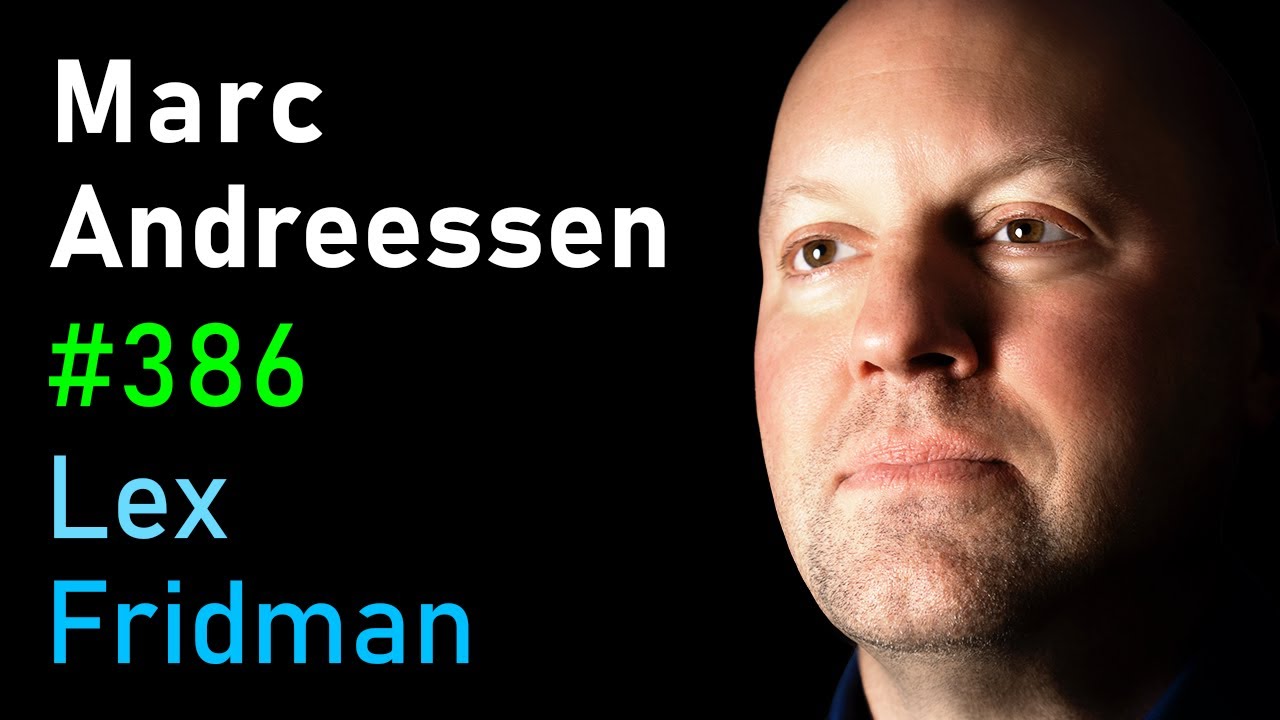
Marc Andreessen argues that the U.S. can avoid decline by embracing its entrepreneurial spirit and energy independence.
▶ 2:15
Why it matters
This perspective challenges the narrative of inevitable decline and suggests policy shifts could sustain U.S. leadership.
Andreessen critiques the ideological conformity in Silicon Valley, highlighting its overwhelming support for one political party.
▶ 25:30
Why it matters
This conformity may stifle innovation and debate, affecting the tech industry's ability to address diverse challenges.
He claims that preference falsification leads to a disconnect between public and private beliefs, potentially sparking revolutions.
▶ 1:05:10
Why it matters
Understanding this dynamic is crucial for predicting societal shifts and the potential for sudden political upheaval.
Andreessen believes the current university system is irreparable and suggests creating new institutions instead.
▶ 1:40:45
Why it matters
This stance implies that without reform, academia may fail to meet future educational and research needs.
He warns that AI's rapid development could outpace regulatory frameworks, leading to unforeseen economic and social impacts.
▶ 2:15:00
Why it matters
The lack of regulation could result in misuse of AI, impacting everything from job markets to privacy.
Detailed Insights
American Economic Potential
+
•
U.S. could achieve energy independence and become a net exporter.
•
Entrepreneurial spirit is key to avoiding national decline.
•
Current debt trajectory risks hyper-inflation similar to Argentina or Brazil.
Silicon Valley's Political Conformity
+
•
Silicon Valley's political donations heavily favor one party.
•
Ideological conformity may stifle innovation.
•
High-status individuals often conform rather than hold strong convictions.
Preference Falsification
+
•
Private beliefs often differ from public expressions.
•
This disconnect can lead to a false societal consensus.
•
Revolutions may occur when suppressed beliefs surface.
Higher Education Reform
+
•
Current university system described as corrupt and ossified.
•
Federal student loan program is unsustainable.
•
New educational institutions are needed to replace failing universities.
AI Development and Regulation
+
•
AI's rapid development could outpace regulatory frameworks.
•
Potential economic and social impacts if AI is misused.
•
AI's role in coding is transforming the tech industry.
How the conversation moved
Lex Fridman begins the conversation by framing the discussion around the potential for American growth and the unique entrepreneurial spirit of the U.S. Marc Andreessen quickly establishes his stance that decline is a choice, emphasizing the need for America to embrace its potential for energy independence and innovation. He argues that the U.S. is uniquely positioned due to its dynamic population and historical individualism, but warns of the risks posed by current economic policies and political decisions.
Andreessen's main argument centers on the idea that the U.S. can maintain its global leadership by avoiding demoralization and embracing entrepreneurial values. He provides evidence of the U.S. adding a trillion dollars to the national debt every 100 days, likening the potential economic consequences to hyper-inflationary spirals seen in Argentina or Brazil. He also discusses the ideological conformity in Silicon Valley, where political donations heavily favor one party, potentially stifling innovation and debate.
Lex doesn't challenge the framing here, though the obvious counter-position would be to argue that Silicon Valley's political leanings reflect broader societal trends rather than stifling innovation. Andreessen critiques the current university system as irreparable, suggesting that new institutions must be created to replace it. He also highlights the phenomenon of preference falsification, where societal consensus may be based on publicly expressed but privately disbelieved views, potentially leading to revolutions.
The conversation concludes with Andreessen discussing the rapid development of AI and its implications for the tech industry and society at large. He warns that AI's advancement may outpace regulatory frameworks, leading to significant economic and social impacts. Lex and Andreessen agree on the transformative potential of AI, particularly in coding, but the discussion leaves open questions about how society will adapt to these changes and what regulatory measures are necessary to manage them.
Surprising moments
Marc Andreessen
Andreessen argues that the current university system is beyond repair and must be replaced, a view that challenges conventional reformist perspectives.
Marc Andreessen
He claims that the ideological conformity in Silicon Valley could stifle innovation, a critique of an industry often seen as a bastion of innovation.
Marc Andreessen
Andreessen introduces 'over-socialization' as a phenomenon where high-status individuals conform to societal beliefs, impacting genuine innovation.
Topics Covered
American Economic PotentialSilicon Valley's Political ConformityPreference FalsificationHigher Education ReformAI Development and Regulation
Memorable Quotes
"Identity politics is worshiping ancestors. It’s tagging newborn infants with either benefits or responsibilities or levels of condemnation based on who their ancestors were." — Marc Andreessen
"Humor is a way to discuss serious things without having deniability." — Marc Andreessen
"Preference falsification is when you believe something and you can’t say it, or, and this is very important, you don’t believe something and you must say it." — Marc Andreessen
"There is no way to fix these things without replacing them. And there’s no way to replace them without letting them fail." — Marc Andreessen
"AI coding is going to get to be phenomenally good. And it’s already great." — Marc Andreessen
Still open
Unresolved by the end of the conversation
Lex asked whether the current university system could be reformed from within, but Andreessen insisted it must be replaced entirely.
Andreessen raised concerns about AI's rapid development outpacing regulation, questioning how society will adapt to these changes.
Jargon glossary
preference falsification
When individuals privately hold beliefs they cannot publicly express, leading to a false societal consensus.
over-socialization
A phenomenon where high-status individuals conform to societal beliefs rather than holding strong personal convictions.
strong form companies
Companies built from scratch for AI, as opposed to adding AI features to existing products.
Andreessen introduces the concept of 'over-socialization' where high-status individuals conform to societal beliefs, impacting genuine innovation.
He argues that the Iron Law of Oligarchy suggests democracy is inherently flawed, with inevitable elite rule.
Andreessen describes 'strong form' companies as those built from scratch for AI, contrasting with 'weak form' companies that add AI features to existing products.
Ask this episode
Premium
Ask any question about this episode — get an answer grounded in the transcript.
Available with Premium. $9.99/month, cancel anytime.
AI-generated summary
· last refreshed
2026-05-29 02:47:17
· how we make these
Quotes are matched verbatim against the source transcript; references are checked to resolve to real URLs. Even so, AI can misread structure or attribute claims imperfectly. If you spot an error, please let us know.
Report an inaccuracy →
Free weekly summary · one Lex Fridman episode, every Friday.