TLexDR
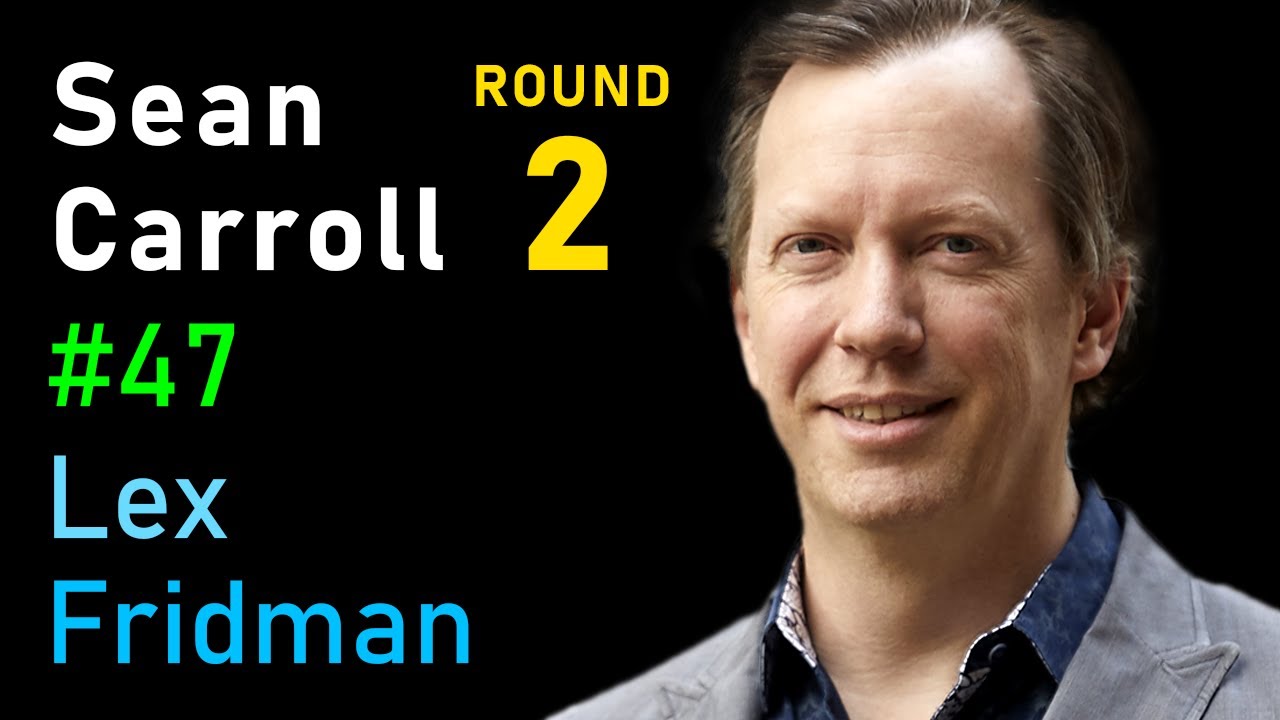
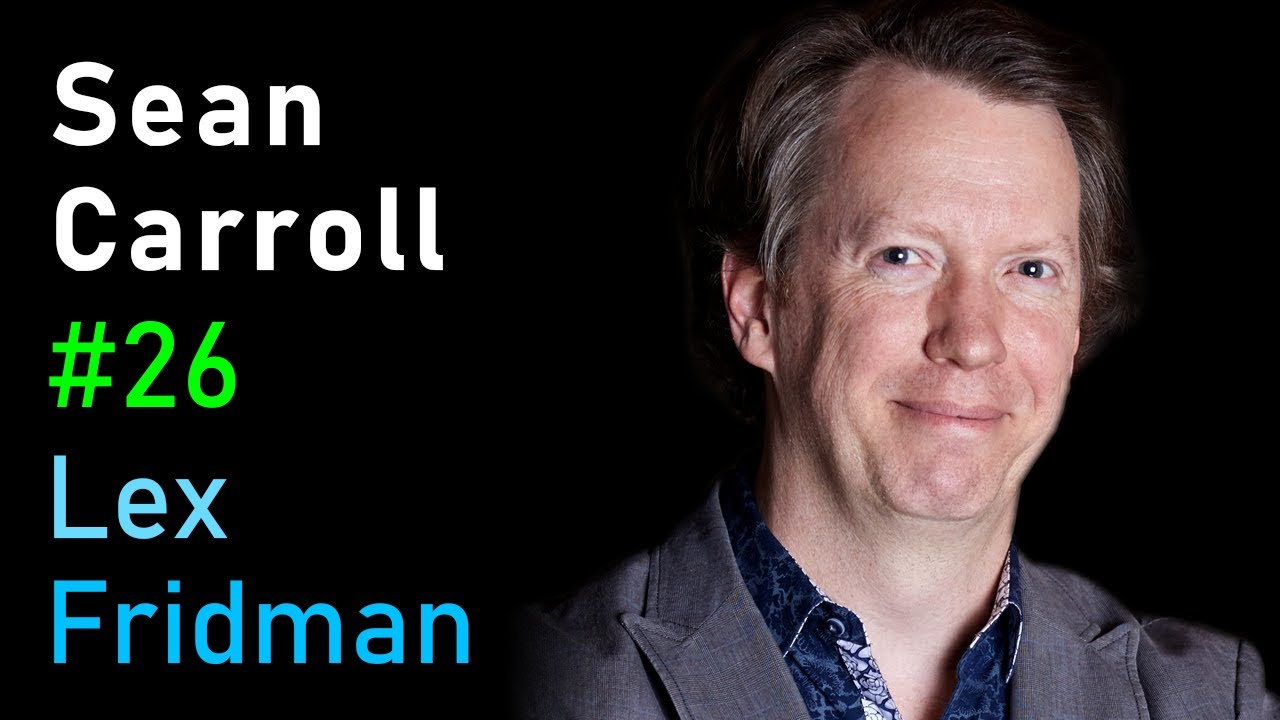
Sean Carroll: General Relativity, Quantum Mechanics, Black Holes & Aliens
Listen on YouTube Share on X Share on Bluesky Link copied!
Core Takeaways
General relativity redefined gravity as the curvature of spacetime, not a force, fundamentally altering physics. ▶ 1:00
Why it matters This redefinition challenges conventional physics and has profound implications for understanding the universe.
Black holes' entropy scales with the area of their event horizon, not the volume, due to the holographic principle. ▶ 45:00
Why it matters This principle suggests a fundamental limit to the information that can be contained in a region of space.
The many-worlds interpretation of quantum mechanics posits that all outcomes exist simultaneously in separate branches. ▶ 1:30:00
Why it matters This interpretation challenges traditional views on quantum mechanics and has implications for reality's nature.
Dark energy, possibly Einstein's cosmological constant, is driving the universe's accelerating expansion since 1998. ▶ 2:15:00
Why it matters Understanding dark energy is crucial for cosmology and could reshape our understanding of the universe's fate.
Carroll argues AI lacks intentionality, as it is optimized to mimic human language without understanding. ▶ 2:45:00
Why it matters This highlights the limitations of AI and the need for specific mechanisms to achieve true understanding.

Detailed Insights

General Relativity and Spacetime
+
Einstein's 1905 papers revolutionized physics, including special relativity.
General relativity redefined gravity as spacetime curvature.
Minkowski's spacetime concept was initially dismissed by Einstein.
Black Holes and Information
+
Black holes' entropy scales with event horizon area.
Hawking radiation is unobservable in large black holes.
Supermassive black holes existed early in the universe.
Quantum Mechanics and Many-Worlds
+
Many-worlds interpretation posits all outcomes exist simultaneously.
Quantum mechanics might be superseded by a better theory.
Wave function contains all information about universe branches.
Dark Energy and Cosmology
+
Dark energy causes universe's accelerating expansion.
Cosmological constant is a leading dark energy candidate.
Unifying dark matter and dark energy has been unsuccessful.
AI and Intentionality
+
AI mimics human language without understanding.
Intentionality won't emerge naturally in AI systems.
Efficiency improvements in computing are necessary.

How the conversation moved

The episode begins with Sean Carroll discussing the transition from special relativity to general relativity, emphasizing how Einstein's insights redefined gravity as the curvature of spacetime. Carroll highlights Einstein's prolific contributions in 1905, including his work on special relativity, and the initial skepticism Einstein had towards Minkowski's spacetime concept, which he later embraced. This sets the stage for a deep dive into the implications of general relativity and how it fundamentally altered our understanding of the universe.

Carroll then shifts to discussing black holes, their properties, and the implications for information theory. He explains that black holes' entropy scales with the area of their event horizon, not the volume, due to the holographic principle. This principle suggests a fundamental limit to the information that can be contained in a region of space, challenging traditional volumetric assumptions. Carroll also touches on the unobservable nature of Hawking radiation from large black holes and the early existence of supermassive black holes, as revealed by the James Webb Space Telescope.

The conversation moves to quantum mechanics, where Carroll elaborates on the many-worlds interpretation, positing that all outcomes of quantum measurements exist simultaneously in separate branches of the universe. He speculates on the possibility of quantum mechanics being superseded by a better theory, though no empirical evidence currently supports this. Carroll also connects the many-worlds interpretation to the arrow of time required for entropy, linking quantum mechanics to thermodynamics, which adds a layer of complexity to understanding reality.

Finally, Carroll addresses the topic of artificial intelligence, arguing that AI lacks true understanding or intentionality. He explains that AI systems, particularly large language models, are optimized to mimic human language but do not possess the mechanisms to understand the world as humans do. Carroll pushes back against the notion that intentionality will naturally emerge in AI systems without specific mechanisms. The discussion also touches on the efficiency of computing, the potential for nuclear fusion, and the challenges of technological advancement, concluding with a cautious optimism for the future.

Surprising moments

Sean Carroll
Carroll pushed back against the idea that intentionality will naturally emerge in AI systems, arguing it requires specific mechanisms.
Sean Carroll
Carroll expressed skepticism about how close we are to understanding how information escapes black holes, suggesting surprises may await.
Sean Carroll
Carroll argued against the idea that complexity fights against the second law of thermodynamics, stating we rely on increasing entropy.

Topics Covered

General Relativity and Spacetime Black Holes and Information Quantum Mechanics and Many-Worlds Dark Energy and Cosmology AI and Intentionality

Memorable Quotes

"The whole point of relativity is to say there’s no such thing as right now when you’re far away." — Sean Carroll
"As smart as Einstein was, he never figured out black holes, and he could have. It’s embarrassing." — Sean Carroll
"The maximum information as reflected in the black hole entropy scales as the area of the black hole’s event horizon, not the volume inside." — Sean Carroll
"Many-worlds comes about by taking the Schrodinger equation seriously." — Sean Carroll
"The cosmological constant is strictly constant, 100% constant." — Sean Carroll
"It’s not even trying to, it’s not a large language model, no aspirations to intentionality, but we attribute that all the time." — Sean Carroll

Still open

Unresolved by the end of the conversation

  • Carroll expressed uncertainty about whether quantum mechanics might be superseded by a better theory, leaving room for future exploration.
  • Lex questioned whether intentionality could naturally emerge in AI systems, which Carroll disputed, leaving the question open.

Jargon glossary

holographic principle
A theory suggesting information in a space is encoded on its boundary, not within its volume.
many-worlds interpretation
A quantum mechanics theory where all possible outcomes of measurements exist in separate universes.
cosmological constant
A term in Einstein's equations representing a constant energy density filling space homogeneously.

References & Resources

The Biggest Ideas in the Universe: Space, Time, and Motion by Sean Carroll book
The Intentional Stance by Dan Dennett paper
The Big Picture: On the Origins of Life, Meaning, and the Universe Itself by Sean Carroll book

For the specialist

What a senior practitioner would find new

  • The entropy of a black hole scales with the area of its event horizon, challenging traditional volumetric assumptions about information capacity.
  • Carroll's 'Complexo Genesis' concept aims to explain how complexity arises as the universe transitions from low to high entropy.
  • The many-worlds interpretation requires the same arrow of time as entropy, linking quantum mechanics to thermodynamics.

Ask this episode Premium

Ask any question about this episode — get an answer grounded in the transcript.

Available with Premium. $9.99/month, cancel anytime.

Upgrade to chat

Related episodes

Other Lex conversations that overlap with this one.

Janna Levin: Black Holes, Wormholes, Aliens, Paradoxes & Extra Dimensions

▶ 3h

Cite this episode

For papers, blog posts, anywhere.

Copied!

AI-generated summary · last refreshed 2026-05-29 03:52:59 · how we make these

Quotes are matched verbatim against the source transcript; references are checked to resolve to real URLs. Even so, AI can misread structure or attribute claims imperfectly. If you spot an error, please let us know.

Report an inaccuracy →