Skip to content
TLexDR
NG
Guest dossier

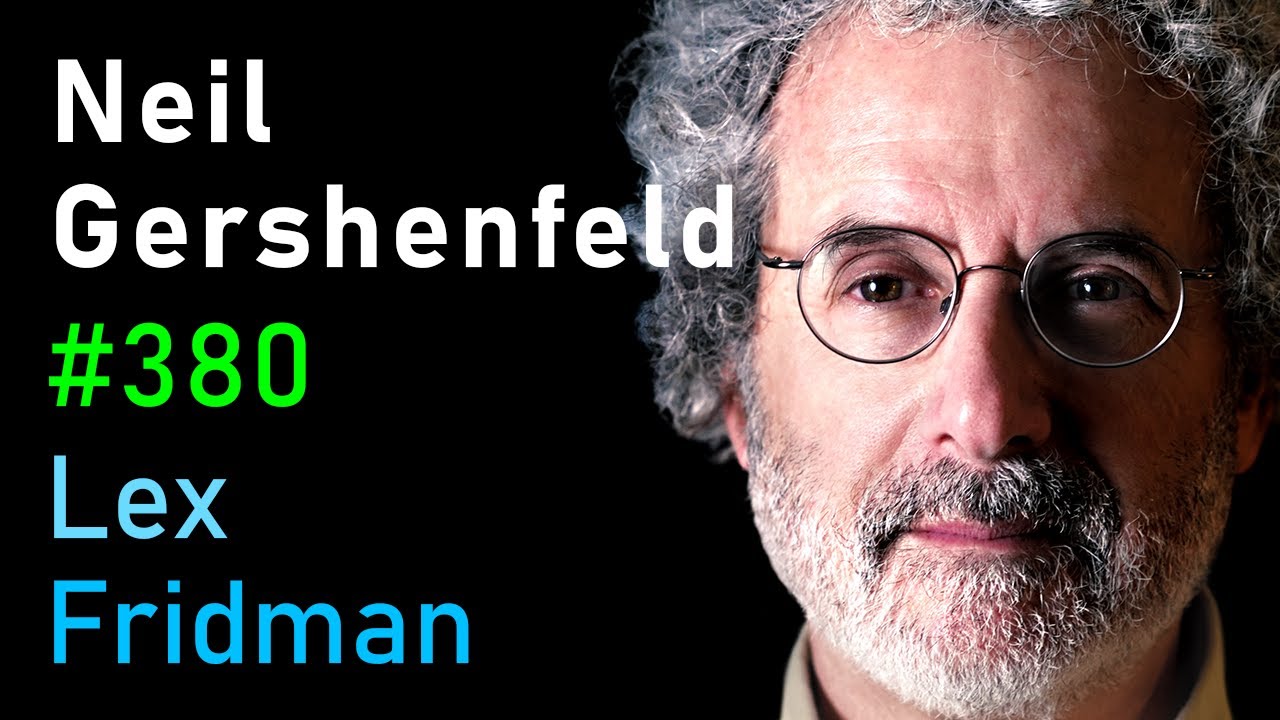
Neil Gershenfeld

physicistuniversity teachercomputer scientist
1 appearance ·5 ideas explored ·Wikipedia ·✓ verified

Neil Adam Gershenfeld is an American physicist. He is a professor in the MIT Program in Media Arts and Sciences and the director of the MIT Center for Bits and Atoms. He works mainly on interdisciplinary topics in physics and computer science, such as quantum computing, nanotechnology, and personal fabrication. He has been called the "intellectual father of the maker movement".

Across 1 conversation, Neil Gershenfeld ranges across Fab Labs, self-replicating robots, computation. Neil Gershenfeld argues that traditional computing models by Turing and von Neumann overlook the physicality of computation, causing scaling issues. Digital materials, like Lego bricks, allow for reversible assembly and are transforming aerospace with lightweight, high modulus structures.

Synthesized by TLexDR from 1 conversation. AI-generated. Report an inaccuracy
For the specialist
preview
Gershenfeld's critique of Turing and von Neumann highlights the need to integrate physical constraints into computing models for better scalability.
#380Neil Gershenfeld: Self-Replicating Robots and the Future of Fabrication
Digital materials, which can be assembled like Lego bricks, are revolutionizing aerospace by providing lightweight, high-strength structures.
#380Neil Gershenfeld: Self-Replicating Robots and the Future of Fabrication
Lassa's Law describes the exponential growth of Fab Labs, doubling every 18 months, indicating a rapid democratization of digital fabrication technology.
#380Neil Gershenfeld: Self-Replicating Robots and the Future of Fabrication
Self-replicating assemblers, inspired by biological systems, could merge manufacturing with biological processes, creating life-like systems from non-living materials.
#380Neil Gershenfeld: Self-Replicating Robots and the Future of Fabrication
2 more specialist takeaways
The expert layer unlocks with Read
Unlock with Read
The appearance

Every conversation, in order

Reading list

What they pointed you toward

books

Quantum Computation and Quantum Information
by Michael A. Nielsen and Isaac L. Chuang

articles

The Endless Frontier
by Vannevar Bush

others

The best master's thesis ever
by Claude Shannon
The differential analyzer
by Vannevar Bush
The Martian
by Andy Weir
How to Make Almost Anything
by MIT
DICE
by Neil Gershenfeld
Maxwell's Demon
by James Clerk Maxwell
Information Theory
by Claude Shannon
Fab Foundation
by Sherry Lasseter
Every idea, by region

The full territory