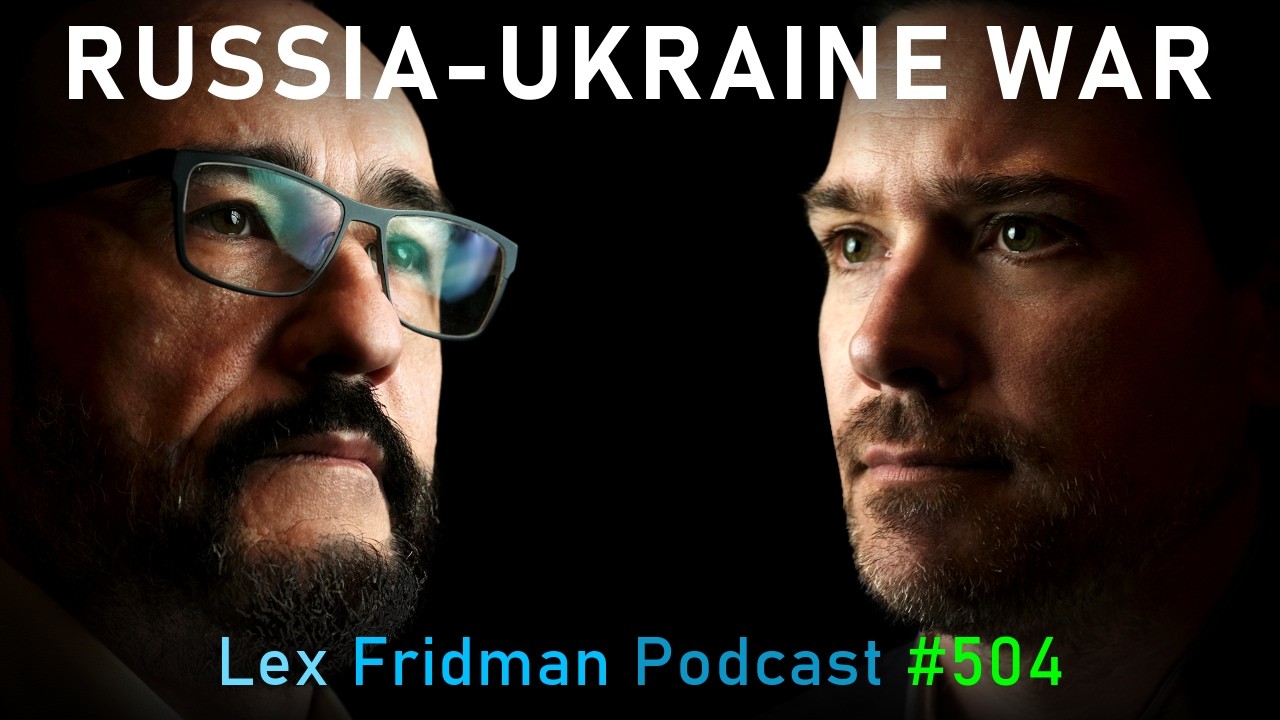
New Lex Fridman Insight: #504 – Russia-Ukraine War: Putin, Zelenskyy, Drones and the Future of Warfare
Sent November 11, 2026
Key Insights
- Drones account for 80% of losses in the Ukraine conflict, but artillery remains crucial for terrain control.
- Russia's strategic bombardment without ground success is historically ineffective, echoing past military failures.
- Ukraine's military innovation is bottom-up, contrasting with Russia's top-down command structure.
- Russia's military is spending 44% of its budget on the war, a financially unsustainable strategy.
- North Korea supplied 40% of Russian artillery ammunition, highlighting Russia's reliance on external support.
How the conversation moved
The host framed the discussion around the ongoing Russia-Ukraine war, focusing on the strategic and tactical dynamics shaping the conflict. The conversation began with an analysis of the current state of the war, highlighting Ukraine's improved combat performance in 2023 and Russia's strategic failures. The guest, Michael Kaufman, provided insights into the military strategies employed by both sides, noting that Ukraine's summer offensive, while not meeting high expectations, marked a significant shift in battlefield dynamics.
Kaufman argued that drones have become a critical component in the conflict, responsible for 80% of losses, yet emphasized the continued importance of traditional artillery in shaping the battlefield. Preston Stewart expanded on this by detailing the role of drones and artillery in the Donbas region, with FPV drones being deployed in staggering numbers. The discussion also touched on the inefficiencies of drone warfare, such as the need for multiple drones to eliminate a single tank, which challenges the perception of drones as a singularly decisive technology.
Despite the detailed analysis, there was little pushback from the host on the guest's assertions, particularly regarding the effectiveness of drone warfare and the strategic decisions made by both sides. The conversation did not challenge the assumption that drones alone could determine the outcome of the conflict, nor did it delve deeply into the potential long-term consequences of such heavy reliance on drone technology. This lack of pushback left some aspects of the discussion open to further exploration.
The conversation concluded with an examination of the political and economic implications of the war, including Russia's unsustainable military spending and its reliance on external support, such as artillery ammunition from North Korea. The discussion highlighted the strategic failures of Russia and the innovative tactics employed by Ukraine, suggesting that the conflict may have generational impacts on Russia's geopolitical standing. The episode ended without a clear resolution, leaving open questions about the future trajectory of the war and the potential for a lasting peace.
Surprising moments
In-depth
Drone Warfare
- Drones account for 80% of conflict losses but need artillery support for effective terrain control.
- FPV drones are deployed in large numbers, with estimates of 8,000 to 10,000 used daily by one side.
- It often takes 10 to 30 drones to destroy a single tank, highlighting inefficiencies in drone warfare.
Military Strategy
- Russia's strategic bombardment without ground success is historically ineffective.
- Ukraine's military innovation is driven from the bottom up, unlike Russia's top-down approach.
- Russia's military spending is a significant portion of its budget, which is unsustainable.
External Support and Dependencies
- North Korea supplied 40% of Russian artillery ammunition, showing Russia's reliance on external sources.
- Russia's military budget allocation is heavily skewed towards the war effort, impacting its economy.
Notable Quotes
The Russian military is doing quite poorly this year in the war. For them, this is probably their worst year of combat performance since winter of 2023.
Still open
- What are the long-term economic impacts on Russia due to its high military expenditure in the Ukraine conflict?
- How will Ukraine's bottom-up military innovation influence future conflicts and military strategies globally?