New Lex Fridman Insight: Alex Filippenko: Supernovae, Dark Energy, Aliens & the Expanding Universe
Sent June 11, 2026
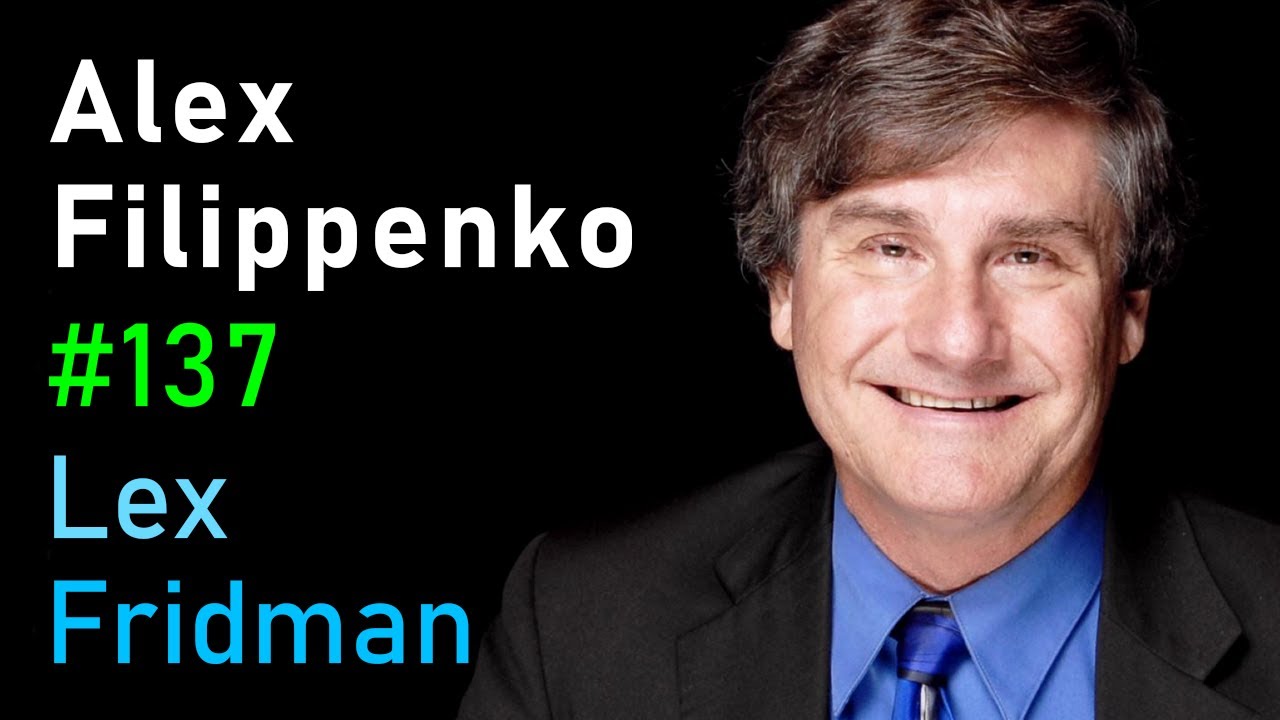
Key Insights
- Dark energy, possibly quantum fluctuations of the vacuum, suggests the universe will expand forever.
- The transition from prokaryotic to eukaryotic cells may be a significant evolutionary filter in the development of intelligent life.
- Type Ia supernovae are crucial for measuring cosmic distances due to their consistent peak brightness.
- AI systems may carry aspects of human consciousness, suggesting continuity of human traits in future machines.
How the conversation moved
The host opened the dialogue by framing the discussion around the mysteries of the universe, particularly focusing on dark energy and its implications for cosmic expansion. Alex Filippenko introduced the idea that dark energy could be quantum fluctuations of the vacuum, which suggests the universe will continue to expand indefinitely. He drew parallels between historical scientific models and current understandings, suggesting that our present theories might be temporary solutions to explain observed phenomena.
Filippenko's main argument centered on the role of dark energy in the universe's expansion and the potential for it to change over time, unlike constant vacuum energy. He provided evidence from various hypotheses, including quintessence and multiverse theories, which have yet to be ruled out. Filippenko also discussed the historical context of scientific models, suggesting that our current understanding of dark energy and dark matter might be akin to Ptolemy's epicycles—temporary fixes that could eventually be replaced by more accurate models.
The host did not explicitly challenge Filippenko's framing, but the conversation naturally brought up the Fermi paradox and the implications of intelligent life in the universe. Filippenko discussed the potential evolutionary filters that might limit the development of intelligent life, such as the transition from prokaryotic to eukaryotic cells. This raised questions about the rarity of intelligent civilizations and whether the great filter lies ahead of us, suggesting a potentially bleak future for humanity if advanced life is discovered elsewhere.
The conversation concluded with a discussion on the implications of these cosmic phenomena for humanity's future, including the potential for AI to carry human consciousness and the challenges of space exploration. Filippenko expressed skepticism about current timelines for colonizing Mars and suggested that machines might be more feasible for interstellar travel than humans. The dialogue left open the question of whether humanity is unique in the universe and the potential for AI to evolve with human-like traits, reflecting on the continuity of human consciousness in future technologies.
Surprising moments
In-depth
Dark Energy and the Universe's Fate
- Dark energy might cause the universe to expand forever.
- Quantum fluctuations could explain dark energy.
- Historical models parallel current dark energy theories.
Fermi Paradox and Intelligent Life
- The transition from prokaryotic to eukaryotic cells is a potential evolutionary filter.
- The discovery of advanced life could suggest the great filter is ahead of us.
Supernovae as Cosmic Distance Markers
- Type Ia supernovae have consistent peak brightness, aiding distance measurement.
- The Chandrasekhar limit explains supernova explosions.
AI and Human Consciousness
- AI systems may carry human traits.
- Machines might be more feasible for interstellar travel than humans.
Notable Quotes
I'm very much a person who believes that there's always a cause, you know, there are no miracles of a supernatural nature, okay?
Still open
- Filippenko questioned whether our understanding of dark energy and dark matter is akin to historical scientific models like epicycles.
- The host raised the question of whether the great filter in the development of intelligent life is ahead of us or behind us.