New Lex Fridman Insight: Bishop Robert Barron: Christianity and the Catholic Church
Sent June 11, 2026
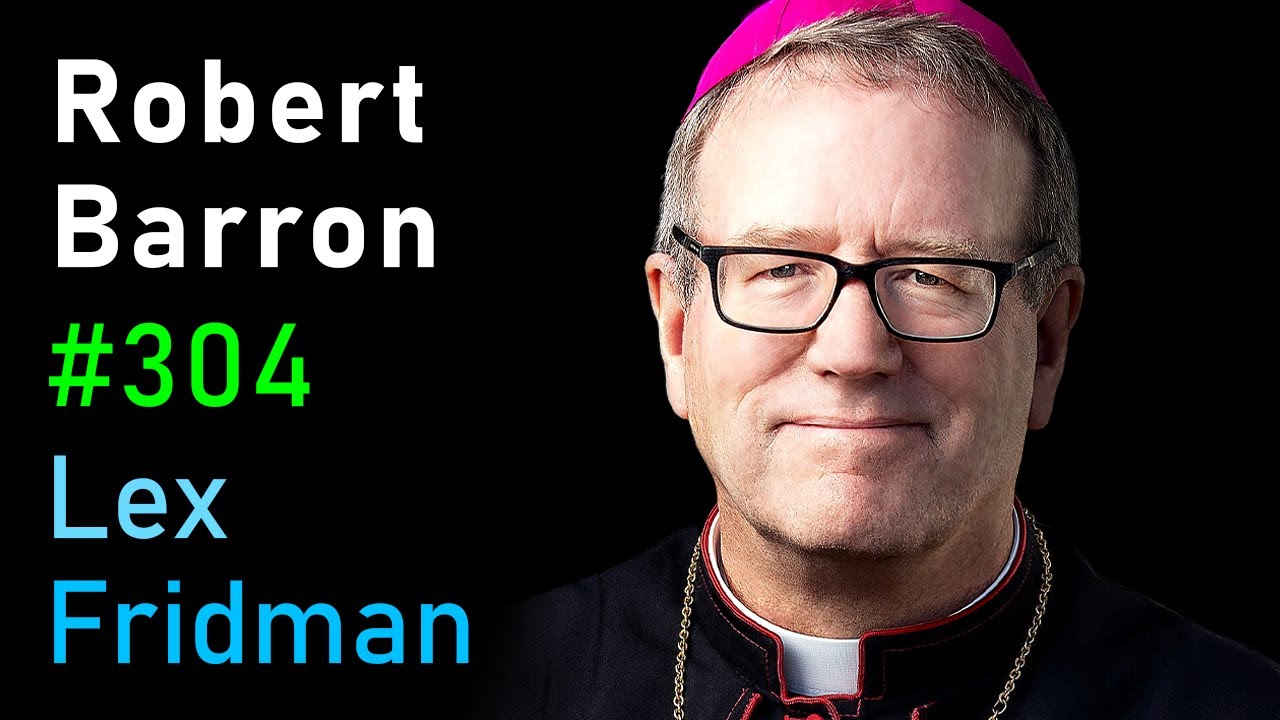
Key Insights
- Bishop Barron asserts that God is not a being among beings but the act of being itself, as per Aquinas.
- The incarnation is central to Christianity, emphasizing God's becoming human to elevate humanity to divinity.
- Mathematics and metaphysics reveal a deeper reality, suggesting a divine creator behind the universe's intelligibility.
- The Catholic Church's stance on issues like abortion and marriage is rooted in its understanding of human dignity and divine law.
- The Catholic Church has reduced sexual abuse incidents post-2002 with the Dallas Accords, challenging assumptions about celibacy's role.
How the conversation moved
The episode begins with Bishop Barron discussing the nature of God as articulated by Thomas Aquinas. He emphasizes that God is not a being among beings but rather the act of being itself, a concept that challenges common misconceptions held by both atheists and theists. This framing sets the stage for a deeper exploration of theological ideas, positioning God as fundamentally different from any other entity in existence. The host, Lex Fridman, appears to accept this framing, allowing Bishop Barron to expand on the implications of this theological perspective without significant pushback.
Bishop Barron then moves to discuss the incarnation, a central tenet of Christianity that asserts God became human to elevate humanity to divinity. He argues that this doctrine offers a form of humanism that surpasses secular philosophies by aiming for participation in the divine nature. The conversation touches on the implications of this belief for human dignity and the nature of the Church, described as an organism rather than an organization. This part of the discussion highlights Christianity's unique claims and its impact on believers' lives, with little challenge from the host.
The discussion shifts to the intersection of mathematics, metaphysics, and theology, where Bishop Barron posits that the intelligibility of the universe suggests a divine creator. He references Eugene Wigner's work on the applicability of mathematics to the physical sciences as evidence of a higher order of reality. Lex does not push back on this point, but a potential counterargument could be the naturalistic explanation for the universe's coherence. The conversation implies that a purely empirical worldview may miss deeper truths about existence.
In the final segments, the conversation addresses the Catholic Church's moral stances on issues like marriage, abortion, and sexual abuse. Bishop Barron defends the Church's views as rooted in a profound understanding of human dignity and divine law. He highlights the effectiveness of the Dallas Accords in reducing sexual abuse incidents, challenging assumptions about celibacy's role in such cases. The episode concludes with a discussion on the problem of evil and the Church's historical engagement with this issue, leaving open questions about the balance between faith and reason.
Surprising moments
In-depth
Nature of God
- Aquinas defines God as ipsum, essay, subsistence, meaning God is the subsistent act of to be itself.
- God is not a being among other beings, which is a fundamental mistake made by atheists and theists alike.
Incarnation and Divinization
- The incarnation is the distinctive claim of Christianity, asserting that God becomes a creature without ceasing to be God.
- Christianity offers a greater humanism than any humanist philosophy, as it aims for participation in the divine nature.
Mathematics and Metaphysics
- Mathematics is described as an experience of the immaterial, stepping out of a purely empirical world into a higher order of being.
- The intelligibility of the world is presented as an argument for the existence of a creator.
Catholic Church's Moral Stances
- The church holds that the appropriate expression of human sexuality is within marriage between a man and a woman.
- The church recognizes human life from conception as worthy of respect, opposing abortion.
Addressing Sexual Abuse
- The Dallas Accords in 2002 implemented protocols that reduced sexual abuse in the Catholic Church.
- Research by Andrew Greeley indicates no correlation between celibacy and the sexual abuse of children.
Notable Quotes
To be God is to be to be.
Still open
- Bishop Barron wonders about the future implications of removing God from societal frameworks, questioning the potential slide into inequality.