New Lex Fridman Insight: Brian Keating: Cosmology, Astrophysics, Aliens & Losing the Nobel Prize
Sent June 11, 2026
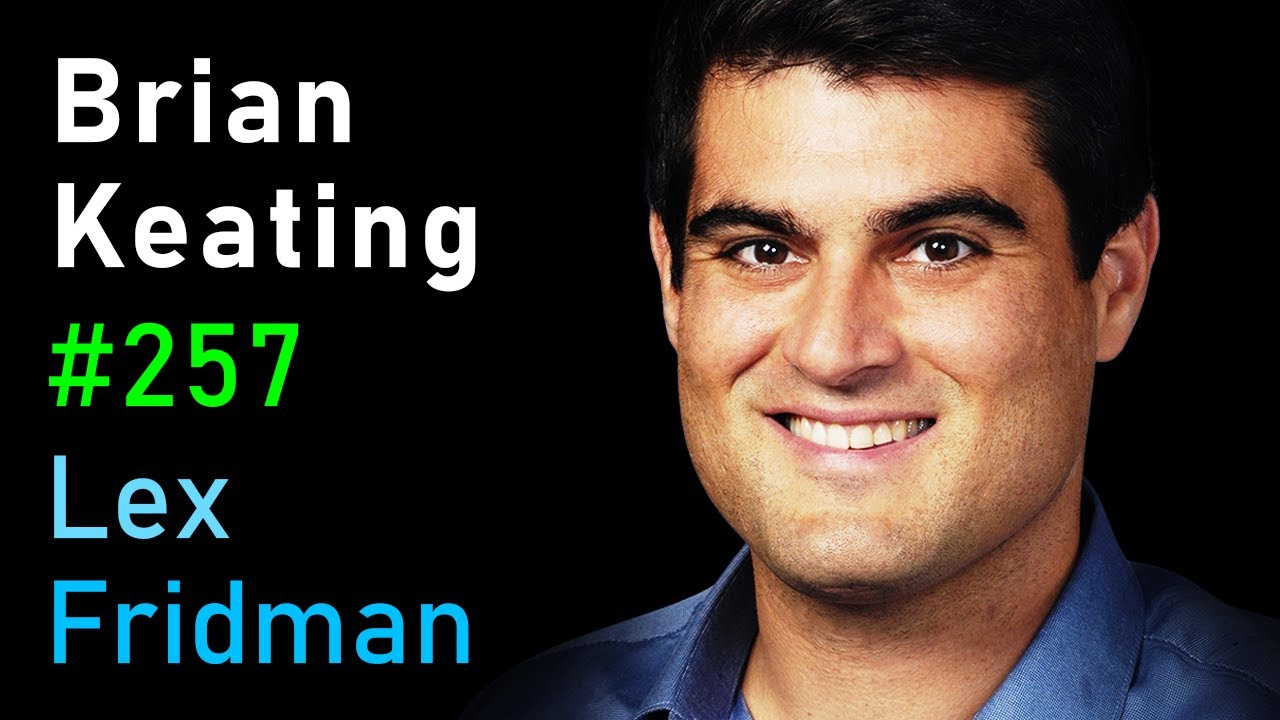
Key Insights
- The telescope's invention by Hans Lippershey and enhancement by Galileo revolutionized our understanding of the universe by allowing us to see back in time.
- The multiverse theory, stemming from inflationary cosmology, suggests multiple universes with varying success, challenging the boundaries of scientific predictability.
- Brian Keating's experience with the BICEP experiments highlights the competitive nature of academia and the emotional toll of scientific pursuit.
- The Nobel Prize's limitations, including its restriction to three recipients, often overlook significant contributors, reflecting the complexities of scientific recognition.
- Panspermia proposes that life can travel between planets, yet the origin of life remains an unresolved mystery.
How the conversation moved
The conversation begins with Brian Keating discussing the transformative impact of the telescope on human understanding of the universe. He highlights how the telescope, initially invented by Hans Lippershey and later improved by Galileo, allowed humanity to look back in time and observe celestial objects as they were millions or billions of years ago. This historical context sets the stage for a broader discussion on cosmology and the tools that have enabled significant scientific discoveries. The host, Lex Fridman, frames the central question around the implications of these discoveries for our understanding of the universe.
Keating delves into various cosmological theories, including the Big Bang and its alternatives like cyclical models, which challenge the singularity concept. He discusses the implications of cosmic inflation and the multiverse theory, which suggests the existence of multiple universes with varying degrees of success. This theory, stemming from inflationary cosmology, raises questions about the boundaries of scientific predictability and the scope of science itself. Lex Fridman adds to this by quoting Paul Steinhardt, who criticizes inflation as being detrimental to science and society.
Despite the depth of the discussion, there is limited pushback from Lex Fridman on these topics. The conversation flows smoothly with both Keating and Fridman agreeing on the potential dangers of inflationary cosmology leading to concepts like the multiverse, which may be outside the purview of traditional science. The lack of significant pushback leaves some questions open about the broader acceptance of these theories within the scientific community and their implications for future research.
The conversation ultimately pivots to the personal and professional challenges faced by scientists, particularly in the context of recognition and the Nobel Prize. Keating shares his experiences with the BICEP experiments and the emotional toll of scientific pursuit, highlighting the competitive nature of academia. The discussion critiques the Nobel Prize's limitations, emphasizing the need for broader recognition systems that capture collaborative scientific efforts. This reflection on recognition and the pursuit of scientific truth ties back to the initial discussion on the transformative impact of tools like the telescope and the ongoing quest for understanding the universe.
Surprising moments
In-depth
Cosmology and Inflation
- The Big Bang theory's alternatives include cyclical models, challenging the singularity concept.
- Inflationary cosmology suggests a multiverse, raising questions about scientific predictability.
- Paul Steinhardt critiques inflation as detrimental to science and society.
Scientific Recognition and the Nobel Prize
- The Nobel Prize's restriction to three recipients often overlooks significant contributors.
- Barry Barish's Nobel win illustrates the randomness of scientific recognition.
- Keating critiques the academic system's unchanged competitive nature.
Origin of Life and Panspermia
- Panspermia suggests life can travel between planets, yet its origin remains a mystery.
- The probability of technological civilization is extremely low, despite numerous planets.
- Extraterrestrial life discovery might not transform human behavior as expected.
Notable Quotes
The telescope, to me, is a lever that has literally moved the Earth throughout history.
Still open
- Keating reflects on whether broader recognition systems beyond the Nobel Prize could better capture collaborative scientific efforts.
- The conversation leaves open the question of how panspermia could reshape our understanding of life's distribution in the universe.