New Lex Fridman Insight: Chris Blattman: War and Violence
Sent June 11, 2026
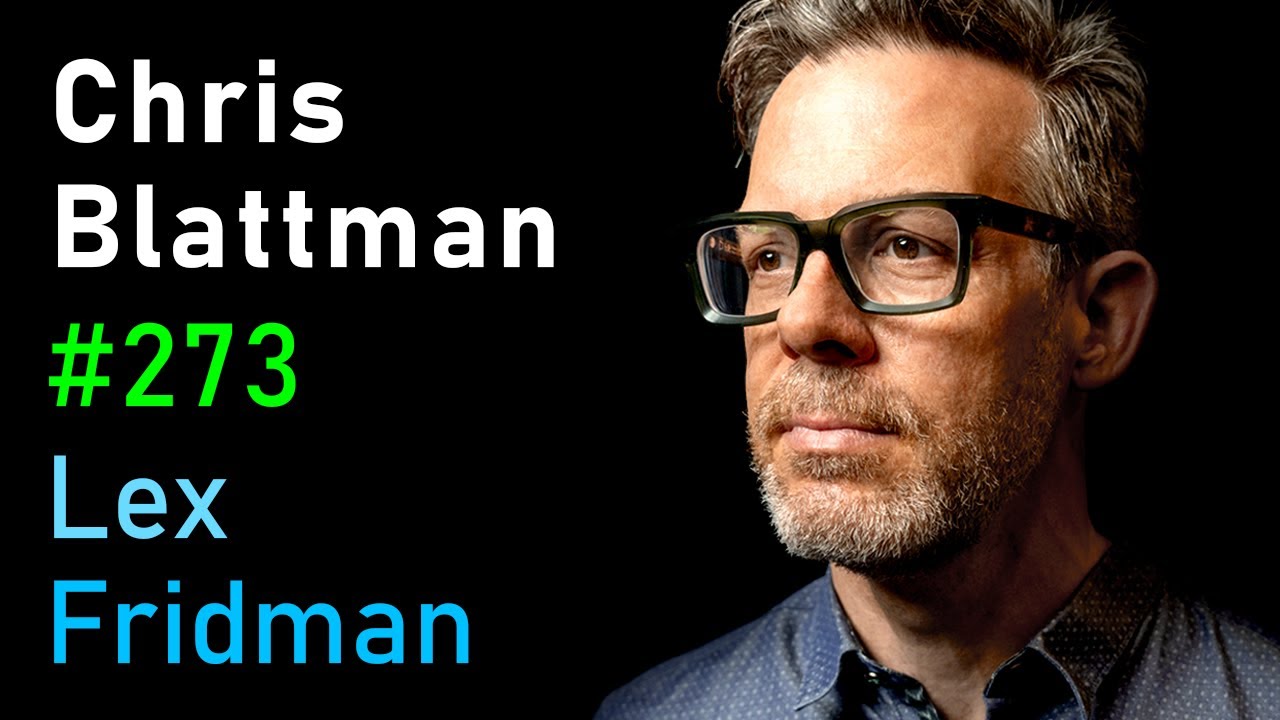
Key Insights
- Chris Blattman argues that war is an inefficient means to achieve political goals, often resulting in loss for all parties involved.
- The US invasion of Afghanistan and the Russia-Ukraine conflict illustrate how miscalculations and intransigence lead to prolonged conflicts.
- The Doomsday Clock reflects the ongoing high risk of nuclear conflict, highlighting the precariousness of current geopolitical tensions.
- In Medellín, criminal organizations maintain peace through hierarchical structures, offering parallels to international institutions like the UN.
- Journalists in Mexico face extreme risks with little consequence for their murderers, contrasting with the severe repercussions of harming DEA agents.
How the conversation moved
The episode begins with Chris Blattman redefining war to encompass any prolonged violent struggle between groups, not just traditional state conflicts. He emphasizes the inefficiency and costliness of war, suggesting that alternative methods could achieve political goals more effectively. This framing sets the stage for a broader discussion on the nature of violence and conflict, challenging the conventional understanding of war as a necessary or inevitable outcome of political disputes.
Blattman supports his argument by examining historical and contemporary conflicts, such as the US invasion of Afghanistan and the ongoing Russia-Ukraine war. He highlights how miscalculations and intransigence can lead to prolonged conflicts, using these examples to illustrate the complexities of international relations and the factors that drive nations to war. The discussion also touches on the concept of just wars, with World War II cited as a rare example due to its clear moral objectives and swift resolution.
Despite the compelling evidence presented, Lex Fridman does not offer significant pushback against Blattman's framing. The conversation lacks explicit tension, as both host and guest seem to agree on the inefficiency of war and the need for better conflict resolution strategies. The absence of pushback leaves some questions unaddressed, such as the potential benefits of military interventions in certain contexts or the role of deterrence in maintaining peace.
The conversation concludes by exploring parallels between international conflicts and organized crime in Medellín, where hierarchical structures among gangs maintain peace. This comparison suggests that structured negotiation and power dynamics can stabilize volatile environments, offering insights into global diplomacy. The episode ends with a reflection on the risks faced by journalists in violent contexts, highlighting the need for accountability and protection for those who expose the realities of conflict.
Surprising moments
In-depth
War's Inefficiency
- War is often an inefficient means to achieve political goals.
- All parties involved in war typically suffer losses.
- There are usually better alternatives to war for conflict resolution.
Conflict Case Studies
- The US invasion of Afghanistan stemmed from a lack of alternatives due to Taliban intransigence.
- Russia-Ukraine conflict highlights miscalculations in international relations.
- World War II is often cited as a just war due to its clear purpose and quick action.
Nuclear Risks
- The Doomsday Clock remains close to midnight, indicating high nuclear risk.
- Unchecked leaders can manipulate propaganda, increasing the risk of conflict.
- Nuclear war risk is terrifyingly high compared to previous decades.
Criminal Peace Models
- Medellín's criminal organizations maintain peace through structured hierarchies.
- This model parallels international institutions like the UN Security Council.
- Negotiated peace among gang leaders reduced homicide rates in Medellín.
Journalism Risks
- Journalists in Mexico face extreme risks with little consequence for their murderers.
- Killing DEA agents in Mexico would provoke strong US responses.
- Understanding criminal organizations is crucial for effective regulation.
Notable Quotes
let me be clear what I mean when I say war. I don't just mean countries duking it out. I mean any kind of prolonged violence struggle between groups.
Still open
- Lex Fridman questioned the effectiveness of military interventions in achieving long-term peace, leaving this as an open area for further exploration.
References & Resources
- Why We Fight, The Roots of War and the Paths to Peace by Chris Blattman — Search
- The Will to Power by Friedrich Nietzsche — Search
- Doomsday Clock by Bulletin of Atomic Scientists — Search
- The Better Angels of Our Nature by Steven Pinker — Search
- Civil War by Ted Miguel — Search
- The Art of War by Sun Tzu — Search