New Lex Fridman Insight: Chris Lattner: Compilers, LLVM, Swift, TPU, and ML Accelerators
Sent June 11, 2026
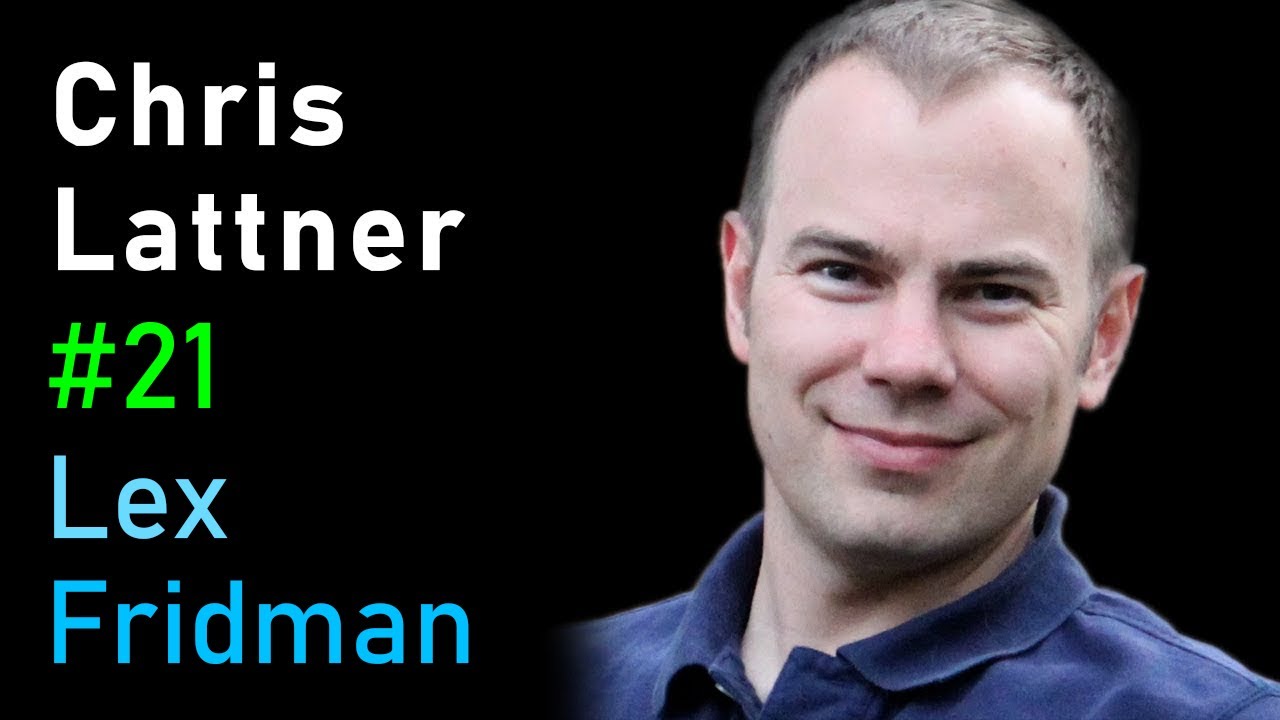
Key Insights
- LLVM's modular design allows for easy replacement of subsystems, unlike GCC, making it more adaptable for tech companies like Google and Apple.
- Swift's development addressed Objective-C's memory safety issues, offering both static and dynamic compilation for flexibility.
- Google's third-generation TPUs achieve 100 petaflops in a liquid-cooled box, illustrating hardware-software co-design.
- MLIR aims to unify various compiler systems in machine learning, promoting code reuse and industry collaboration.
How the conversation moved
Lex Fridman opens the conversation by framing the significance of compilers in modern computing, particularly focusing on LLVM's role in optimizing code across various hardware platforms. Chris Lattner, the guest, initially frames LLVM as a modular and adaptable infrastructure that has become a cornerstone for major tech companies like Google and Apple. He emphasizes the community-driven nature of LLVM, which contrasts with the more rigid and less adaptable GCC. This sets the stage for a deeper dive into the technical intricacies of compilers and their evolution.
Lattner's main argument centers around the flexibility and modularity of LLVM, which allows for easy replacement of subsystems and fosters collaboration among tech giants. He provides concrete evidence by discussing LLVM's adoption by companies like Sony for graphics compilation and its impact on compiler design standards. He also highlights the evolution of Swift, developed to address Objective-C's limitations, particularly its memory safety issues. Swift's design incorporates both static and dynamic compilation, offering flexibility and safety.
Despite the depth of the discussion, Lex does not challenge Lattner's framing of LLVM and Swift's superiority over older systems like GCC and Objective-C. The conversation lacks explicit pushback, though a reasonable counterpoint could be whether the modularity of LLVM might introduce complexity that could hinder performance in certain scenarios. However, this potential tension remains unexplored, leaving the conversation heavily weighted towards Lattner's perspective on the benefits of LLVM and Swift.
The conversation pivots towards the advancements in machine learning hardware, particularly Google's TPU innovations and the role of Swift in optimizing machine learning processes. Lattner discusses the significance of MLIR in unifying compiler systems, promoting code reuse and collaboration across the industry. The episode concludes with reflections on leadership and the balance between short-term execution and long-term vision, leaving open questions about the future direction of compiler and machine learning technology.
Surprising moments
In-depth
Compilers and LLVM
- LLVM's modular design allows for easy subsystem replacement, unlike GCC.
- LLVM's community includes major tech companies collaborating on shared infrastructure.
- Compilers like LLVM standardize optimization and code generation processes.
Swift Programming Language
- Swift addresses Objective-C's memory safety issues with a new language design.
- Swift supports both static and dynamic compilation, offering flexibility.
- Swift's design enables beginners to learn easily while offering advanced features.
Machine Learning and Hardware Innovations
- Google's TPUs achieve 100 petaflops, showcasing hardware-software co-design.
- MLIR aims to unify compiler systems in machine learning for better collaboration.
- Swift for TensorFlow adds language features to optimize machine learning processes.
Notable Quotes
The way I look at this is you have a two-sided problem of you have humans that need to write code and then you have machines that need to run the program that the human wrote.
Still open
- Lex asked about the balance between short-term execution and long-term vision in leadership, which Chris discussed but left open-ended.
References & Resources
- Compilers: Principles, Techniques, and Tools by Alfred V. Aho, Monica S. Lam, Ravi Sethi, Jeffrey D. Ullman — Search
- The Swift Programming Language by Apple — Search
- TensorFlow by Google — Search
- MLIR by Google — Search
- The Dragon Book by Alfred V. Aho, Monica S. Lam, Ravi Sethi, Jeffrey D. Ullman — Search