New Lex Fridman Insight: Chris Lattner: The Future of Computing and Programming Languages
Sent June 11, 2026
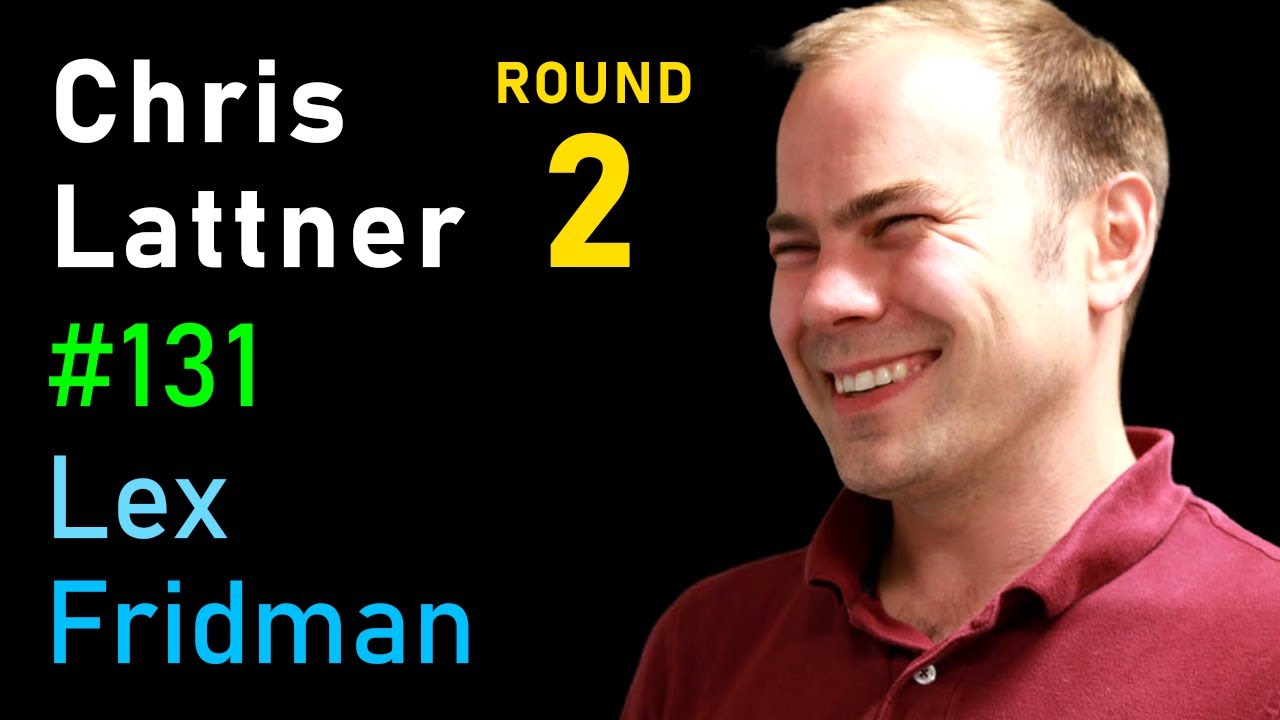
Key Insights
- Swift's value semantics reduce the need for defensive copying, enhancing efficiency and mathematical consistency.
- MLIR outperforms LLVM by providing a flexible infrastructure for domain-specific compilers, addressing redundancy issues.
- RISC-V's open standard allows for customizable chips, contrasting with proprietary instruction sets like x86 and ARM.
- Quantum computing is in its infancy, likened to a science project, with practical applications expected in about 10 years.
- Swift's design prioritizes progressive disclosure of complexity, balancing power, efficiency, and user experience.
How the conversation moved
Lex Fridman opened the conversation by exploring the leadership styles of Steve Jobs, Elon Musk, and Jeff Dean, with Chris Lattner providing insights into their differing approaches to technology and human factors. Lattner highlighted how Jobs focused on human-centric product design, Musk emphasized technological advancement, and Dean led through his engineering prowess. This set the stage for a broader discussion on the intersection of leadership and technological development, framing the central question of how leadership styles influence innovation and product success.
Lattner's main argument revolved around the importance of programming languages and their role in developer productivity and system efficiency. He emphasized Swift's value semantics as a key advantage, allowing variables to behave like mathematical objects, which reduces the need for defensive copying and enhances both performance and developer experience. Lattner also discussed MLIR's advantages over LLVM, noting its flexibility in developing domain-specific compilers, and highlighted RISC-V's potential to revolutionize chip design with its open standard instruction set.
Despite the compelling arguments, Lex did not challenge Lattner's positions directly, leaving some areas unexplored. For instance, while Lattner praised MLIR's flexibility, there was no discussion on potential downsides or limitations compared to LLVM in specific applications. Similarly, the conversation on RISC-V's open standard lacked a counterpoint on the challenges or risks associated with adopting such a model in a market dominated by proprietary technologies. The absence of pushback left these areas ripe for further exploration and debate.
The conversation concluded with a look at the future of computing, touching on the nascent state of quantum computing and the evolving landscape of machine learning and programming languages. Lattner expressed optimism about the potential of these technologies to drive innovation, while acknowledging the challenges and uncertainties that lie ahead. The discussion wrapped up by reiterating the importance of thoughtful design and leadership in navigating the complexities of technological advancement, leaving open questions about how these fields will evolve and integrate in the coming years.
Surprising moments
In-depth
Programming Language Design
- Swift's value semantics improve efficiency and mathematical consistency.
- Swift's design emphasizes progressive disclosure of complexity.
- Python's limitations in concurrency due to the global interpreter lock.
Compiler and Hardware Innovations
- MLIR provides a more flexible infrastructure than LLVM.
- RISC-V's open standard allows for customizable chip design.
- RISC-V's potential to dominate due to its flexibility.
Quantum Computing
- Quantum computing is in its early stages, akin to a science project.
- Practical applications of quantum computing are expected in about 10 years.
Notable Quotes
Steve's trying to build things that feel good, that people love, that affect people's lives, how they live.
Still open
- Lattner questioned whether MLIR could fully replace LLVM in all applications, noting the need for further exploration.
- The conversation left open the question of how RISC-V's open standard will impact the dominance of proprietary instruction sets.