New Lex Fridman Insight: Christof Koch: Consciousness
Sent June 11, 2026
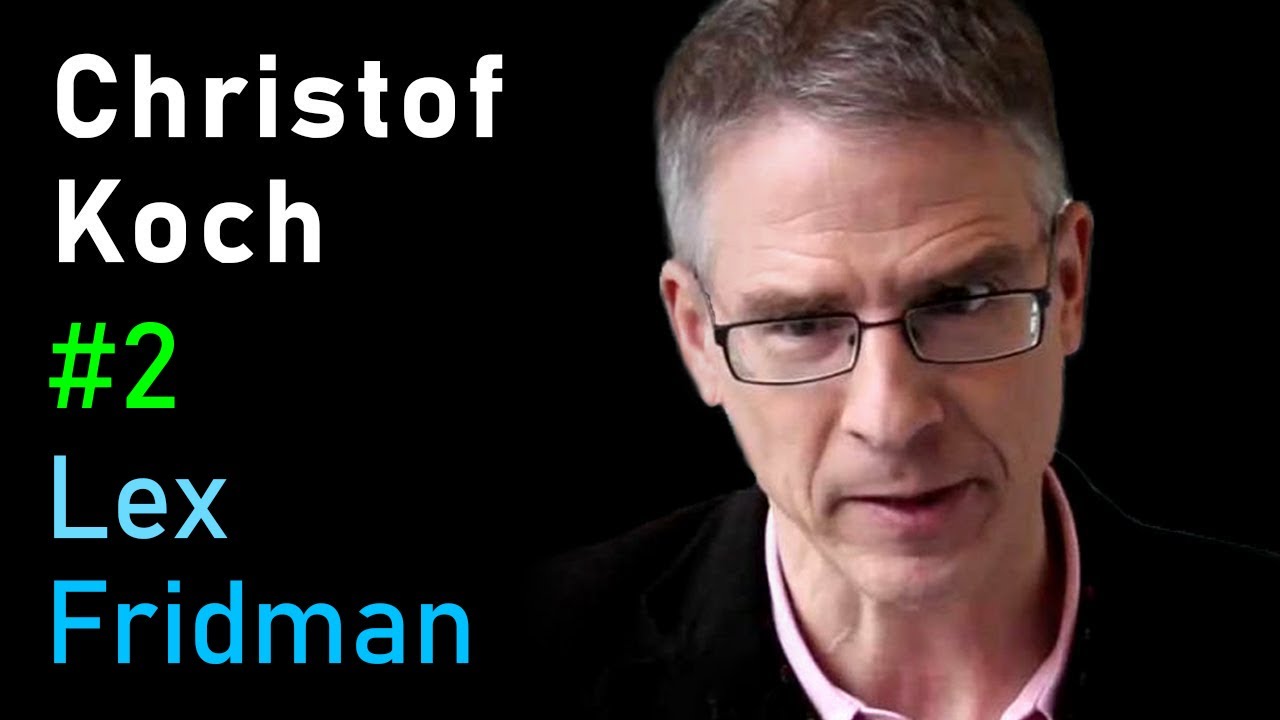
Key Insights
- Koch argues consciousness and intelligence are distinct; intelligence is functional, while consciousness is experiential.
- The ZAP and ZIP test can determine consciousness with 100% accuracy using transcranial magnetic stimulation.
- Integrated Information Theory (IIT) posits that consciousness arises from a system's cause-effect power over spatial-temporal grains.
- Koch asserts that a perfect brain simulation won't be conscious; it merely imitates behavior.
- The claustrum, with its extensive cortical connections, may function as a conductor for consciousness.
How the conversation moved
The episode begins with Koch framing consciousness as fundamentally different from intelligence, emphasizing that while intelligence is about functionality, consciousness is about subjective experience. He references philosopher Thomas Nagel to illustrate how consciousness encompasses the feeling of being, which is distinct from the operational nature of intelligence. This distinction is crucial for understanding why artificial systems, despite their intelligence, may not possess consciousness.
Koch introduces the ZAP and ZIP test, a method using transcranial magnetic stimulation to measure consciousness with high accuracy. He further discusses Integrated Information Theory (IIT), which posits that consciousness arises from a system's intrinsic causal power. This theory provides a framework for understanding consciousness beyond mere computational ability, suggesting that consciousness is a measurable phenomenon linked to the structure and function of the brain.
Despite the compelling arguments, Lex does not challenge Koch's views on the limitations of artificial intelligence achieving true consciousness. Koch states that even a perfect simulation of the human brain will not be conscious, as it only mimics behavior rather than embodying real experience. This claim, while not contested by Lex, raises significant questions about the future of AI and its potential to replicate human-like consciousness.
The conversation concludes with a discussion on the claustrum's role in consciousness, likening it to a conductor in an orchestra. Koch explains that its unique connections to all cortical regions might solve the binding problem of consciousness, integrating diverse inputs into a unified experience. This exploration leaves open the possibility of further research into the claustrum's function, highlighting the ongoing quest to unravel the mysteries of consciousness.
Surprising moments
In-depth
Consciousness vs. Intelligence
- Consciousness is about experience, not function.
- Intelligence can exist without consciousness.
Measuring Consciousness
- ZAP and ZIP test measures consciousness accurately.
- Integrated Information Theory explains consciousness through cause-effect power.
Simulated vs. Real Consciousness
- Simulations imitate but do not replicate consciousness.
- Neuromorphic machines are needed for artificial consciousness.
The Role of the Claustrum
- Claustrum integrates inputs from all cortical areas.
- It may solve the binding problem of consciousness.
Still open
- Koch questions whether a neuromorphic machine could ever truly replicate human consciousness, leaving the answer open.
- The potential for the claustrum to solve the binding problem of consciousness remains an area for further exploration.