New Lex Fridman Insight: Daniel Kahneman: Thinking Fast and Slow, Deep Learning, and AI
Sent June 11, 2026
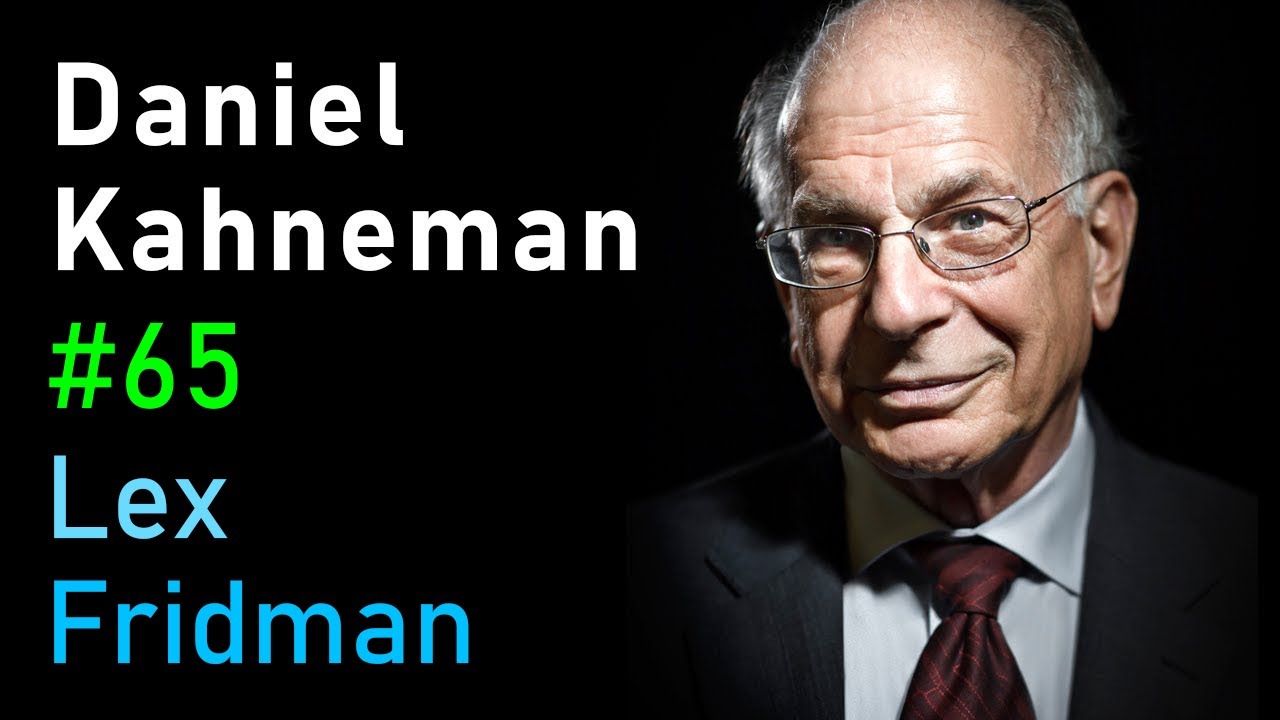
Key Insights
- Kahneman argues that deep learning mimics System One thinking, being fast and predictive but lacking reasoning and causality.
- The distinction between the experiencing self and the remembering self explains why people often prioritize memories over actual experiences.
- DeepMind and OpenAI are exploring neural networks for reasoning, but temporal causality remains a challenge.
- Controlled experiments in psychology often fail to translate to real-world outcomes, as shown by a 0% success rate in studies on gym attendance.
- Kahneman highlights that dehumanization enables ordinary people to commit atrocities, challenging assumptions about human morality.
How the conversation moved
The host framed the conversation around the dichotomy of human thought processes, as outlined in Kahneman's 'Thinking, Fast and Slow,' and its implications for AI development. Kahneman began by discussing how System One and System Two represent different cognitive functions, with System One being fast and instinctive, akin to deep learning's predictive nature, while System Two is slower and more deliberative, which AI currently lacks. This set the stage for exploring how these cognitive models can inform AI design.
Kahneman argued that deep learning systems mirror System One processes, excelling in pattern recognition but falling short in reasoning and understanding causality. He provided evidence by comparing AI's predictive capabilities to human intuition, noting that while AI can predict outcomes, it struggles with the reasoning required for complex problem-solving. This comparison highlighted a significant limitation in current AI systems, which are unable to replicate the deliberative reasoning of System Two.
The host did not explicitly challenge Kahneman's framing, though a potential counterargument could be that AI's rapid advancements might eventually bridge the gap between System One and System Two processes. However, Kahneman's emphasis on the inherent differences in reasoning capabilities between humans and AI remained largely unchallenged. The conversation briefly touched on Jan LeCun's optimistic view that neural networks could evolve into reasoning systems without major changes, suggesting a divergence in expert opinions on AI's future capabilities.
The discussion concluded with Kahneman emphasizing the importance of understanding human cognition to inform AI development, particularly in areas like reasoning and decision-making. The conversation pivoted to explore the broader implications of AI in society, including ethical considerations and the potential for AI to augment human capabilities. While the dialogue left open questions about how AI might eventually achieve human-like reasoning, it underscored the need for continued research into both human cognition and AI development.
Surprising moments
In-depth
Human Cognition and AI
- Kahneman describes System One as fast and instinctive, similar to deep learning's predictive capabilities.
- System Two is slower and deliberative, which AI lacks, highlighting a gap in reasoning capabilities.
- Dehumanization allows ordinary people to commit atrocities, challenging assumptions about human morality.
AI Development Challenges
- DeepMind and OpenAI are working on neural networks for reasoning, but temporal causality is unsolved.
- Grounding is essential for AI to understand the world, raising questions about the need for a perceptual system.
- Active learning is crucial for developing both system one and system two capabilities in AI.
Psychological Research and Real-world Application
- Controlled experiments often fail to translate to real-world outcomes, as shown by a 0% success rate in gym attendance studies.
- Between-subject experiments require larger sample sizes and are harder to predict compared to within-subject experiments.
Notable Quotes
It's a surprise that enough people willingly participated in that.
Still open
- Kahneman questioned whether AI can ever truly achieve the reasoning capabilities of System Two, leaving this open for future exploration.
References & Resources
- Man's Search for Meaning by Viktor Frankl — Search