New Lex Fridman Insight: David Buss: Sex, Dating, Relationships, and Sex Differences
Sent June 11, 2026
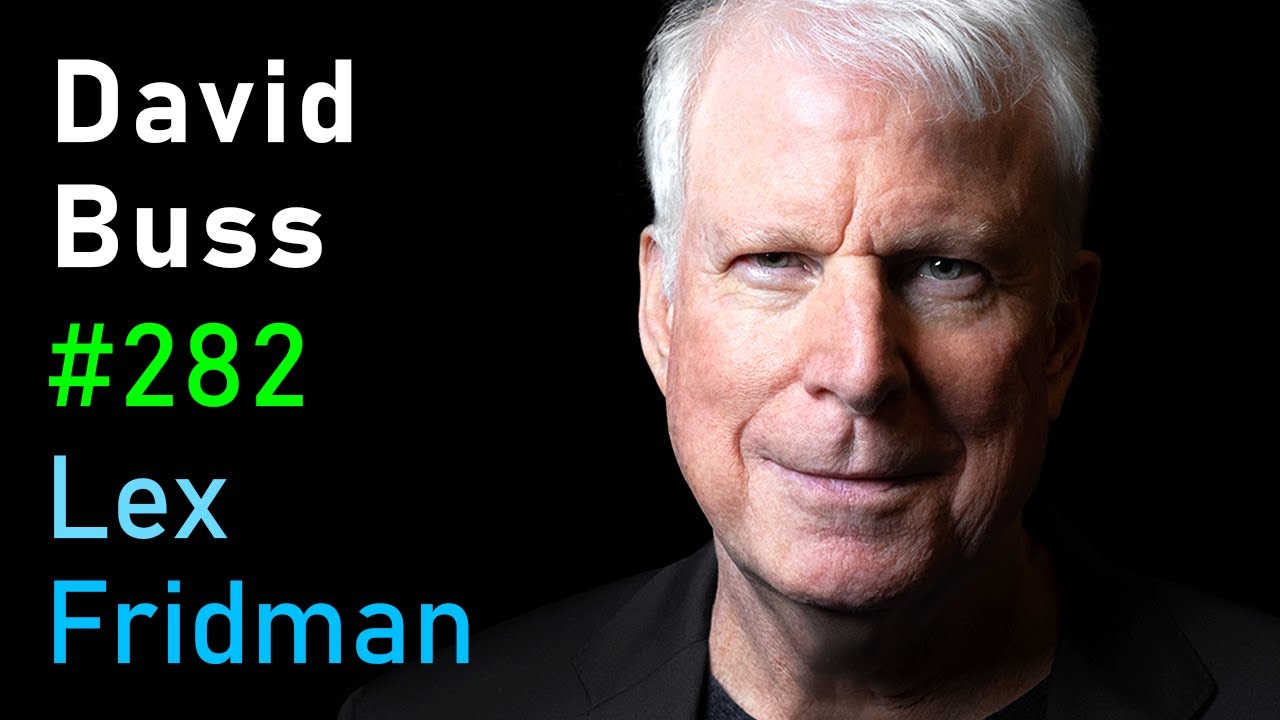
Key Insights
- David Buss argues that concealed ovulation in women is an evolutionary adaptation, empowering them in mate selection.
- Buss asserts that emotional instability is the most predictive personality trait for relationship breakups and divorces.
- Men and women differ significantly in jealousy triggers; women are more upset by emotional infidelity, while men are more upset by sexual infidelity.
- Buss highlights that 91% of men and 84% of women have had homicidal thoughts, indicating a commonality in human psychology.
- Social media exacerbates women's self-esteem issues post-puberty by amplifying unrealistic beauty standards.
How the conversation moved
Lex Fridman opens the conversation by framing it around the complexities of human relationships, sex, and evolutionary psychology. David Buss, a prominent figure in evolutionary psychology, begins by discussing the evolutionary significance of sex and violence in human history, emphasizing that humans are a sexually reproducing species. He explains that successful reproduction requires complex mating psychology, which has evolved over time to include strategies such as long-term pair bonding and parental investment. Buss uses examples from the Yanomami people to illustrate how historical mating strategies often involved violence and resource acquisition, including the capture of women.
Buss's main argument centers around the idea that human mating strategies are deeply rooted in evolutionary psychology. He provides evidence that human males invest heavily in parental care, which is rare among mammals, and that concealed ovulation in women is an evolutionary adaptation that empowers them in mate selection. Buss also discusses the competitive nature of mating, where desirable mates are scarce, and individuals use various strategies, including language and reputation management, to attract partners. He highlights the role of jealousy in relationships, noting that it serves as a necessary emotion to protect valued relationships and is triggered differently in men and women.
While Lex didn't challenge Buss's evolutionary framing, the conversation did touch on areas of potential contention, such as the biological underpinnings of beauty standards and the societal impact of social media on self-esteem. Buss argues against the notion that beauty standards are entirely socially constructed, suggesting they have biological roots. He also addresses the impact of social media, particularly on women's self-esteem, which declines after puberty due to increased competition in the mating domain. Buss's stance on these issues may not align with more socially constructed views of beauty and self-esteem, highlighting a tension between evolutionary and sociocultural explanations.
The conversation concludes with a broader discussion on the implications of Buss's theories for understanding human behavior and relationships. Buss emphasizes the importance of acknowledging sex differences and the evolutionary roots of human psychology, arguing against the suppression of scientific knowledge. He also touches on the complexities of free speech and scientific discourse, particularly in the context of controversial research on sex differences. The episode ends with Buss and Lex reflecting on the meaning of life, suggesting that experiencing the rich array of human psychology is part of what makes life meaningful. This leaves open questions about how these evolutionary insights can be integrated into modern societal norms and relationship practices.
Surprising moments
In-depth
Evolutionary Psychology and Mating Strategies
- Humans evolved long-term pair-bonded mating strategies.
- Concealed ovulation in women empowers them in mate selection.
- Mating involves competition for desirable partners.
Jealousy and Infidelity
- Emotional infidelity upsets women more, while men are more upset by sexual infidelity.
- Jealousy serves as a necessary emotion to protect valued relationships.
Impact of Social Media
- Social media exacerbates self-esteem issues in women post-puberty.
- Unrealistic beauty standards are amplified through social media platforms.
Notable Quotes
We humans are a sexually reproducing species and so everything has to go through sex.
Still open
- Buss questioned how evolutionary insights into mating strategies can be integrated into modern relationship practices.
- Lex and Buss discussed whether the societal impact of social media on self-esteem can be mitigated with current interventions.