New Lex Fridman Insight: David Eagleman: Neuroplasticity and the Livewired Brain
Sent June 11, 2026
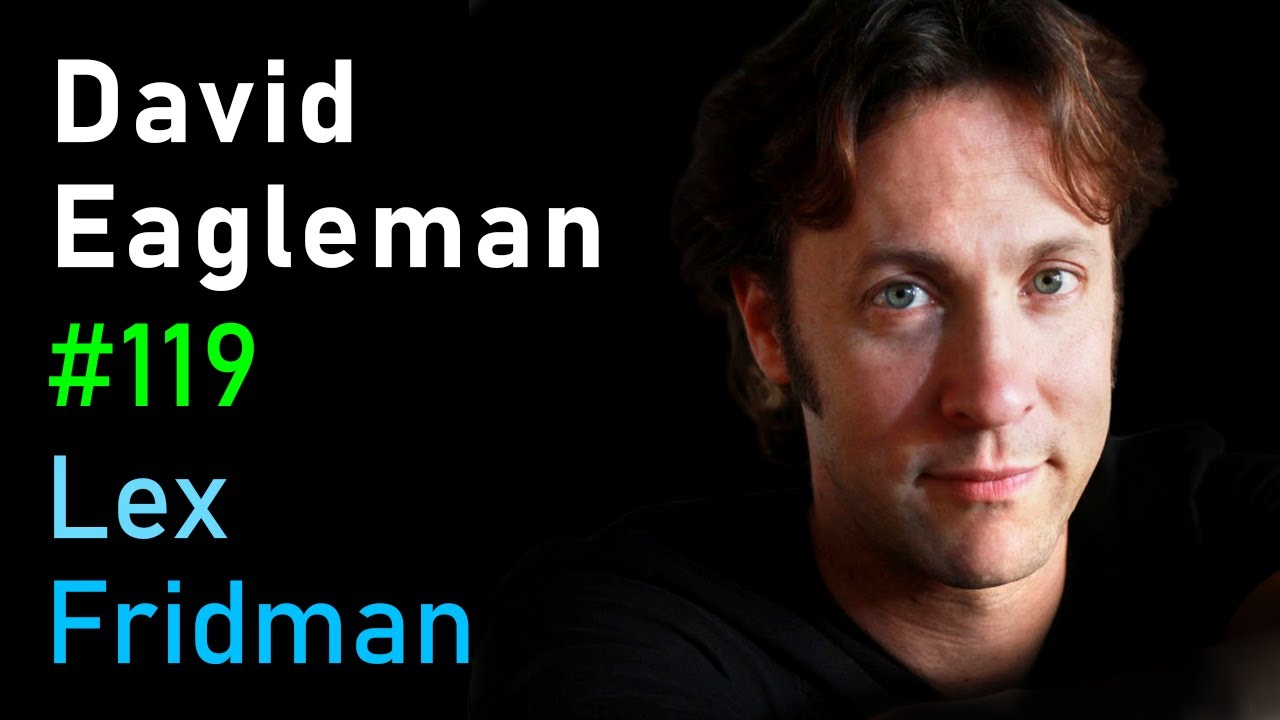
Key Insights
- David Eagleman introduces 'liveware' as a concept for a brain that physically reconfigures itself with experience, emphasizing neuroplasticity.
- Human brain plasticity varies across regions; the visual cortex solidifies early, while the somatosensory and motor cortices remain adaptable.
- Neosensory's $399 wristband allows deaf individuals to perceive sound through skin vibrations, offering an affordable alternative to hearing aids.
- AI models like GPT-3 lack the human brain's ability to understand context and relevance, highlighting a gap in AI's mimicry of human intelligence.
- Eagleman argues that the legal system should consider individual brain differences, advocating for specialized mental health courts.
How the conversation moved
Lex Fridman opens the conversation by framing the brain as a dynamic system, introducing David Eagleman's concept of 'liveware' to describe a brain that continuously reconfigures itself. Eagleman explains that neuroplasticity is not uniform across the brain; different regions have distinct windows of plasticity, with some areas like the visual cortex solidifying earlier than others. This sets the stage for discussing how the brain's adaptability impacts learning and behavior.
Eagleman argues that this adaptability is a fundamental trait of the human brain, allowing it to absorb cultural and environmental influences. He highlights how this plasticity occurs at multiple levels, including synaptic weights and receptor distributions, which are often overlooked. Eagleman also touches on the legal implications of neuroplasticity, suggesting that the justice system should account for individual brain differences through specialized mental health courts. This perspective challenges the current one-size-fits-all approach to sentencing.
While Lex doesn't explicitly challenge Eagleman's views, the conversation naturally contrasts human intelligence with AI capabilities. Lex points out that AI models like GPT-3, despite their impressive performance, lack the brain's ability to understand context and relevance. This highlights a significant gap in AI's ability to mimic human intelligence, emphasizing the importance of understanding the brain's unique mechanisms. The discussion underscores that raising neural network parameters alone won't achieve human-like intelligence.
The conversation pivots to practical applications of neuroplasticity, particularly in technology. Eagleman discusses Neosensory's wristband, which allows deaf individuals to perceive sound through skin vibrations, illustrating the potential of sensory substitution technologies. This innovation represents a significant step in making assistive technologies more accessible and affordable. The discussion concludes with Eagleman emphasizing the importance of adaptability in education and the workforce, as the future will demand skills and jobs that are currently unimaginable.
Surprising moments
In-depth
Neuroplasticity and Liveware
- Eagleman coined 'liveware' to describe a brain that reconfigures itself with experience.
- Different brain regions have varying plasticity windows, with some solidifying faster than others.
Legal System and Neuroscience
- Eagleman argues for specialized mental health courts to account for individual brain differences.
- The legal system's current model fails to accommodate the nuances of brain science.
AI and Human Intelligence
- GPT-3 lacks the ability to understand human relevance and context, unlike human brains.
- Increasing neural network parameters won't necessarily lead to human-like intelligence.
Sensory Substitution Technology
- Neosensory's wristband allows the deaf to perceive sound through skin vibrations.
- The device is significantly cheaper than traditional hearing aids and cochlear implants.
Notable Quotes
The whole point is for it to keep changing.
Still open
- Eagleman raises the question of how the legal system can effectively incorporate neuroscience to account for individual brain differences.
References & Resources
- Livewired by David Eagleman — Search
- Ascent of Money by Niall Ferguson — Search
- The Brain on Trial by Unnamed — Search
- Denial of Death by Ernest Becker — Search
- Terror Management Theory by Sheldon Solomon — Search
- Invisible Cities by Italo Calvino — Search
- All the Light We Cannot See by Anthony Doerr — Search
- Cosmos by Carl Sagan — Search
- Incognito by David Eagleman — Search
- The Rise and Fall of the Third Reich by William L. Shirer — Search