New Lex Fridman Insight: David Patterson: Computer Architecture and Data Storage
Sent June 11, 2026
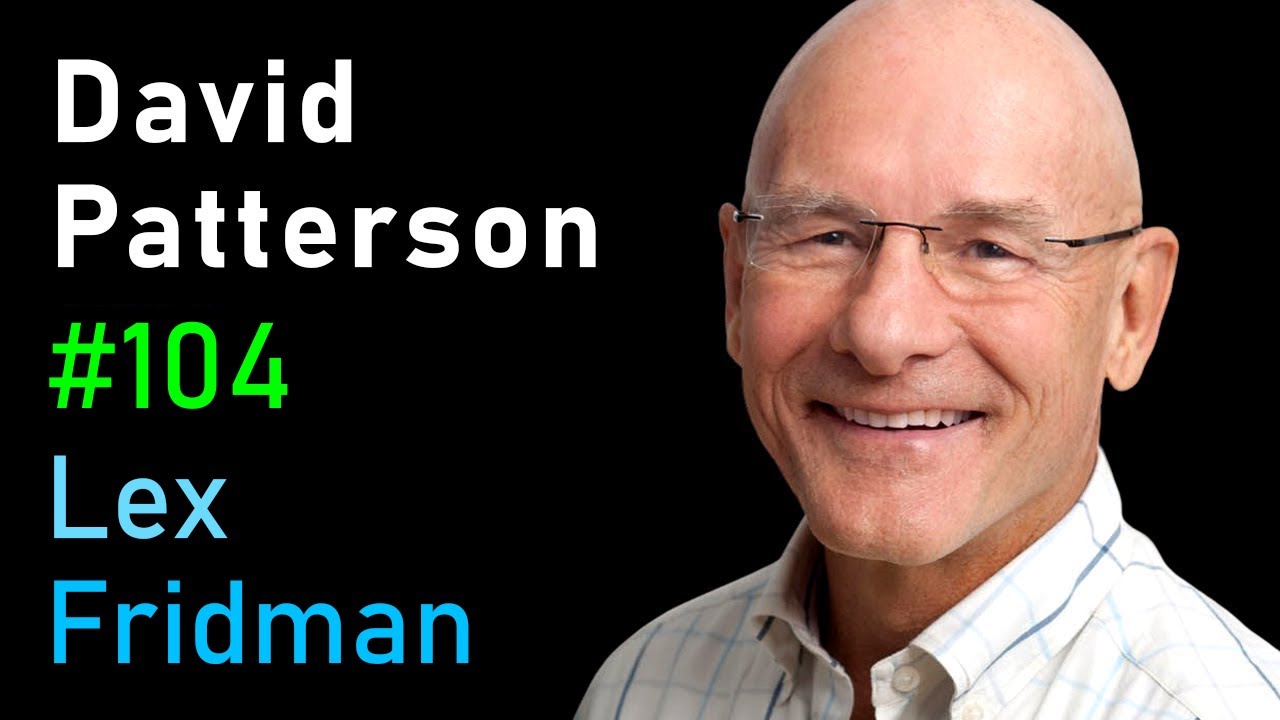
Key Insights
- Moore's Law is slowing, with Intel processors improving only marginally, challenging the future of exponential growth in computing.
- RISC architecture executes 50% more instructions four times faster than CISC, optimizing for speed and simplicity.
- RAID technology improved data storage reliability by using multiple inexpensive disks instead of one expensive disk.
- Quantum computing is at least a decade away from achieving error-corrected capabilities, likely not before 2030.
- RISC-V, an open instruction set architecture, is gaining popularity due to its simplicity and open-source nature.
How the conversation moved
The episode begins with David Patterson outlining the transformative impact of microprocessors and Moore's Law on computing. Patterson emphasizes how microprocessors enabled computers to shrink from room-sized machines to devices that fit in our pockets, fundamentally altering the landscape of technology. Moore's Law, which predicted the exponential growth of computing power by doubling the number of transistors on a chip every two years, was a central theme. This set the stage for a discussion on how these technological advancements have shaped modern computing and what the future holds as these trends evolve.
John Hennessy joins the conversation to delve into the evolution of microprocessor design, particularly focusing on the shift from CISC to RISC architecture. He argues that RISC's simpler instruction set allows for more efficient processing, with the ability to execute 50% more instructions at four times the speed of CISC. This efficiency is crucial as Moore's Law slows, meaning that optimizing instruction sets becomes increasingly important. The discussion also touches on the role of machine learning hardware accelerators, which are optimized for matrix multiplication, a key operation in AI applications.
Lex doesn't challenge the framing here, though the obvious counter-position would be that the slowing of Moore's Law could lead to stagnation in software development unless new paradigms are adopted. Patterson pushes back against Jim Keller's claim that Moore's Law is not dead, arguing that the evidence from Intel's recent performance suggests otherwise. This tension underscores the uncertainty and debate within the industry about the future trajectory of computing power and innovation.
The conversation pivots to the future of computing technologies, including quantum computing and RISC-V. Patterson suggests that quantum computing is at least a decade away from practical, error-corrected applications, impacting strategic planning for industries reliant on cutting-edge computation. Meanwhile, RISC-V's open-source model is gaining traction, with its simplicity and accessibility challenging proprietary systems and potentially democratizing access to advanced computing. The episode closes with reflections on personal experiences and the importance of relationships over professional achievements, providing a humanistic perspective on technological progress.
Surprising moments
In-depth
Microprocessor Evolution
- Microprocessors have drastically reduced the size and cost of computers.
- Moore's Law predicted the exponential growth of computing power.
RISC vs. CISC
- RISC executes simpler instructions faster than CISC.
- RISC's efficiency is crucial as Moore's Law slows.
Data Storage and RAID
- RAID improved data storage by using multiple inexpensive disks.
- RAID set a precedent for modern storage reliability.
Quantum Computing's Future
- Quantum computing is at least a decade away from practical use.
- Current limitations delay strategic advancements reliant on quantum tech.
RISC-V and Open Source
- RISC-V is gaining traction due to its open-source nature.
- RISC-V challenges proprietary systems, democratizing computing access.
Notable Quotes
The biggest thing that happened was the invention of the microprocessor.
Still open
- Patterson questioned the future of Moore's Law and whether new paradigms are needed to sustain innovation in computing.
- The feasibility and timeline for quantum computing to achieve error-corrected capabilities remain uncertain, impacting strategic planning.
References & Resources
- Ascent of Money by Niall Ferguson — Search
- MLPerf by Peter Mattson — Search
- National Academy of Engineering Report by National Academy of Engineering — Search
- A Case for Redundant Arrays of Inexpensive Disks by Garth Gibson, Randy Katz, David A. Patterson — Search
- Computer Architecture, A Quantitative Approach by John Hennessy and David Patterson — Search
- RISC-V: The New Instruction Set Architecture by Krzysztof Sanowicz — Search