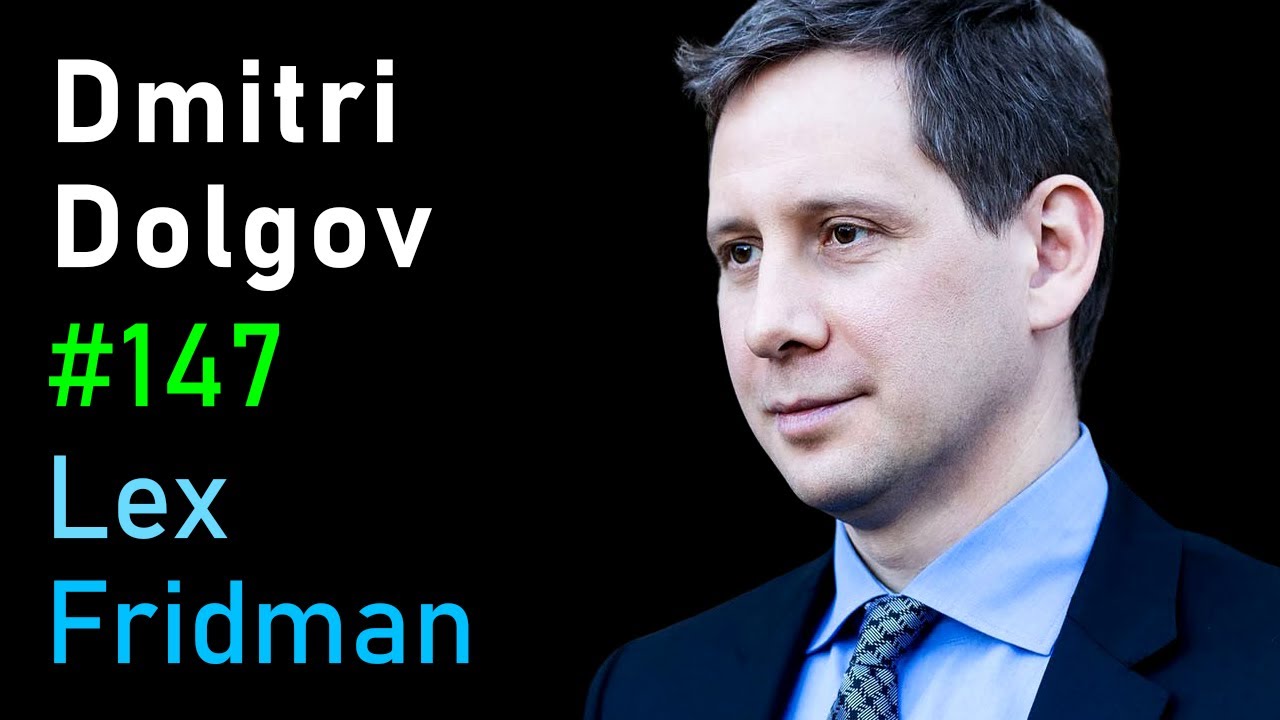
New Lex Fridman Insight: Dmitri Dolgov: Waymo and the Future of Self-Driving Cars
Sent June 11, 2026
Key Insights
- Waymo's fifth generation hardware platform is designed for large-scale manufacturing and improved reliability, enabling expansion beyond Phoenix.
- LiDAR technology, once costly, is now affordable and crucial for autonomous vehicle safety, allowing detection in low visibility conditions.
- Waymo's autonomous vehicles can operate independently without connectivity, enhancing reliability and data sharing for decision-making.
- In 2015, Waymo conducted the first fully driverless ride on public roads with a vehicle lacking a steering wheel or pedals.
- Waymo has been testing in over 25 cities, gathering data to support future deployments and scaling efforts.
How the conversation moved
Lex Fridman opens the conversation by exploring Dmitri Dolgov's journey from his early programming days to his leadership role in Waymo's autonomous vehicle technology. Dolgov shares anecdotes from his past, including a childhood programming project that gained international attention, setting the stage for his future in robotics and AI. The discussion transitions to Dolgov's involvement in the DARPA Urban Challenge, a pivotal experience that shaped his understanding of autonomous systems and their potential. This segment establishes Dolgov's credibility and frames the broader discussion on the evolution of self-driving technology.
Dolgov elaborates on Waymo's technological advancements, particularly the development of their fifth generation hardware platform. This platform is designed for large-scale manufacturing, crucial for expanding Waymo's services beyond Phoenix. Dolgov emphasizes the importance of LiDAR technology, which has become more affordable and integral to the safety and functionality of autonomous vehicles. He highlights Waymo's extensive testing across multiple cities, gathering data to refine their systems for broader deployment. This segment underscores Waymo's commitment to innovation and scalability in the autonomous vehicle sector.
Despite the impressive advancements, the conversation lacks explicit pushback from Lex, which could have enriched the discussion by addressing potential challenges or criticisms of autonomous vehicle technology. Dolgov's narrative remains largely unchallenged, focusing on the positive aspects of Waymo's progress and future potential. The absence of significant counterarguments or exploration of ethical concerns, such as the implications of autonomous systems on employment or urban infrastructure, leaves some questions unanswered.
The episode concludes with a forward-looking perspective on Waymo's role in shaping the future of transportation. Dolgov expresses optimism about the impact of autonomous vehicles, highlighting the potential for improved safety and user experience. He discusses Waymo's efforts to collect user feedback and continuously improve their services, reinforcing the company's commitment to customer satisfaction. The conversation ends on a hopeful note, with Dolgov envisioning a future where autonomous vehicles become a standard mode of transportation, transforming how people and goods move around the world.
Surprising moments
In-depth
Waymo's Technological Advancements
- Waymo's fifth generation hardware platform enables large-scale manufacturing and reliability improvements.
- Waymo has been testing in over 25 cities to gather data for future deployments.
LiDAR and Sensor Fusion
- LiDAR is crucial for safety, allowing detection in low visibility conditions.
- The cost of LiDAR has decreased, making it more accessible for autonomous vehicles.
Autonomous Vehicle User Experience
- Waymo aims to create a seamless and predictable user experience, prioritizing safety and comfort.
- Feedback mechanisms include real-time feedback through a touchscreen in the car.
Notable Quotes
I think it was the uniform and the, you know, the, the stripe baton that made cars go in the right directions.
Still open
- Lex asked about the ethical implications of autonomous vehicles, such as decision-making in critical scenarios, but it was not deeply explored.