New Lex Fridman Insight: Dmitry Korkin: Evolution of Proteins, Viruses, Life, and AI
Sent June 11, 2026
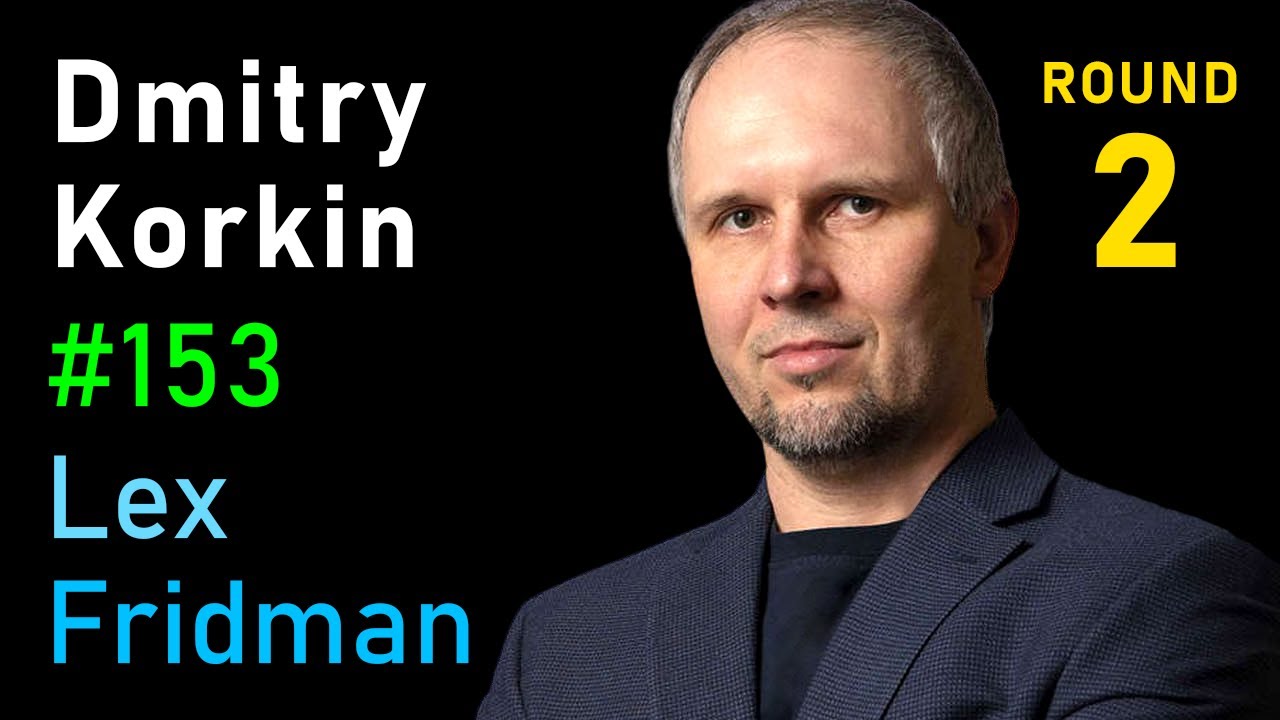
Key Insights
- AlphaFold2's protein folding predictions are a milestone, yet struggle with multi-domain proteins.
- The spike protein of SARS-CoV-2 operates as a trimer, enhancing its ability to bind to the ACE2 receptor.
- Machine learning could predict viral mutations, potentially aiding vaccine and antiviral development.
- The scientific response to COVID-19 vastly outpaced the SARS response, highlighting improved global collaboration.
- Self-replicating programs and evolutionary algorithms present new possibilities for AI and robotics.
How the conversation moved
Lex Fridman introduces the episode by framing the discussion around the evolution of proteins, viruses, and the role of AI in understanding these complex systems. Dmitry Korkin begins by emphasizing the intricate nature of proteins, particularly focusing on the spike protein of SARS-CoV-2. He highlights the role of cryo-electron microscopy in revealing the protein's structure and function, setting the stage for a deeper exploration of viral mechanisms and potential therapeutic interventions.
Korkin then shifts to discussing the groundbreaking achievements of AlphaFold2 in protein folding prediction. He underscores the significance of this advancement in bioinformatics, noting its near-experimental level accuracy for compact proteins. However, he points out the challenges AlphaFold2 faces with multi-domain proteins, illustrating the limitations of current AI models in handling complex biological data. This sets a backdrop for discussing the broader implications of AI in scientific discovery.
Despite the enthusiasm for AI's role in protein folding, there is no explicit pushback from Lex on the limitations highlighted by Korkin. The conversation lacks a direct challenge to Korkin's views, though an obvious counterpoint would be questioning the scalability of AlphaFold2's approach given the limited training data available. This absence of pushback leaves room for further exploration of how AI can overcome these data constraints to achieve more comprehensive protein modeling.
The conversation pivots to the potential of machine learning in predicting viral mutations, which Korkin suggests could revolutionize vaccine and antiviral drug development. He also touches on the rapid scientific response to COVID-19 compared to SARS, attributing this to improved global collaboration and technological advancements. The discussion concludes by exploring the intriguing possibilities of self-replicating programs and evolutionary algorithms in AI, highlighting both their potential and the challenges they pose for future research.
Surprising moments
In-depth
Protein Structure and Function
- The spike protein of SARS-CoV-2 is a trimer, enhancing its binding capability.
- Cryo-electron microscopy has advanced our understanding of protein structures.
Protein Folding and AlphaFold2
- AlphaFold2's predictions are near experimental levels for compact proteins but struggle with multi-domain proteins.
- The CASP competition is a benchmark for protein structure prediction.
Machine Learning in Virology
- Machine learning can predict viral mutations, aiding vaccine development.
- David Baker's Rosetta algorithm links protein structure to function.
Scientific Response to Pandemics
- The COVID-19 response was faster than SARS, showing improved global collaboration.
- Sequencing allows precise tracing of virus evolution.
Self-Replicating Programs and AI
- Self-replicating programs present new challenges and opportunities in AI.
- Evolutionary algorithms could lead to advancements in robotics.
Notable Quotes
Viruses are both terrifying and beautiful.
Still open
- Korkin questions whether machine learning can effectively predict viral mutations to aid in vaccine development, acknowledging it's an open challenge.
- The scalability of AlphaFold2's approach given the limited training data available remains an unresolved issue.