New Lex Fridman Insight: Donald Knuth: Programming, Algorithms, Hard Problems & the Game of Life
Sent June 11, 2026
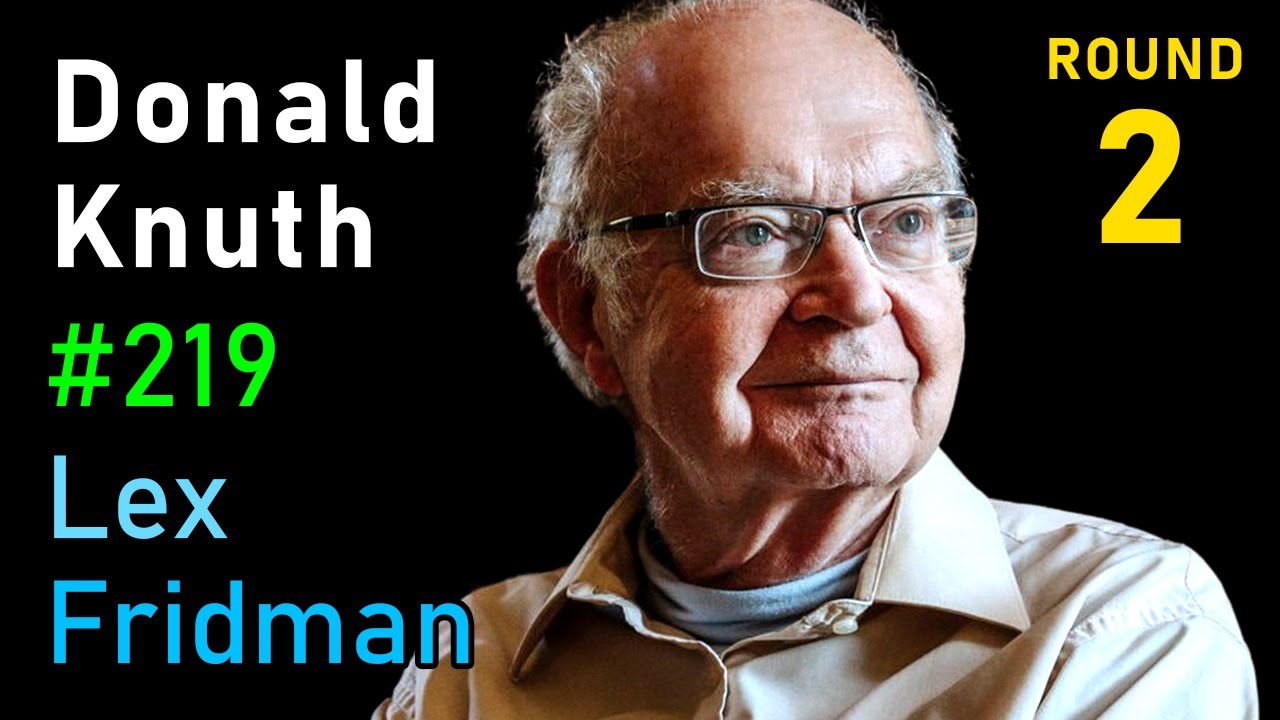
Key Insights
- Donald Knuth's first large-scale program was a tic-tac-toe game in IBM 650 Assembler in 1957, which included early machine learning concepts.
- Knuth believes that the question of whether consciousness is more than computation is currently unanswerable and may remain so indefinitely.
- Knuth argues that automation in programming, exemplified by tools like OpenAI Codex, risks humans losing control over complex systems.
- The Game of Life, created by John Conway, illustrates how complex systems can evolve without the creator's full understanding.
How the conversation moved
The host framed the discussion around Donald Knuth's impact on programming and algorithms, setting the stage to explore his pioneering work and philosophical insights. Knuth began by recounting his early programming experiences, particularly his work on the IBM 650, which laid the groundwork for his future contributions. He shared anecdotes about debugging his first programs, illustrating the challenges and intricacies of early computing. This set the context for understanding the evolution of programming and the foundational role of algorithms in modern technology.
Knuth's main argument centered on the complexity and unpredictability of programming and algorithms, using his tic-tac-toe program as a case study. He explained how this program incorporated machine learning concepts, a groundbreaking approach at the time, and discussed the philosophical implications of programming, such as the balance between optimization and creativity. Knuth also touched on the role of humor in programming, suggesting that enjoyment and creativity are integral to innovation.
The conversation encountered tension when discussing the implications of automation in programming. Knuth expressed concerns about tools like OpenAI Codex leading to a loss of human control over complex systems. While the host did not directly challenge this view, the discussion highlighted a broader debate about the ethical implications of AI and automation. Knuth's skepticism about the full understanding of consciousness further underscored the limits of computation, contrasting with the optimism often associated with technological advancement.
The discussion concluded with reflections on the Game of Life and its demonstration of emergent complexity. Knuth and the host explored how such systems evolve without the creator's full understanding, drawing parallels to current AI developments. The conversation pivoted to philosophical considerations, including the nature of consciousness and the ethical responsibilities of programmers. Knuth's insights provided a nuanced perspective on the intersection of human creativity and technological progress, leaving open questions about the future of AI and computation.
Surprising moments
In-depth
Early Programming and Machine Learning
- Knuth's first large-scale program was a tic-tac-toe game in IBM 650 Assembler.
- The program included three components: random play, strategic play, and learning play.
- The learning component focused on avoiding losses, converging to draws after 600 games.
Consciousness and Computation
- Knuth believes consciousness may remain an unanswerable question.
- Neurologists have shown humans make decisions before conscious awareness.
- Christos Papadimitriou's model of consciousness aligns with experimental findings.
Automation and Programming
- Knuth warns about losing control over automated systems.
- OpenAI Codex and GitHub Copilot assist in code completion.
- Knuth emphasizes the importance of happiness over truth in programming.
Game of Life and Emergent Systems
- The Game of Life shows complex evolution without full creator understanding.
- John Conway questioned the morality of ending a Game of Life simulation.
- Knuth sees parallels between the Game of Life and learning processes.
Notable Quotes
I had more bugs in it than the number of lines of code.
Still open
- Knuth questioned whether consciousness can be fully understood by science, suggesting it might remain an unanswerable question.
- The ethical implications of automation in programming and its potential societal impacts were flagged as unresolved by Knuth.