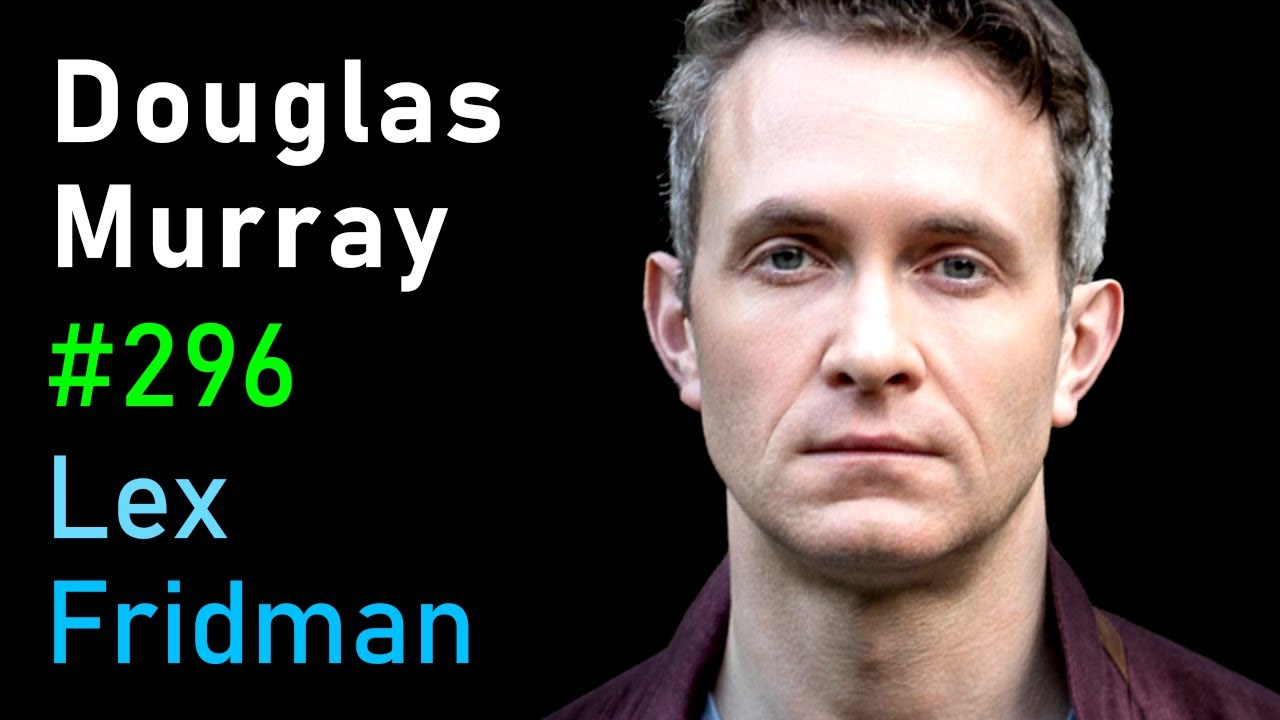
New Lex Fridman Insight: Douglas Murray: Racism, Marxism, and the War on the West
Sent June 11, 2026
Key Insights
- Douglas Murray argues that Western civilization's self-criticism is a unique strength, allowing moral progress like the civil rights movement.
- Murray claims that attributing black underachievement solely to racism ignores factors like family structure and personal decisions.
- He criticizes the revival of Marxism, highlighting its historical failures and Marx's own racist views.
- Murray suggests that critical race theory's activist roots signal a decline in academic rigor.
- He argues that gratitude, not resentment, is key to societal and individual well-being.
How the conversation moved
Lex Fridman opens the discussion by framing the conversation around the perceived war on Western civilization, inviting Douglas Murray to elaborate on his view that Western culture's unique capacity for self-criticism has driven moral progress. Murray begins by asserting that Western civilization, defined by the synthesis of Athens and Jerusalem, possesses an unparalleled ability to introspect and reform, citing the civil rights movement as an example of this self-correcting mechanism. He challenges the notion that slavery is a uniquely Western sin, pointing out that it was a global practice and emphasizing the moral advancements made by the West in addressing it.
Murray's main argument centers on the idea that Western civilization's self-critical nature is a strength rather than a weakness, enabling it to address and rectify historical injustices. He provides evidence by discussing the intentions of America's founding fathers to abolish slavery, as indicated by the Declaration of Independence's assertion that 'all men are created equal.' Murray argues that this principle acted as a 'time bomb' that eventually led to the abolition of slavery. He also critiques the oversimplification of racism as the sole cause of black underachievement, suggesting that other factors like family structure play significant roles.
Lex does not explicitly challenge Murray's framing, though the conversation naturally invites debate on whether Western civilization's self-criticism is indeed unique or whether other cultures possess similar capacities for introspection. Murray's critique of Marxism and its revival could have been a point of contention, but Lex allows Murray to present his views without substantial pushback. Murray's assertion that gratitude is essential for societal well-being, countering resentment, could also be seen as a controversial stance, given the complex socio-political landscape.
The conversation concludes with Murray emphasizing the importance of gratitude over resentment, suggesting it as a solution to societal divisions. He argues that critical race theory's activist origins indicate a decline in academic rigor, a point that remains open for further discussion. Murray's views on the revival of Marxism and the selective critique of historical figures like Marx and Churchill are left as points for the audience to ponder, highlighting the ongoing debate about how societies should engage with their pasts and ideologies. The episode ends without a definitive resolution, leaving listeners to consider the implications of Murray's arguments on contemporary discourse.
Surprising moments
In-depth
Western civilization
- Murray argues Western civilization is defined by a blend of Athens and Jerusalem.
- Self-criticism is a unique strength of the Western mind.
- Slavery is not a uniquely Western sin, but the West has made significant moral progress.
Racism and societal issues
- Racism is often oversimplified as the sole cause of black underachievement.
- Asian Americans' success challenges the narrative of systemic racism as the primary barrier.
- Hereditary sin is applied to white Americans, attributing blame based on ancestry.
Marxism and its critiques
- Marxism has historically failed, leading to millions of thwarted lives.
- Marx's racist views are often overlooked in discussions about his theories.
- Critiques of capitalism can be valuable, but Marxism's revival is questioned.
Critical race theory and academia
- Critical race theory originated as an activist philosophy in law.
- Activism in academia is seen as a sign of decline.
- Critical race theory assumes a return to extreme racism, which is challenged.
Gratitude and resentment
- Gratitude is the antidote to resentment and societal division.
- Resentment is a common human sentiment that can drive societal issues.
- Gratitude can foster positive change, countering the effects of resentment.
Notable Quotes
I will not have the entire landscape deracinated, and then the worst ideas tried again.
Still open
- Murray questions whether the revival of Marxism is justified given its historical failures.
- The conversation leaves open the implications of critical race theory's activist roots on academic rigor.
References & Resources
- The Madness of Crowds by Douglas Murray — Search
- The War on the West by Douglas Murray — Search
- Life and Fate by Vasily Grosman — Search
- The Leopard by Giuseppe Tomasi di Lampedusa — Search
- The Rise and Fall of the Third Reich by William L. Shirer — Search
- The True Believer by Eric Hoffer — Search
- Crowds and Power by Elias Canetti — Search
- The Strange Death of Europe by Douglas Murray — Search
- New York Post by Douglas Murray — Search
- The Doors of Perception by Aldous Huxley — Search
- Lord of the Flies by William Golding — Search
- The World of Yesterday by Stefan Zweig — Search
- Genealogy of Morals by Friedrich Nietzsche — Search
- Putin's Palace by Alexei Navalny — Search