New Lex Fridman Insight: Elon Musk: SpaceX, Mars, Tesla Autopilot, Self-Driving, Robotics, and AI
Sent June 11, 2026
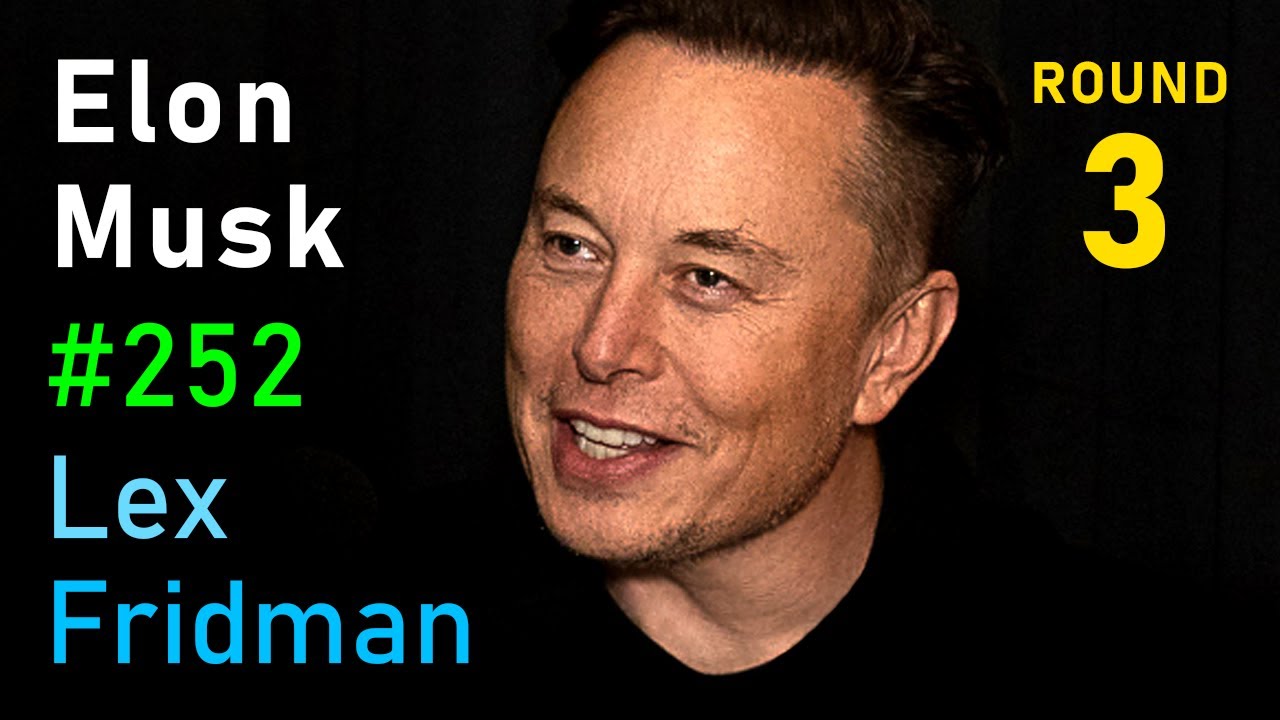
Key Insights
- The Raptor engine's 300 bar pressure surpasses the RD-180's 267 bar, showcasing SpaceX's engineering prowess.
- Mars colonization requires reducing the cost to send one ton to Mars from $1 billion to under $1 million.
- Tesla's neural networks bypass image post-processing, reducing latency by 13ms, enhancing self-driving responsiveness.
- Dogecoin's fixed inflation model makes it more practical than Bitcoin for daily transactions.
- TeslaBot leverages autopilot tech, aiming to make humanoid robots practical and useful.
How the conversation moved
The conversation began with Elon Musk reflecting on the significance of recent human spaceflight missions, such as the Crew Dragon Demo 2 and Inspiration 4, which he sees as pivotal steps towards a new era of space exploration. Musk emphasized the importance of returning to the moon to establish a science base, drawing parallels to research stations in Antarctica. He argued that such a base would advance our understanding of the universe and prevent the Apollo missions from being the pinnacle of human space exploration. This setup framed the broader discussion on the future of space travel and humanity's role in it.
Musk's main argument centered around the engineering challenges and breakthroughs needed for sustainable space exploration and colonization. He highlighted the Raptor engine's 300 bar pressure capability as a significant advancement over existing technology, such as the RD-180 engine. Musk also discussed the financial and logistical hurdles of establishing a self-sustaining city on Mars, emphasizing the need to drastically reduce the cost of transporting materials to the Martian surface. He proposed that achieving full reusability in rocket design is essential for making space travel economically viable, with potential cost reductions of up to 100 times using Starship.
Despite the ambitious goals, there was no significant pushback from Lex Fridman, who largely allowed Musk to elaborate on his vision without challenge. However, the conversation did touch on the complexities of cryptocurrency, where Musk's preference for Dogecoin over Bitcoin was discussed due to its fixed inflation model. This highlighted a potential area of contention, as the practicality and economic implications of such models are still debated. Lex did not challenge Musk's assertions directly, leaving some open questions about the feasibility of these plans and the timeline for their realization.
The conversation concluded with Musk sharing insights on the evolution of Tesla's neural networks and the development of TeslaBot, which leverages autopilot technology. Musk expressed optimism about the future of autonomous driving, noting the improvements in latency and safety standards achieved by Tesla's custom C compiler and neural networks. The discussion also touched on broader themes of human progress and the importance of making a positive impact, with Musk advising young people to pursue useful and fulfilling lives. The episode ended on a hopeful note, with Musk envisioning a future where humanity thrives both on Earth and beyond.
Surprising moments
In-depth
Space Exploration
- Crew Dragon Demo 2 and Inspiration 4 marked significant milestones.
- Musk advocates for a moon base to advance scientific knowledge.
- SpaceX aims to surpass Apollo's achievements.
Rocket Engineering
- Raptor engine's 300 bar pressure sets a new standard.
- Manufacturing challenges include unique materials and alloys.
- Full reusability of rockets is the ultimate goal.
Mars Colonization
- Current cost to Mars is $1 billion per ton.
- A self-sustaining city requires a 1,000x cost reduction.
- Mars city must survive without Earth resupply.
Cryptocurrency
- Bitcoin's latency limits its daily use.
- Dogecoin's fixed inflation is more practical.
- Cryptocurrency's evolution traces back to Nick Szabo.
Autonomous Driving
- Tesla's neural networks reduce latency by 13ms.
- Neural nets replace conventional software, reducing code.
- FSD aims to be significantly safer than human driving.
Notable Quotes
I think we could learn a lot about the nature of the universe if we have a proper science base on the moon, like we have a science base in Antarctica and many other parts of the world.
Still open
- Musk pondered how a self-sustaining Mars city would survive without Earth resupply, acknowledging the challenge.
- The feasibility of reducing Mars transport costs by a factor of 1,000 remains an open question Musk did not fully resolve.
References & Resources
- RD-180 by Russian Rocket Engine — Search
- Stephen Hawking's estimate on civilization-ending events by Stephen Hawking — Search
- The Evolution of Ideas by Nick Szabo — Search
- FSD 10.6 by Tesla — Search
- Hardcore History by Dan Carlin — Search
- The Court of the Red Czar by Simon Sebag Montefiore — Search
- The Entire Soviet Rocket Engine Family Tree by Tim Dodd — Search