New Lex Fridman Insight: Elon Musk: War, AI, Aliens, Politics, Physics, Video Games, and Humanity
Sent May 30, 2026
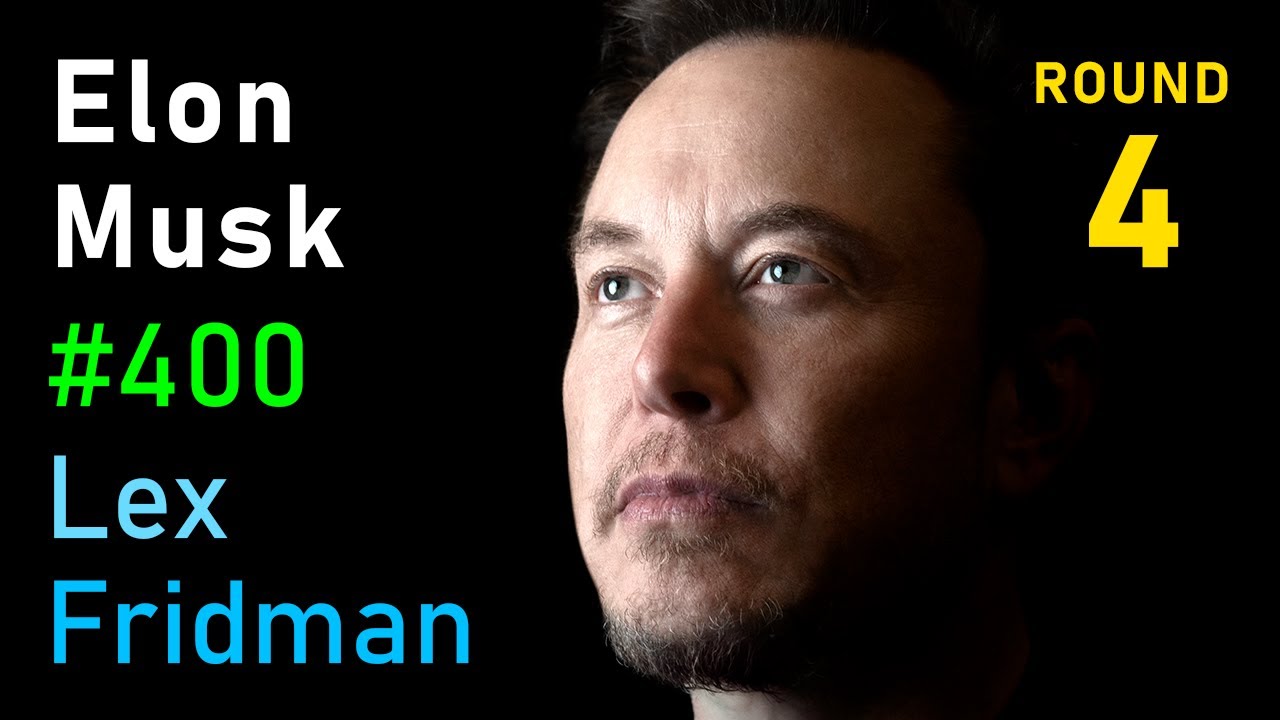
Key Insights
- Elon Musk argues that war is an inherent part of human nature, suggesting that complete peace is unlikely.
- Musk believes AI must discover new physics to match human intelligence, emphasizing the importance of physics in AI development.
- Musk claims SpaceX's satellite network is crucial for monitoring extraterrestrial life, surpassing all other companies combined.
- Musk criticizes OpenAI for shifting from its original open-source mission to a closed-source, profit-driven model.
- Musk highlights Tesla's AI efficiency, achieving high performance with minimal compute power compared to traditional methods.
How the conversation moved
The conversation begins with Elon Musk discussing the nature of war, suggesting that it is an inherent part of human nature and questioning the feasibility of achieving lasting peace. He argues that wars have always existed and will continue to do so, emphasizing the need to address the cycle of violence perpetuated by retaliation. This sets the stage for a broader discussion on the challenges of diplomacy and the potential for peace between superpowers, particularly in the context of historical conflicts and the role of nuclear weapons as a deterrent.
Musk then transitions to the topic of artificial intelligence, asserting that for AI to truly match or surpass human intelligence, it must be capable of discovering new physics. He emphasizes the importance of grounding AI in the principles of physics, suggesting that reality and physics serve as the ultimate tests for AI's capabilities. This argument highlights Musk's belief in the potential for AI to drive significant scientific breakthroughs, provided it is developed with a focus on fundamental scientific discovery rather than incremental improvements.
Despite the depth of Musk's claims, there is a notable lack of pushback from the host regarding the feasibility of AI discovering new physics or the implications of Musk's views on war and peace. This absence of challenge leaves open questions about the practicality of Musk's vision for AI and the broader societal implications of his views on conflict. The conversation also touches on Musk's critique of OpenAI's shift from its original open-source mission to a closed-source, profit-driven model, which he argues undermines the ethical foundation of AI development.
The discussion concludes with Musk highlighting Tesla's approach to AI development, focusing on achieving high efficiency with minimal compute power. He contrasts this with traditional AI methods that rely on brute force and high power consumption, arguing that Tesla's approach is more sustainable and effective. This segment underscores Musk's broader vision for technology development, emphasizing efficiency, sustainability, and the need for regulatory oversight in AI to ensure responsible advancement. The conversation leaves open the potential for further exploration of these themes, particularly in the context of future technological developments.
Surprising moments
In-depth
War and Human Nature
- Musk claims war is rooted in human behavior and unlikely to disappear.
- He suggests that peace efforts must address the cycle of violence perpetuated by retaliation.
AI and New Physics
- AI must discover new physics to match human intelligence.
- Physics serves as the ultimate test for AI's capabilities.
Extraterrestrial Life Monitoring
- SpaceX's satellites outnumber all others and are essential for extraterrestrial monitoring.
- This network positions SpaceX at the forefront of space exploration.
OpenAI's Ethical Shift
- Musk criticizes OpenAI for becoming closed-source and profit-driven.
- This shift raises concerns about transparency and innovation in AI.
Tesla's AI Efficiency
- Tesla's AI operates with minimal power, achieving high efficiency.
- This approach contrasts with traditional, high-power AI methods.
Notable Quotes
The goal of Hamas was to provoke an overreaction from Israel.
Still open
- Musk questions whether AI can truly surpass human intelligence without discovering new physics, leaving open the feasibility of this achievement.
- The host does not challenge Musk's claim that war is an inherent part of human nature, leaving open the debate on the potential for lasting peace.