New Lex Fridman Insight: Erik Brynjolfsson: Economics of AI, Social Networks, and Technology
Sent June 11, 2026
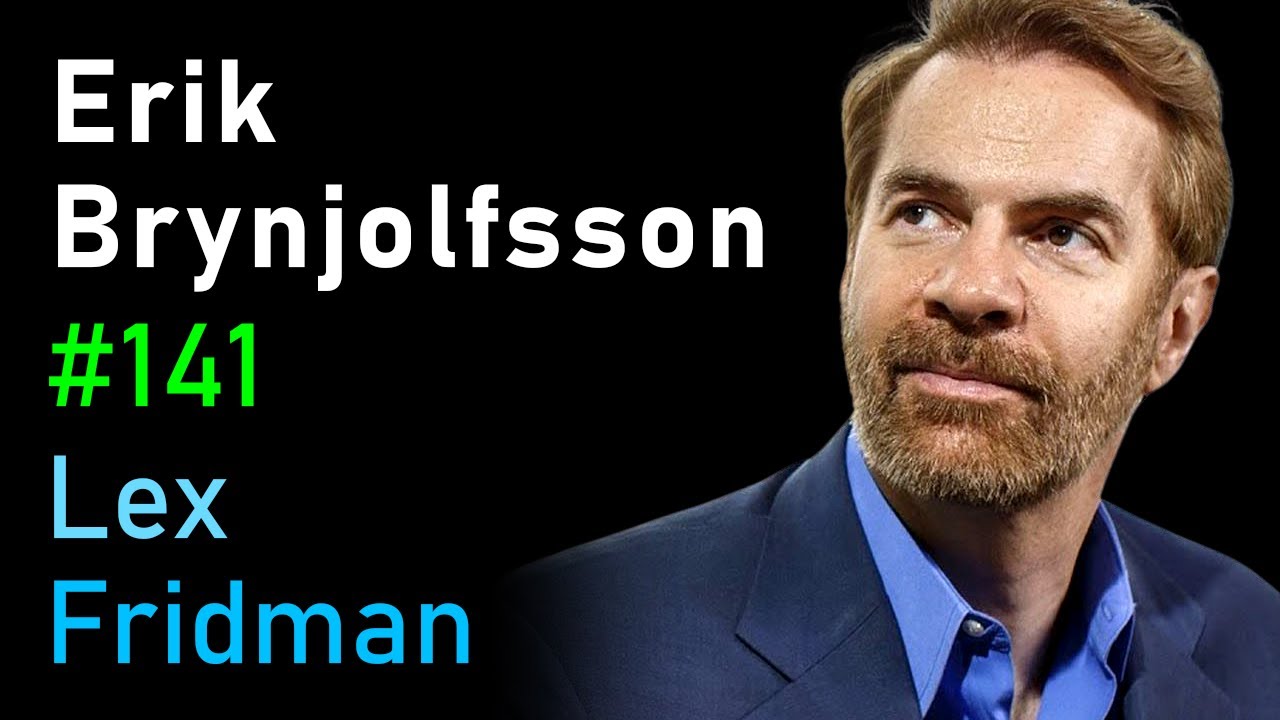
Key Insights
- Exponential growth in technology, like AI, outpaces human institutions, creating societal mismatches.
- AI advancements are driven by faster chips, more data, and improved training techniques, but face data bottlenecks.
- GDP fails to capture the value of free digital services, prompting the need for new metrics like GDP B.
- Remote work and economic inequality are reshaping post-pandemic society, with hysteresis suggesting lasting changes.
- Technological determinism is rejected; individuals must shape technology's societal impact.
How the conversation moved
The episode begins with Erik Brynjolfsson discussing the critical importance of understanding exponential growth, especially in technology. He highlights how this growth can lead to societal mismatches as human institutions and learning processes do not evolve at the same rapid pace. Brynjolfsson uses examples like COVID-19 to illustrate the catastrophic potential of exponential growth if not properly understood. He also points out that while technological advancements are accelerating, human adaptability remains relatively static, creating a significant gap that needs addressing.
Brynjolfsson argues that AI advancements are primarily driven by faster chips, more data, and improved training techniques. He notes that these factors have led to significant improvements in AI capabilities, but also highlights a bottleneck: the finite amount of human-generated data available for training models like GPT-3. This limitation poses a challenge for future AI development, suggesting that new methods of data generation or utilization may be necessary to continue the current pace of AI progress.
Lex Fridman challenges the notion that self-driving cars will soon be fully realized, emphasizing the complexity of achieving autonomy in varied conditions. He references Andrew Ng's argument that focusing on level four autonomy, where vehicles operate only in well-mapped areas, is a more practical approach. This pushback highlights the ongoing debate about the timeline and feasibility of autonomous vehicle deployment, underscoring the challenges that remain in this field despite technological advancements.
The conversation shifts to the economic implications of technology, particularly the inadequacies of GDP in measuring the value of digital goods. Brynjolfsson introduces the concept of GDP B, a new metric designed to account for the benefits derived from free digital services. This proposal addresses the gap in traditional economic measures and reflects the need for innovative approaches to value assessment in the digital age. The episode concludes with a discussion on the role of individuals in shaping technology's impact, rejecting technological determinism in favor of personal responsibility.
Surprising moments
In-depth
Exponential Growth and Technology
- Exponential growth creates societal mismatches as human institutions evolve slower.
- Elon Musk's first principles thinking aids in leveraging exponential growth.
- Coomey's law shows energy efficiency in computing is outpacing speed improvements.
AI Advancements and Challenges
- AI progress is driven by faster chips and more data, but faces data bottlenecks.
- Autonomous vehicles focus on level four autonomy for practical deployment.
- Machine learning can automate tasks but not entire occupations.
Economic Metrics and Digital Goods
- GDP fails to account for free digital services, leading to GDP B proposal.
- Measuring digital goods' value requires innovative methods like choice experiments.
Post-Pandemic Economic Shifts
- Hysteresis suggests lasting changes in remote work and economic inequality.
- Shared prosperity is necessary to address inequalities exacerbated by technology.
Technological Determinism and Responsibility
- Technological determinism is rejected in favor of individual responsibility.
- Platforms can be designed to promote truth or misinformation, impacting democracy.
Notable Quotes
The greatest shortcoming of the human race is our inability to understand the exponential function.
Still open
- Brynjolfsson questioned how society can adapt its institutions to keep pace with exponential technological growth.
- Lex wondered about the long-term feasibility of autonomous vehicles in varied driving conditions.