New Lex Fridman Insight: Gary Marcus: Toward a Hybrid of Deep Learning and Symbolic AI
Sent June 11, 2026
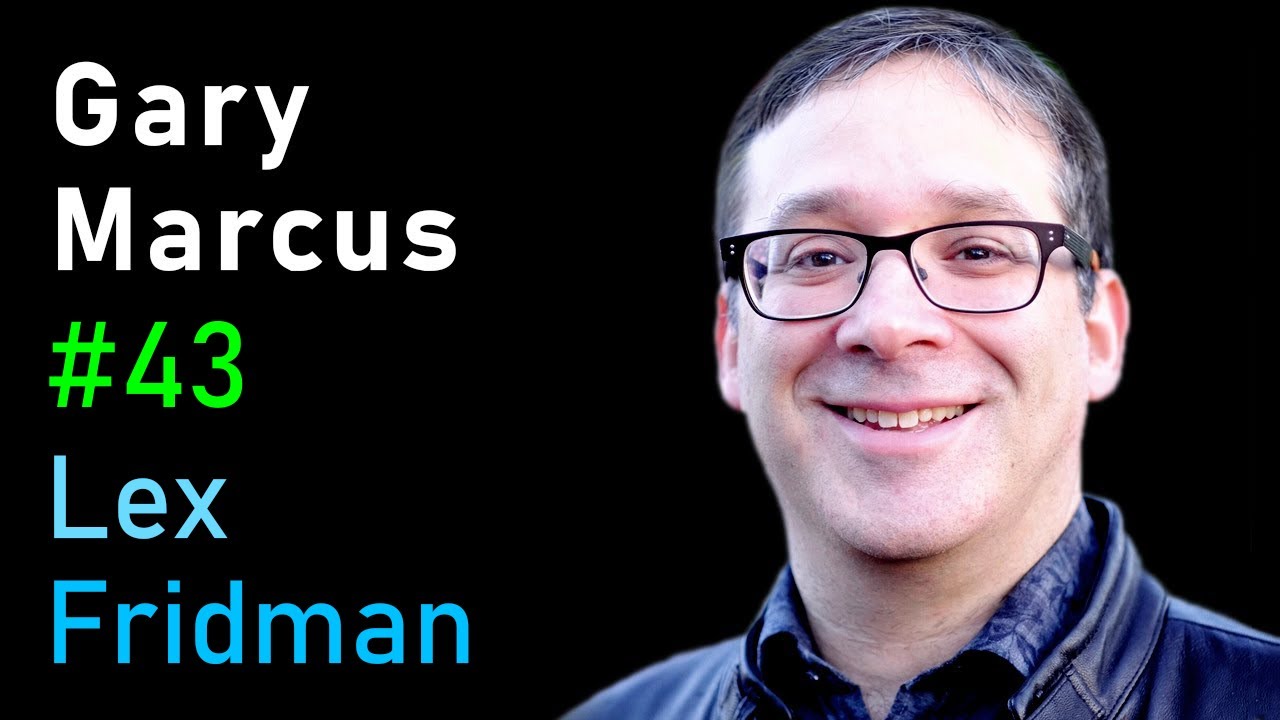
Key Insights
- Gary Marcus argues that AI progress is linear, not exponential, challenging Ray Kurzweil's singularity view.
- Marcus advocates for a hybrid AI approach, combining deep learning with symbolic reasoning for better comprehension.
- Current AI systems excel in specific tasks but lack common sense and generalization across domains.
- Marcus proposes a 'Turing Olympics' to evaluate AI intelligence through diverse challenges.
- Ethical AI development requires translating principles like 'do no harm' into executable code.
How the conversation moved
The conversation begins with Gary Marcus critiquing the notion of a technological singularity, a concept popularized by Ray Kurzweil, suggesting instead that AI progress is linear rather than exponential. Marcus argues that while AI systems are improving, their advancements are not as rapid or transformative as some predict. He highlights that current AI excels in mathematical intelligence and specific tasks like game playing but falls short in understanding natural language and common sense, which are crucial for broader applications.
Marcus's main argument centers on the limitations of current AI systems, particularly their inability to generalize knowledge across different domains. He emphasizes that deep learning systems primarily learn correlations rather than understanding underlying concepts, which limits their effectiveness in real-world applications. Marcus advocates for a hybrid approach, integrating deep learning with symbolic reasoning to address these shortcomings. He proposes the idea of a 'Turing Olympics' to assess AI intelligence through diverse challenges, emphasizing comprehension over traditional metrics.
Lex Fridman challenges Marcus's view by questioning whether deep learning could eventually capture common sense reasoning. Marcus counters by highlighting the necessity of cognitive models and symbolic reasoning in achieving true AI comprehension. The tension arises from differing perspectives on the path forward for AI development, with Marcus advocating for a hybrid approach while acknowledging the current limitations of deep learning. Fridman's skepticism about the feasibility of integrating symbolic reasoning with deep learning adds depth to the discussion.
The conversation concludes with Marcus emphasizing the importance of ethical AI development, particularly the challenge of translating ethical principles into executable code. He argues that AI systems must demonstrate an understanding of harm to be considered trustworthy, a point that underscores the need for ethical committees to guide AI development. Marcus's proposal for a 'Turing Olympics' and his advocacy for a hybrid AI approach highlight his vision for a more comprehensive and ethically grounded future for AI technology.
Surprising moments
In-depth
AI Progress and Singularity
- Marcus argues AI progress is linear, challenging the singularity view.
- Current AI excels in specific tasks but lacks generalization and common sense.
Hybrid AI Approach
- Marcus advocates for integrating deep learning with symbolic reasoning.
- A hybrid approach could enhance AI's comprehension and real-world applicability.
Turing Olympics for AI Evaluation
- Marcus proposes a 'Turing Olympics' to assess AI through diverse challenges.
- This approach emphasizes comprehension over traditional Turing test metrics.
Ethical AI Development
- AI ethics require translating principles like 'do no harm' into code.
- Ethical committees are necessary to guide AI development.
Notable Quotes
I think our place in the food chain has already changed.
Still open
- Marcus questions whether current AI systems can ever truly understand human emotions and motivations.
- Lex Fridman asks if deep learning alone can eventually capture common sense reasoning.