New Lex Fridman Insight: George Hotz: Hacking the Simulation & Learning to Drive with Neural Nets
Sent June 11, 2026
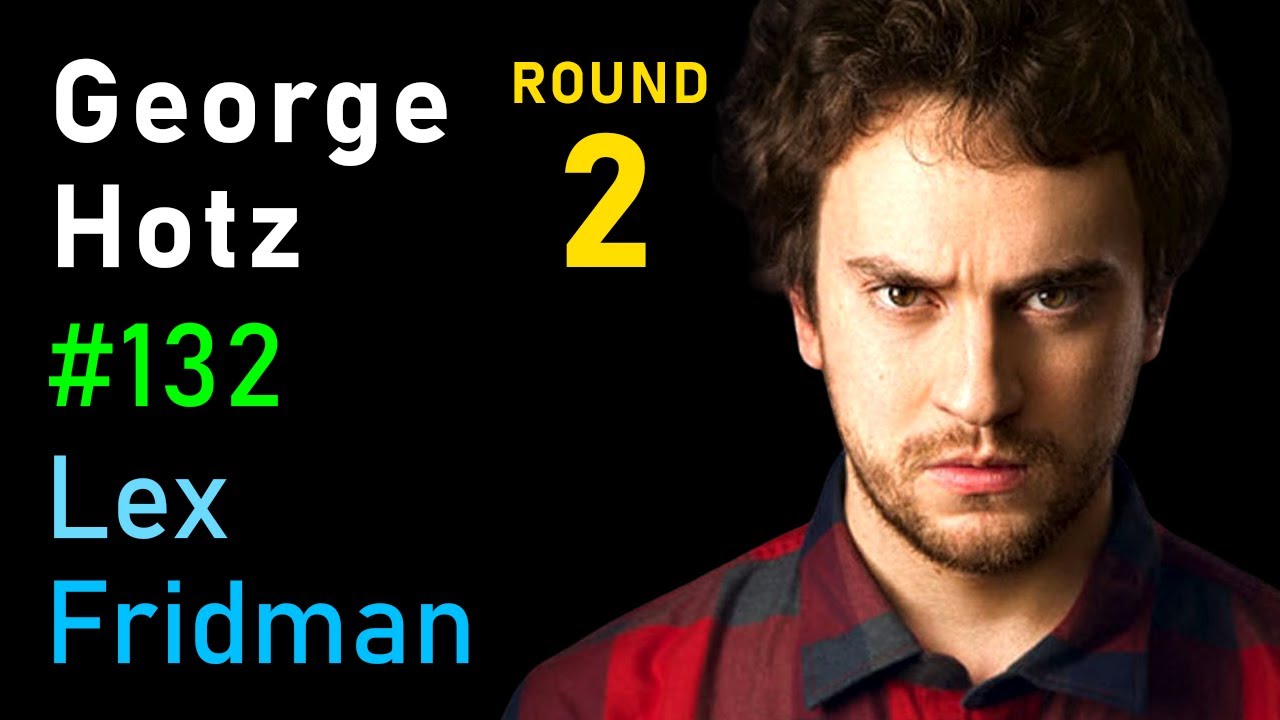
Key Insights
- Comma AI's Comma 2 device, priced at $1,000, supports 91 car models and aims to reach 100 by year-end.
- George Hotz argues that Tesla's multitask learning approach to autonomous driving is flawed compared to end-to-end learning.
- MuZero is highlighted as a cornerstone paper for self-driving technology, with full autonomy expected in the late 2020s.
- Hotz critiques NVIDIA's pricing strategy for high-end chips as unsustainable and potentially harmful long-term.
- Ethereum's layer two solutions improve scalability by running contracts off-chain, posting only results on-chain.
How the conversation moved
Lex Fridman began the conversation by framing the central question around the potential for intelligent life in the universe and the implications of civilizations self-destructing. George Hotz introduced the idea that the IQ required to destroy the world decreases annually, suggesting that technology democratizes destruction. This led to a discussion on the Fermi Paradox and the likelihood of intelligent civilizations wireheading themselves into oblivion. Hotz's perspective was that if intelligent civilizations existed, they would have already taken over the universe unless they self-destructed.
Hotz's main argument centered on the flaws in Tesla's approach to autonomous driving, advocating for an end-to-end learning model over Tesla's multitask learning. He supported his position by highlighting the historical trend in AI where feature engineering approaches are eventually replaced by end-to-end methods. Hotz also pointed to MuZero as a cornerstone paper that could significantly impact self-driving technology, projecting full autonomy in the later 2020s. This claim was backed by his belief that end-to-end learning offers a more scalable solution for achieving level five autonomy.
Lex did not challenge Hotz's critique of Tesla's approach, though the obvious counter-position would be that Tesla's vast data collection and real-world testing offer a practical advantage. Hotz also pushed back against the notion that NVIDIA's high pricing strategy is sustainable, arguing that it could limit accessibility and drive customers to competitors. The tension here lay in contrasting business strategies: maximizing short-term profits versus long-term market dominance.
The conversation pivoted to the technical aspects of Ethereum and its layer two solutions, which Hotz believes enhance scalability by running contracts off-chain. Hotz's critique of NVIDIA's pricing strategy remained unresolved, but he emphasized the importance of open competition and innovation in the cryptocurrency space. The discussion concluded with Hotz's vision of a world where smart contracts replace traditional legal systems, highlighting the potential of decentralized technologies to reshape industries.
Surprising moments
In-depth
Autonomous Driving
- Comma AI's Comma 2 supports 91 car models and aims for 100 by year-end.
- Tesla's multitask learning approach is critiqued as flawed.
- MuZero is pivotal for self-driving technology, with full autonomy expected by late 2020s.
AI Hardware
- NVIDIA's pricing strategy for high-end chips like the A100 is criticized.
- Google's TPU terms restrict autonomous vehicle training, favoring NVIDIA.
Cryptocurrency and Ethereum
- Ethereum's layer two solutions improve scalability by running contracts off-chain.
- Smart contracts offer a reliable alternative to traditional legal agreements.
Notable Quotes
The IQ required to destroy the world falls by one point every year.
Still open
- Hotz questioned whether Tesla's multitask learning approach can achieve level five autonomy, leaving its viability open-ended.
- The conversation raised doubts about NVIDIA's long-term pricing strategy without resolving its potential impact on market competition.