New Lex Fridman Insight: Ginni Rometty: IBM CEO on Leadership, Power, and Adversity
Sent June 11, 2026
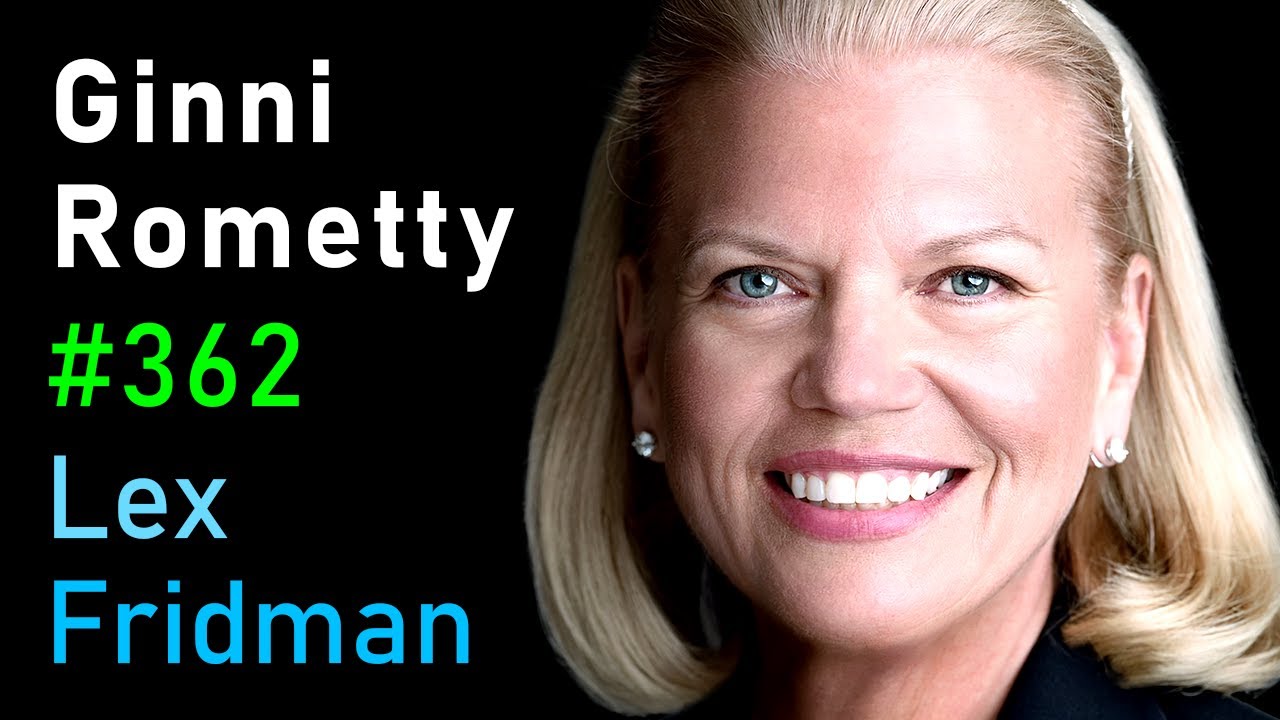
Key Insights
- Ginni Rometty reduced IBM's management layers by half to enhance decision-making speed and autonomy.
- Rometty's leadership focused on hiring for curiosity and adaptability, addressing a skills gap where only 2 out of 10 employees had modern skills.
- IBM's acquisition of Red Hat for $34 billion was a strategic pivot towards hybrid cloud, despite financial risks.
- Rometty emphasizes 'good power,' which involves meaningful action and responsibility in technology.
- The 110 initiative aims to elevate 1 million Black employees into the middle class without requiring college degrees.
How the conversation moved
The conversation opens with Ginni Rometty discussing her tenure as CEO of IBM, focusing on the challenges of leading a massive organization with 280,000 employees. She highlights the necessity of reducing management layers to improve decision-making speed and autonomy, emphasizing that processes should not overshadow customer needs. Rometty frames leadership as a non-popularity contest, underscoring the importance of making tough decisions that may not always be well-received but are essential for progress.
Rometty's main argument centers on the importance of hiring for curiosity and adaptability, rather than traditional qualifications, to address a significant skills gap within IBM. She notes that when she took over, only 2 out of 10 employees had the skills needed for the future, prompting a shift in hiring practices. This approach aligns with her broader leadership philosophy that values continuous learning and flexibility as crucial traits in a rapidly evolving industry.
Lex did not challenge Rometty's emphasis on hiring for adaptability over traditional qualifications, though a potential counterpoint could be the risk of undervaluing domain expertise. The conversation also touched on IBM's strategic decisions, such as the acquisition of Red Hat for $34 billion, a move that involved significant financial risk but was aimed at positioning IBM as a leader in hybrid cloud solutions. This decision highlighted the tension between long-term strategic vision and short-term financial pressures.
The discussion concludes with Rometty's reflections on 'good power,' a leadership philosophy that combines meaningful action with ethical responsibility. This concept serves as a pivot from traditional power dynamics, focusing on empathy and collaboration. The conversation also explores Rometty's post-retirement initiatives, such as the 110 project, which aims to elevate Black employees into the middle class without requiring college degrees, challenging the traditional pathways to career advancement. The episode closes with an emphasis on the importance of diversity and inclusion in leadership.
Surprising moments
In-depth
Leadership and Organizational Change
- Rometty reduced IBM's management layers by half to improve decision-making.
- She prioritized hiring for curiosity and adaptability to close skills gaps.
- IBM's core mission involves essential global infrastructure work.
Strategic Business Decisions
- IBM's acquisition of Red Hat was a strategic move towards hybrid cloud.
- The acquisition involved significant financial risks but aimed to redefine IBM's market position.
Ethical Leadership and Good Power
- Rometty emphasizes 'good power,' which involves meaningful and responsible action.
- She discusses the importance of empathy and collaboration in leadership.
Diversity and Workforce Initiatives
- The 110 initiative aims to elevate 1 million Black employees into the middle class without college degrees.
- Rometty implemented returnships for those who left the workforce for family reasons.
Notable Quotes
I always say to people, your process is not your customer.
Still open
- What are the long-term impacts of IBM's strategic pivot towards hybrid cloud on its financial stability?
- How will the 110 initiative reshape traditional hiring practices and workforce dynamics?