New Lex Fridman Insight: Guillaume Verdon: Beff Jezos, E/acc Movement, Physics, Computation & AGI
Sent May 30, 2026
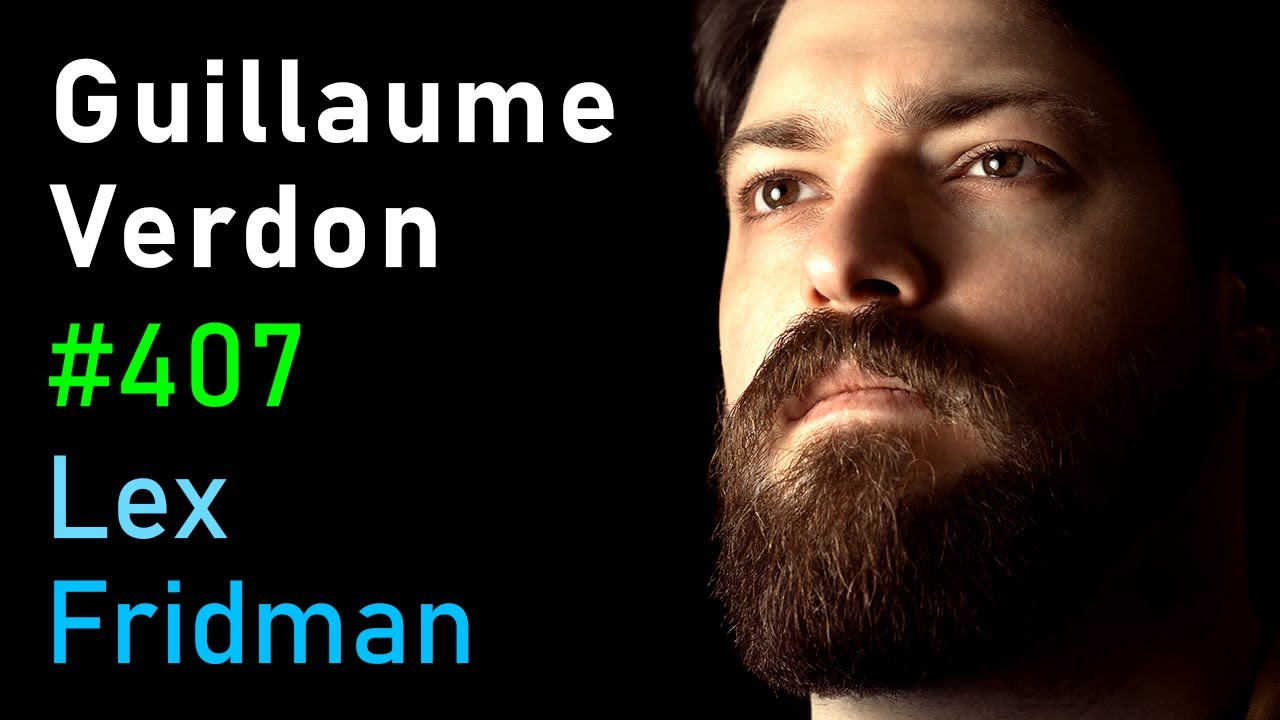
Key Insights
- Guillaume Verdon argues that e/acc promotes rapid technological progress as ethically optimal, contrasting with decelerationist views.
- Verdon highlights the risks of centralized AI control, advocating for decentralized systems to prevent authoritarian power.
- Quantum computing, according to Verdon, can simulate complex systems, potentially transforming AI and physics understanding.
- Verdon critiques AI safety funding allocations, suggesting market-driven budgets over arbitrary safety percentages.
- He proposes that effective altruism's focus on minimizing suffering may lead to counterproductive outcomes like wireheading.
How the conversation moved
The episode begins with Guillaume Verdon outlining his journey from theoretical physics to quantum machine learning, framing his work within the philosophy of effective accelerationism (e/acc). Verdon positions e/acc as a movement advocating for rapid technological progress as the ethically optimal path, contrasting with decelerationist ideologies that promote slowing technological advancement. This setup introduces the core theme of the conversation: the balance between technological acceleration and societal impact, with Verdon emphasizing the role of AI as a social equalizer.
Verdon's main argument centers on the risks of centralized AI control and the importance of decentralization to prevent authoritarian power. He provides concrete examples, such as the potential for a government-backed AI cartel, and argues for decentralized control to maintain fault tolerance and innovation. Verdon also critiques the recommendation to allocate a fixed percentage of AI funding to safety, suggesting that market-driven budgets would better align safety with competitive needs, thus fostering a more dynamic and responsive AI ecosystem.
Lex Fridman did not explicitly challenge Verdon's framing on decentralization and market-driven safety budgets, though a potential counter-position could argue that some level of centralization might be necessary to ensure global standards and prevent misuse. The conversation also touches on the controversial nature of doxxing in tech discourse, with Verdon defending anonymity as crucial for free speech and innovation. This tension highlights the complex interplay between transparency, privacy, and progress in the tech industry.
The conversation concludes with Verdon exploring the transformative potential of quantum computing in AI and physics, suggesting that quantum systems could simulate complex phenomena more efficiently than classical methods. He also critiques effective altruism's focus on minimizing suffering, proposing a shift towards objective energy measures to guide progress. The discussion ends with an open question about the future of AI and the role of physics-based approaches in achieving general intelligence, leaving room for further exploration of these emerging themes.
Surprising moments
In-depth
E/acc Movement and Technological Progress
- E/acc promotes rapid technological progress as ethically optimal.
- It contrasts with decelerationist ideologies that advocate slowing down tech advances.
- The movement views AI as a social equalizer and a means to foster growth.
AI Centralization vs. Decentralization
- Centralized AI control poses risks of authoritarian power.
- Decentralized systems are advocated to prevent monopolistic control.
- Market-driven safety budgets are preferred over arbitrary allocations.
Quantum Computing's Role in AI
- Quantum computing can simulate complex systems, transforming AI.
- Quantum error correction is crucial for maintaining quantum states.
- Verdon is optimistic about quantum computing's future impact.
Critique of Effective Altruism
- Effective altruism's focus on minimizing suffering may lead to wireheading.
- Verdon suggests focusing on objective energy measures rather than subjective hedonism.
- This approach could redirect efforts towards more impactful solutions.
Notable Quotes
I realized that I wanted to not only understand how the universe computes, but sort of compute like nature and figure out how to build and apply computers that are inspired by nature.
Still open
- Verdon questions whether decentralized AI systems can truly prevent authoritarian control without introducing new risks.
- He raises the issue of whether effective altruism's focus on minimizing suffering might inadvertently lead to unproductive outcomes like wireheading.