New Lex Fridman Insight: Infinity, Paradoxes, Gödel Incompleteness & the Mathematical Multiverse | Lex Fr
Sent May 31, 2026
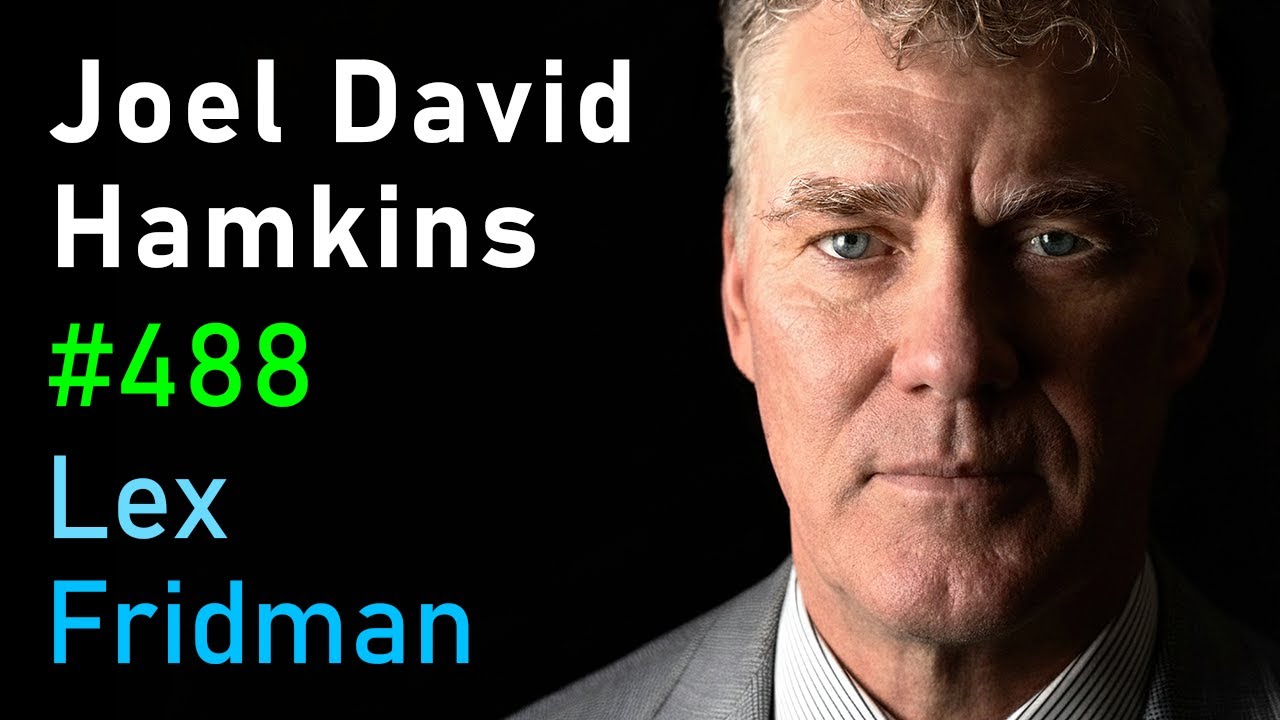
Key Insights
- Cantor's discovery of different infinities sparked a major philosophical and mathematical debate.
- Gödel's incompleteness theorems show that no consistent mathematical system can prove all truths within its framework.
- The continuum hypothesis remains undecidable within Zermelo-Fraenkel set theory with the axiom of choice (ZFC).
- Hamkins argues that AI is not yet reliable for mathematical reasoning due to its tendency to produce incorrect proofs.
How the conversation moved
Lex framed the episode around the grand themes of mathematical philosophy, particularly focusing on the nature of infinity, paradoxes, and Gödel's incompleteness theorems. Joel David Hamkins began by discussing Cantor's contributions, emphasizing the revolutionary idea that infinities can have different sizes, which sparked significant debate in the mathematical community. This set the stage for exploring how these concepts challenge traditional views of mathematical certainty and completeness.
Hamkins elaborated on Gödel's incompleteness theorems, providing a detailed explanation of how these theorems establish the limitations of formal mathematical systems. He highlighted that no system can prove all truths or its own consistency, using these insights to argue for a more nuanced understanding of mathematical truth versus provability. This discussion was supported by historical context and examples, such as the implications for Hilbert's program and the philosophical underpinnings of mathematical logic.
Despite the depth of the conversation, Lex did not challenge Hamkins on the potential implications of these theorems for practical mathematics or computational fields. The conversation lacked a direct counter-position, such as questioning whether these theoretical limitations significantly impact everyday mathematical practice or computational applications. Hamkins' views on AI and mathematical reasoning were also presented without significant pushback, though he expressed skepticism about AI's current capabilities in producing reliable proofs.
The discussion concluded with Hamkins' reflections on the continuum hypothesis and the multiverse view in set theory. He explained the undecidability of the continuum hypothesis within ZFC, suggesting that this reflects the inherent complexity and richness of mathematical structures. The conversation pivoted towards the implications of these ideas for understanding mathematical truth, with Hamkins advocating for a pluralistic view that embraces the diversity of mathematical realities. This left open questions about the future of mathematical exploration and the role of AI in this evolving landscape.
Surprising moments
In-depth
Infinity and its implications
- Cantor's discovery led to a mathematical and philosophical crisis.
- Hilbert's Hotel illustrates paradoxes of infinity.
Gödel's Incompleteness Theorems
- Gödel's first theorem shows no system can prove all truths.
- The second theorem states no system can prove its own consistency.
The Continuum Hypothesis
- The hypothesis is undecidable within ZFC.
- It highlights the limitations of current mathematical frameworks.
AI in Mathematics
- Hamkins argues AI is unreliable for proofs.
- AI often produces incorrect or ungrounded arguments.
Notable Quotes
Some infinities are bigger than others.
Still open
- Hamkins questioned whether AI can ever achieve the reliability required for mathematical reasoning, leaving the future of AI in this domain uncertain.