New Lex Fridman Insight: Ishan Misra: Self-Supervised Deep Learning in Computer Vision
Sent June 11, 2026
Key Insights
- Self-supervised learning uses data itself as supervision, eliminating the need for labeled datasets like ImageNet, which took 22 human years to annotate.
- Self-supervised learning in computer vision can predict missing elements in sequences, such as video frames, enhancing model understanding.
- Contrastive learning in self-supervised contexts uses positive and negative pairs to learn embeddings, crucial for both NLP and computer vision.
- The SEER system trains large models using uncurated internet images, moving away from biases of curated datasets like ImageNet.
- PyTorch is favored over TensorFlow for its ease of debugging, aligning with imperative programming paradigms.
How the conversation moved
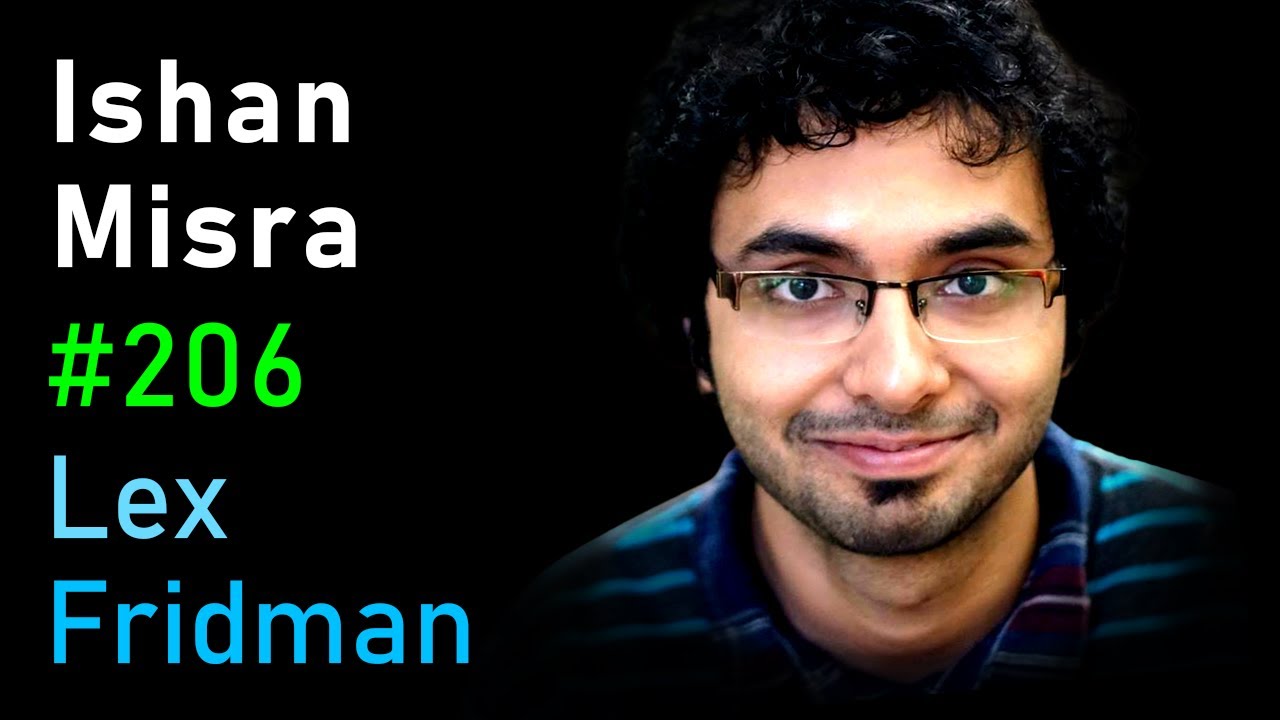
Lex Fridman opens the conversation by asking Ishan Misra to explain the concept of self-supervised learning and its potential impact on the field of machine learning. Misra frames self-supervised learning as a revolutionary approach that uses the data itself as a source of supervision, eliminating the need for extensive labeled datasets like ImageNet, which required 22 human years to annotate. This method, Misra argues, could address the scalability issues inherent in traditional supervised learning, allowing models to learn from vast amounts of unlabeled data.
Misra elaborates on the techniques used in self-supervised learning, such as predicting missing elements in sequences, which enhances a model's understanding of the world without explicit labels. He emphasizes the role of contrastive learning, where models learn to distinguish between positive and negative pairs, a method crucial for both natural language processing and computer vision. Misra also introduces the SEER system, which trains models using uncurated internet images, moving away from the biases of curated datasets like ImageNet.
Despite the promising advancements, Lex does not challenge Misra's claims directly, though the conversation touches on potential limitations of self-supervised learning. Misra acknowledges that while self-supervised learning is not a panacea, it represents a significant step forward in machine learning. The discussion also highlights the challenges of scaling contrastive learning, which requires many negative samples, and the need for intelligent data augmentation techniques.
The conversation concludes with a discussion on the practical applications of these technologies and the tools used in their development. Misra discusses the advantages of PyTorch over TensorFlow, particularly its ease of debugging and alignment with imperative programming paradigms. This accessibility, Misra suggests, accelerates the development cycle, making it a preferred choice for many researchers and developers. The episode wraps up with Misra's reflections on the future of self-supervised learning and its potential to transform the field.
Surprising moments
In-depth
Self-Supervised Learning
- Self-supervised learning uses data as its own supervision, bypassing the need for labeled datasets.
- It allows models to predict missing elements in sequences, enhancing understanding.
- Self-supervised learning can scale machine learning by leveraging vast unlabeled data.
Contrastive Learning
- Contrastive learning uses positive and negative pairs to learn embeddings.
- It is crucial for both NLP and computer vision applications.
- Such learning helps models distinguish between similar and dissimilar data.
SEER System
- SEER trains models using uncurated internet images, avoiding biases of curated datasets.
- It aims to improve model generalization by using diverse, real-world data.
- The system represents a shift in AI training methodologies.
Frameworks: PyTorch vs TensorFlow
- PyTorch is easier to debug due to its imperative nature.
- The open-source community supports rapid translation between frameworks.
- PyTorch aligns with how many are taught programming, making it more accessible.
Notable Quotes
The reason it has the term supervised in itself is because you're using the data itself as supervision.
Still open
- What are the limitations of self-supervised learning in addressing fundamental questions of object definition in computer vision?
- How can data augmentation techniques be improved to be more intelligent and context-aware?
References & Resources
- Self-Supervised Learning, the Dark Matter of Intelligence by Ishan Misra and Yann LeCun — Search
- Generative Adversarial Networks by Ian Goodfellow — Search
- Variational Autoencoders by D. P. Kingma and M. Welling — Search
- Designing Network Design Spaces by Unknown — Search
- Kinetics Dataset by Google — Search