New Lex Fridman Insight: Jed Buchwald: Isaac Newton and the Philosophy of Science
Sent June 11, 2026
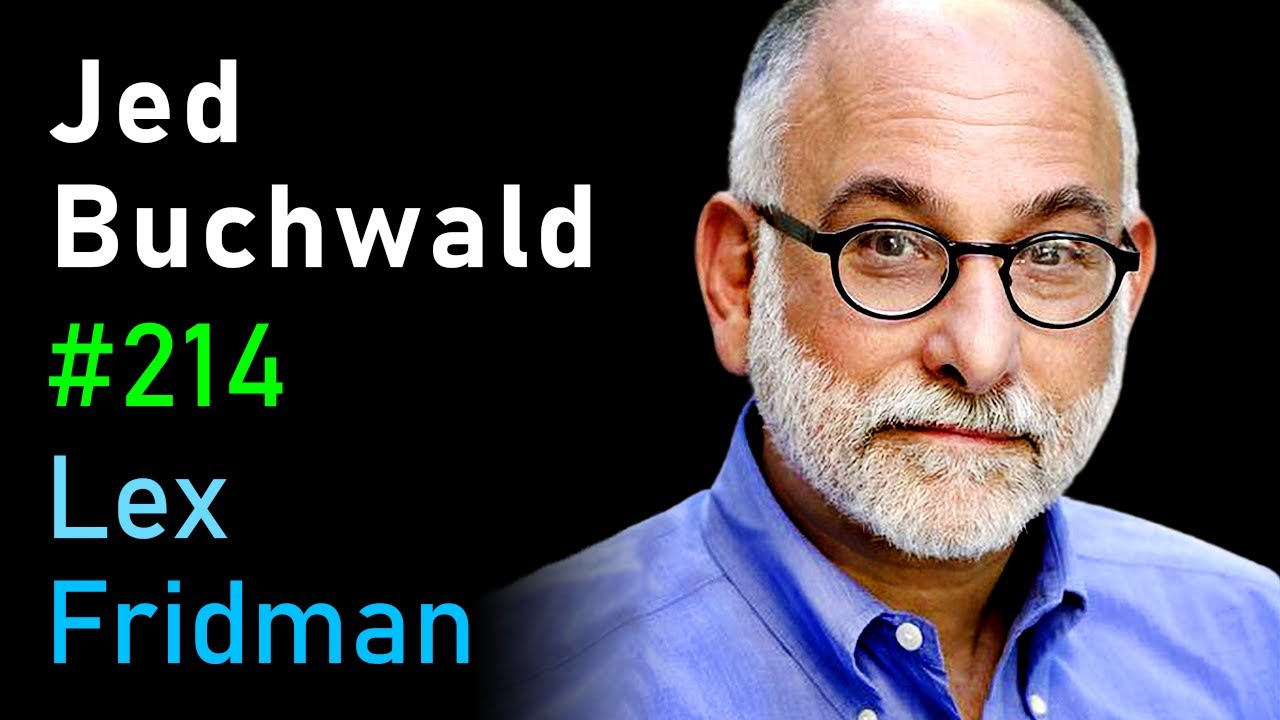
Key Insights
- Jed Buchwald challenges Kuhn's paradigm shift theory, arguing scientific progress is more complex and not solely driven by shifts.
- Isaac Newton's prism experiments showed colors are inherent in sunlight, contradicting the belief that colors are modifications of white light.
- Newton's skepticism of sensory evidence influenced his scientific methodology, emphasizing constructed devices over human perception.
- The controversy over calculus between Newton and Leibniz highlights the competitive dynamics in scientific development.
- Newton's religious beliefs, such as creationism and anti-Trinitarianism, contrasted with his scientific achievements.
How the conversation moved
The episode begins with Jed Buchwald critiquing Thomas Kuhn's influential theory of paradigm shifts, which posits that scientific progress occurs through revolutionary changes in scientific understanding. Buchwald, who was Kuhn's research assistant over fifty years ago, argues that this view oversimplifies the nature of scientific progress. He believes that while paradigm shifts do happen, they are not as neat or direct as Kuhn suggested. Instead, Buchwald emphasizes the importance of a common structure in theoretical and experimental practices, using the wave theory of light as an example where scientific evolution was more complex than a simple shift from Newtonian particle theory.
Buchwald continues by discussing the nature of scientific discovery, challenging the notion that key figures like Newton or Galileo were solely responsible for scientific advancements. He argues that the context of the time would have led to similar discoveries by other thinkers. This sets the stage for a broader discussion on the limitations of human understanding of reality and the concept of a theory of everything in physics, particularly through string theory. Buchwald notes that while the standard model is effective for large particle accelerators, it does not necessarily mean we have reached the depths of reality, questioning the uniqueness of our universe's laws.
The conversation then shifts to Isaac Newton's contributions to optics and his innovative experimental methods. Newton's prism experiments, which revealed that colors are inherent in sunlight, challenged the prevailing belief that colors were modifications of white light. This segment also touches on Newton's skepticism of sensory evidence, which influenced his scientific methodology. Buchwald highlights the controversy with Robert Hooke, who dismissed Newton's findings as already known or incorrect. Despite this, Newton's manipulative experimentation, such as adjusting the prism by hand, showcased his unique approach to scientific inquiry.
Finally, the episode explores historical scientific rivalries, focusing on the calculus controversy between Newton and Leibniz. This rivalry highlights the competitive dynamics in the development of scientific ideas, where personal rivalries can drive innovation. The discussion also touches on Newton's religious beliefs, such as his creationist views and anti-Trinitarianism, which contrast with his scientific achievements. The conversation concludes by comparing Newton's work with that of Einstein, noting the significant advancements in mathematical structures and experimental devices that bridged the gap between their theories.
Surprising moments
In-depth
Scientific Progress and Paradigm Shifts
- Buchwald argues against the simplicity of Kuhn's paradigm shifts.
- Scientific progress involves both theoretical and experimental practices.
- The wave theory of light as an example of complex scientific evolution.
Newton's Contributions to Optics
- Newton's prism experiments revealed colors in sunlight.
- His experimental methods challenged prevailing notions.
- Controversy with Robert Hooke over Newton's findings.
Perception and Scientific Methodology
- Newton's skepticism of sensory evidence influenced his methods.
- Hooke's emphasis on constructed devices over perception.
- Newton and Hooke's correspondence on motion and gravity.
Historical Scientific Rivalries
- The calculus controversy between Newton and Leibniz.
- Intellectual rivalry and its impact on scientific progress.
- Arago and Biot's contentious relationship in optics.
Newton's Religious Beliefs
- Newton's creationist beliefs based on biblical chronology.
- His anti-Trinitarian views and skepticism of post-Christ miracles.
- Comparison with Einstein's scientific advancements.
Notable Quotes
I got into this field because I was Tom Kuhn's research assistant 50 years ago, 52 years ago.
Still open
- Buchwald questions whether scientific discoveries are inevitable or contingent on key figures like Newton and Galileo.
- The conversation raises the question of whether a theory of everything in physics is truly achievable.