New Lex Fridman Insight: Jeff Bezos: Amazon and Blue Origin
Sent May 30, 2026
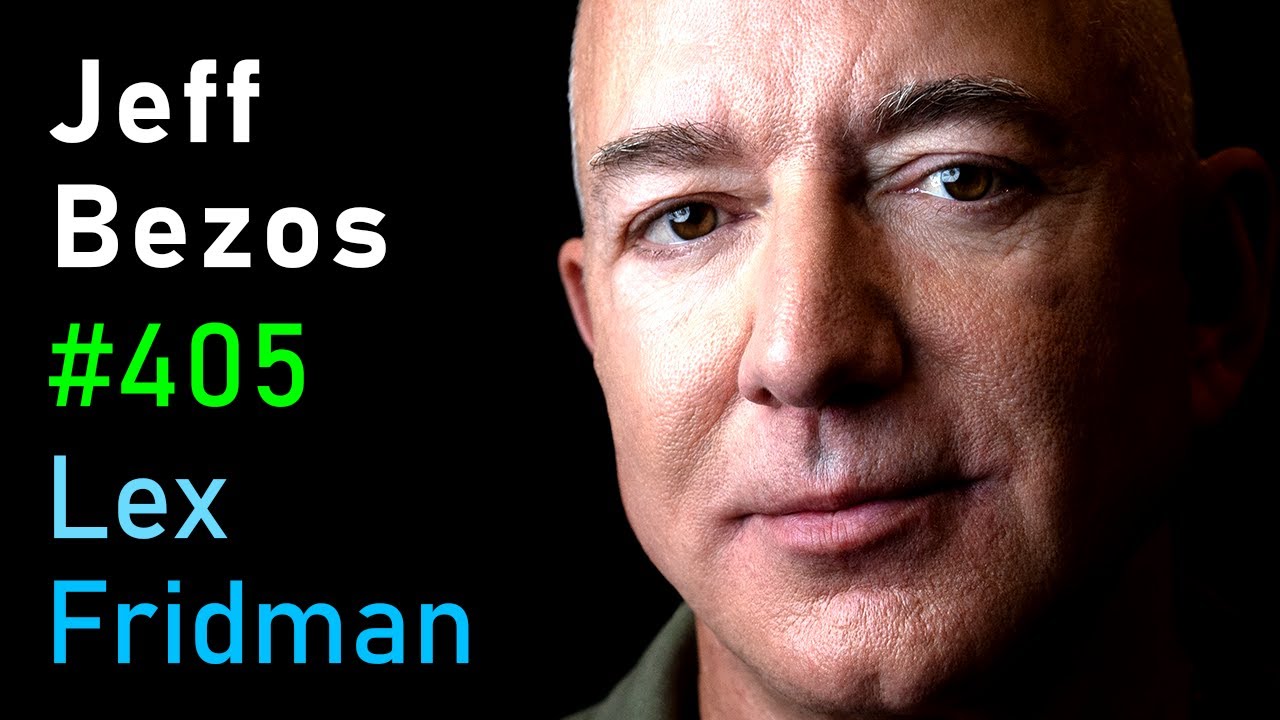
Key Insights
- Bezos envisions a future with a trillion humans living in space, using resources from the moon and asteroids.
- Blue Origin's New Glenn rocket is designed to lift 45 metric tons to low Earth orbit, with a thrust of 3.9 million pounds.
- Bezos argues that most company decisions are reversible, advocating for quick decision-making and experimentation.
- Bezos highlights the importance of data-driven decision-making, allowing junior employees to overrule seniors with data.
- Bezos believes AI will help humanity avoid self-destruction by providing powerful tools for problem-solving.
How the conversation moved
The conversation begins with Jeff Bezos reflecting on his childhood experiences on a ranch, which he credits with teaching him self-reliance and problem-solving skills. This sets the stage for his broader vision of humanity's future in space, where he imagines a trillion humans living in the solar system. Bezos argues that moving heavy industry to space is essential for preserving Earth and that energy usage per capita must increase for continued societal advancement. His vision includes giant space stations and utilizing resources from the moon and asteroid belt, which he believes will support this ambitious future.
Bezos then discusses the capabilities of Blue Origin, particularly the Blue Ring spacecraft and the New Glenn rocket. The Blue Ring can carry up to 3,000 kilograms of payload to geosynchronous orbit, while the New Glenn rocket is designed to lift 45 metric tons to low Earth orbit. Bezos emphasizes the importance of building heavy infrastructure for space to enable future entrepreneurs to start companies, similar to the internet boom. He also highlights the engineering challenges of building rockets, noting that larger turbo pumps are more efficient and that friction stir welding allows for stronger welds.
Throughout the conversation, Bezos emphasizes the importance of decision-making frameworks and a culture of innovation. He argues that most company decisions are reversible and should be made quickly, advocating for a culture where junior employees can overrule seniors if they have data. This approach fosters a dynamic environment that encourages experimentation and rapid adaptation. However, there is little pushback from the host, leaving some of Bezos's more controversial claims, such as the feasibility of his space vision, largely unchallenged.
The conversation concludes with Bezos discussing the potential benefits of AI and the importance of long-term thinking. He believes that AI will help humanity avoid self-destruction by providing powerful tools for problem-solving. Bezos also introduces the concept of the 10,000-Year Clock as a symbol of long-term thinking, emphasizing the need for humans to extend their thinking horizons beyond five years to better address future challenges like climate change. The discussion leaves open questions about the practical implementation of Bezos's ambitious visions, particularly in space exploration and AI.
Surprising moments
In-depth
Space Vision and Preservation
- Bezos envisions a trillion humans in space supported by giant space stations.
- Moving heavy industry to space is essential for Earth's preservation.
Blue Origin's Technological Capabilities
- Blue Ring can carry up to 3,000 kg to geosynchronous orbit.
- New Glenn rocket can lift 45 metric tons to low Earth orbit.
Decision-Making and Innovation
- Most decisions are reversible and should be made quickly.
- Day one thinking prevents organizational stagnation.
Data-Driven Culture
- Junior employees can overrule seniors with data.
- Anecdotal evidence can be more reliable than flawed data.
AI's Role in Humanity's Future
- AI could prevent human self-destruction by providing powerful tools.
- AI models like ChatGPT are discoveries, not inventions.
Still open
- Bezos's vision of a trillion humans in space raises questions about the feasibility and timeline for such an endeavor.
- The practicality of moving heavy industry to space to preserve Earth remains an open question.