New Lex Fridman Insight: Jeff Hawkins: The Thousand Brains Theory of Intelligence
Sent June 11, 2026
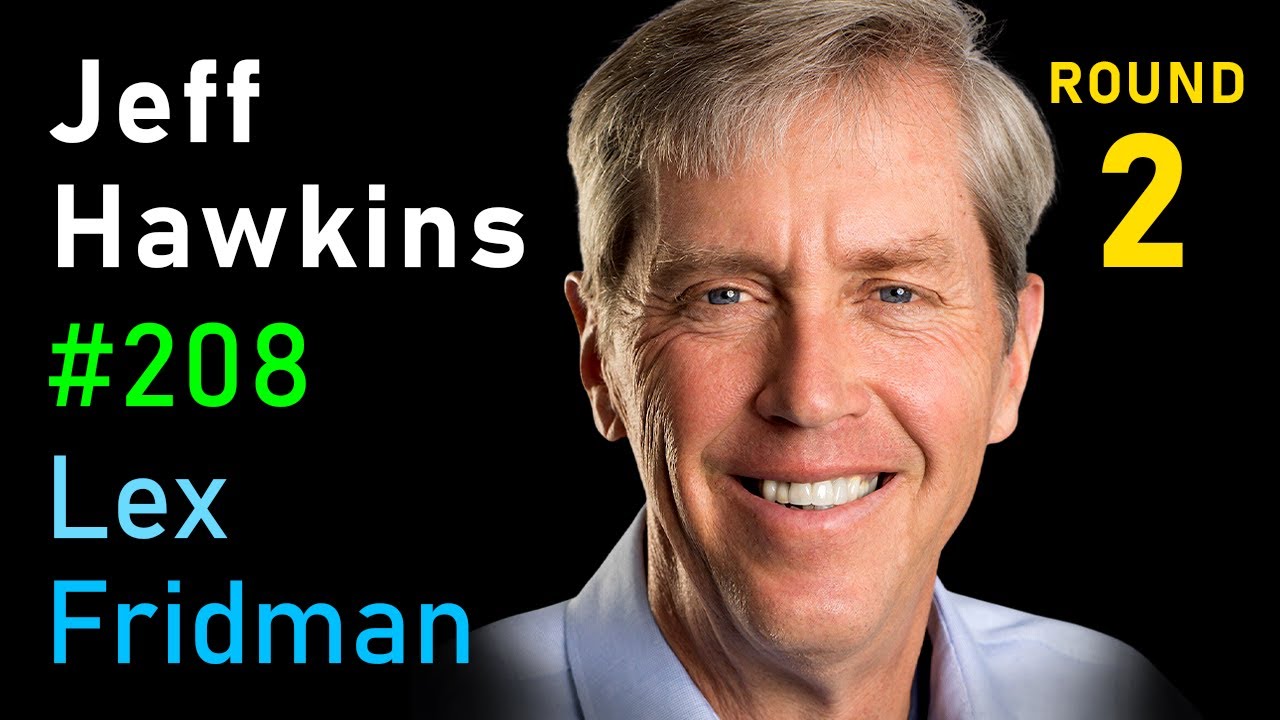
Key Insights
- The Thousand Brains Theory posits that the neocortex contains 150,000 independent modeling systems, each acting as a complete model.
- Jeff Hawkins argues that intelligence is the ability to learn a model of the world, emphasizing interaction over passive observation.
- AI systems, according to Hawkins, won't develop desires or agency without explicit programming, countering common fears.
- Self-replication in AI poses significant risks, potentially leading to uncontrolled consequences if not regulated.
- Preserving human knowledge for future intelligent life could involve innovative methods like satellite archives.
How the conversation moved
Lex Fridman opens the conversation by framing the discussion around the preservation of human knowledge for future civilizations and the implications of intelligence. Jeff Hawkins introduces the idea that if human civilization were to end, all of our knowledge would vanish, emphasizing the need to preserve it for potential future intelligent beings. He suggests that the essence of human experiences, such as love, should be prioritized over mere factual data when communicating with potential alien civilizations.
Hawkins then delves into the Thousand Brains Theory of Intelligence, explaining that the neocortex consists of about 150,000 independent modeling systems, each capable of building its own model of the world. This decentralizes the traditional view of intelligence, suggesting that knowledge is stored in thousands of separate models that communicate through voting mechanisms. Intelligence, according to Hawkins, is the ability to learn a model of the world, which requires active interaction with the environment rather than passive observation.
Lex does not challenge Hawkins' framing of the Thousand Brains Theory, but the conversation does explore potential pushbacks regarding AI agency. Hawkins argues that AI systems will not develop desires or agency without explicit programming, countering common fears about autonomous AI. He emphasizes that the existential risk of AI lies in human application and deployment rather than the AI's inherent capabilities. This perspective shifts the focus from AI autonomy to the responsibilities of human programmers.
The discussion concludes by addressing the risks associated with self-replication in AI, which Hawkins identifies as a significant existential threat. He advocates for regulation to prevent uncontrolled consequences and suggests innovative methods for preserving human knowledge, such as using satellites to archive information for future intelligent species. The conversation ends with a reflection on the potential for intelligent machines to transcend human limitations and preserve knowledge beyond the existence of biological life.
Surprising moments
In-depth
Thousand Brains Theory
- The neocortex contains about 150,000 independent modeling systems.
- Knowledge is represented in thousands of separate models that communicate through voting.
- Learning occurs through interaction, not just observation.
AI and Agency
- AI systems won't develop desires without explicit programming.
- The existential risk of AI is due to human application, not AI autonomy.
Preservation of Knowledge
- Preserving knowledge involves innovative methods like satellite archives.
- Future intelligent systems may need to travel to preserve knowledge beyond biological limits.
Notable Quotes
If human civilization were to destroy itself, all of knowledge, all our creations will go with us.
Still open
- How can we effectively preserve human knowledge for future intelligent life beyond biological limitations?
- What regulatory frameworks are necessary to mitigate the risks associated with self-replicating AI systems?