New Lex Fridman Insight: Jeff Hawkins: Thousand Brains Theory of Intelligence
Sent June 11, 2026
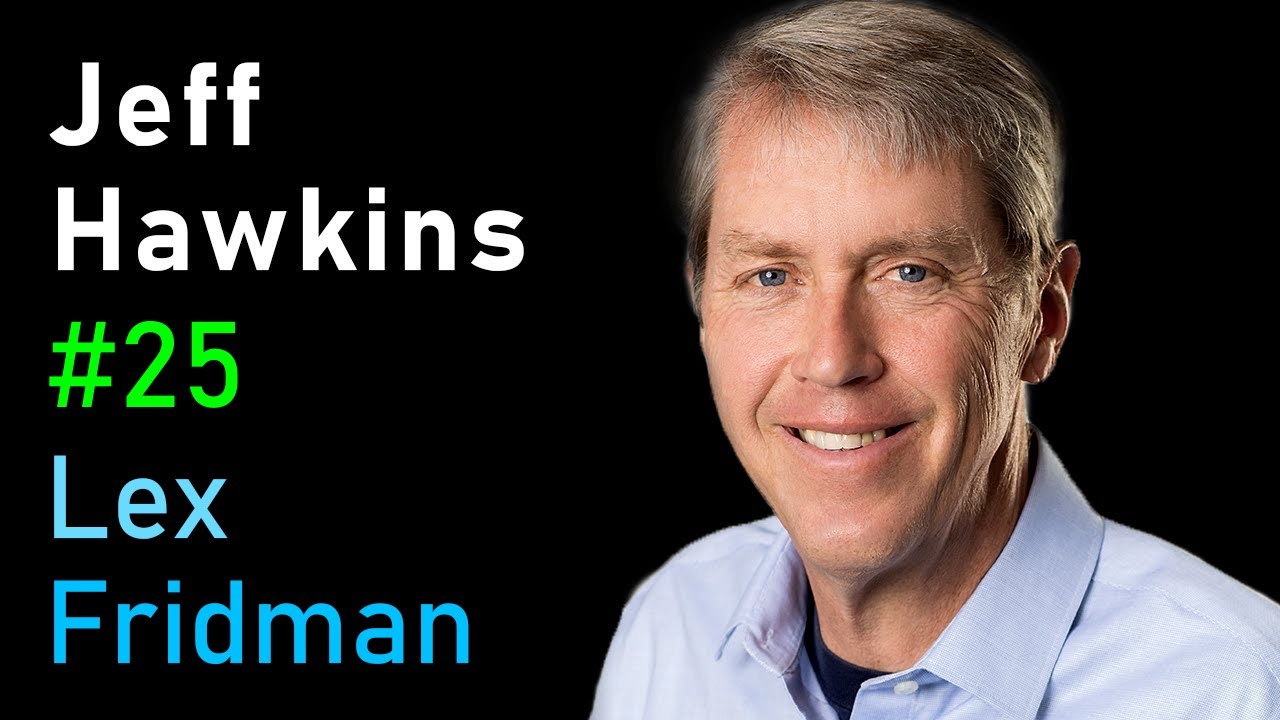
Key Insights
- The Thousand Brains Theory posits that each object is represented by thousands of models in the neocortex, which collectively determine its identity.
- Jeff Hawkins argues that intelligence in machines will be achieved faster by studying the brain's neocortex, which is uniform across species and crucial for cognitive functions.
- Hierarchical Temporal Memory (HTM) theory emphasizes time-based patterns and hierarchical processing as essential for understanding brain function and intelligence.
- Hawkins contends that current AI models lack the biological principles necessary for true intelligence, such as the predictive capabilities of real neurons.
- Hawkins downplays existential threats from AI, suggesting bacteria pose a greater risk and emphasizing the preservation of human knowledge as a legacy.
How the conversation moved
Lex Fridman opens the conversation by framing the central question around how understanding the human brain can inform the development of intelligent machines. Jeff Hawkins immediately positions the neocortex as a crucial element, noting its uniformity across species and its significant volume in the human brain. He argues that studying the neocortex is the fastest path to machine intelligence, as it underpins various cognitive functions. Hawkins highlights the common cortical algorithm, suggesting that different functions are built on the same underlying circuits, making the neocortex a universal processor.
Hawkins advances his main argument by introducing the Thousand Brains Theory of Intelligence, which posits that the neocortex creates thousands of models for each object, such as a cup, and these models vote to determine the object's identity. He contrasts this with traditional models that assume a single representation. Hawkins also discusses Hierarchical Temporal Memory (HTM), emphasizing the importance of time-based patterns and hierarchical processing in understanding brain function. He supports his claims with empirical data, arguing that these approaches align more closely with how the brain operates compared to speculative theories.
Despite the compelling nature of Hawkins' theories, Lex Fridman does not challenge the core assumptions or the feasibility of implementing these ideas in artificial intelligence systems. However, Hawkins himself pushes back against the prevailing notion that scaling up current AI models will lead to true intelligence. He argues that without incorporating biological principles, such as the predictive capabilities of real neurons, AI will not achieve human-like intelligence. This tension highlights a significant gap between current AI models and Hawkins' vision of intelligent systems.
The conversation concludes with Hawkins addressing existential threats posed by AI, downplaying them in favor of more immediate concerns like privacy and misinformation. He argues that bacteria pose a greater existential threat than superintelligent AI. Hawkins emphasizes the importance of preserving human knowledge as a legacy, suggesting that intelligent machines could serve as vessels for this knowledge, outlasting humanity itself. The discussion leaves open questions about the practical implementation of Hawkins' theories in AI development and the broader implications for society.
Surprising moments
In-depth
Neocortex and Intelligence
- The neocortex is a key structure for understanding intelligence due to its uniformity and volume in the brain.
- Hawkins emphasizes the neocortex's role in cognitive functions across species.
- Studying the neocortex is seen as the fastest path to developing machine intelligence.
Hierarchical Temporal Memory
- HTM theory focuses on time-based patterns and hierarchical processing in the brain.
- The theory is grounded in empirical data, contrasting with more speculative theories.
- HTM suggests the brain learns a model of the world for navigation and interaction.
Thousand Brains Theory
- The theory posits thousands of models for each object in the neocortex.
- Sensory models interact to form a unified understanding of objects and concepts.
- Reference frames are used by the brain for abstract thinking and object recognition.
AI Limitations and Biological Principles
- Current AI models lack the predictive capabilities of real neurons.
- Hawkins argues that scaling current AI won't achieve true intelligence.
- Biological principles like sparse patterns are essential for real intelligence.
Preservation of Human Knowledge
- Hawkins views AI as a tool for preserving human knowledge beyond our existence.
- Existential threats from AI are considered less significant than other risks.
- The essence of humanity is seen in accumulated knowledge, not genetics.
Notable Quotes
I actually believe that studying the brain is actually the fastest way to get to machine intelligence.
Still open
- Hawkins questions whether current AI models can ever achieve true intelligence without incorporating biological principles like predictive coding.