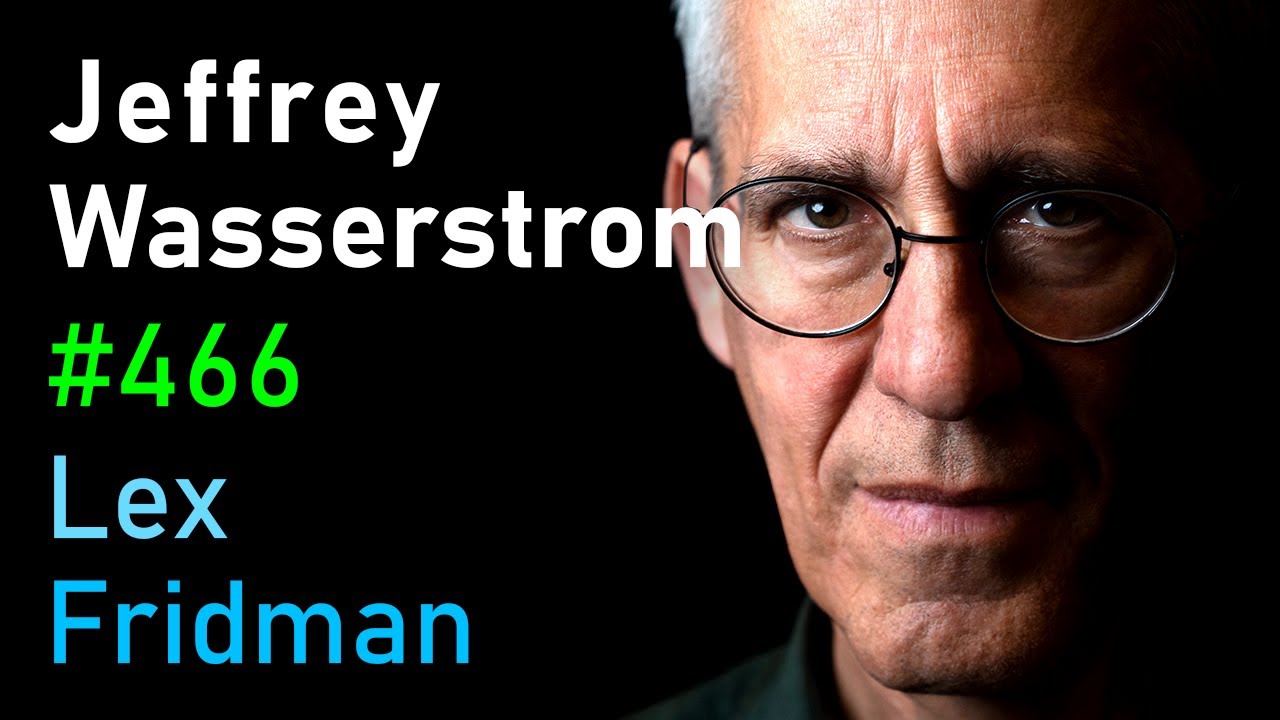
New Lex Fridman Insight: Jeffrey Wasserstrom: China, Xi Jinping, Trade War, Taiwan, Hong Kong, Mao
Sent May 30, 2026
Key Insights
- Xi Jinping's leadership style contrasts with Mao's, emphasizing stability over chaos and embracing Confucian ideals.
- The Tiananmen Square protests were driven by anti-corruption sentiment and were inspired by the May Fourth Movement.
- China's censorship strategy includes fear, friction, and flooding to control narratives, especially post-Tiananmen.
- The Hong Kong protests highlight the erosion of 'One Country, Two Systems' and serve as a warning to Taiwan.
- The US-China trade war under Trump and Xi Jinping saw tariffs rise to 145% on Chinese imports.
How the conversation moved
The conversation begins with Jeffrey Wasserstrom comparing the leadership styles of Xi Jinping and Mao Zedong, focusing on their approaches to governance and personality cults. Wasserstrom notes that Xi Jinping is the first leader since Mao to have a sustained cult of personality, but unlike Mao, who thrived in chaos, Xi prioritizes stability and embraces Confucian ideals. This sets the stage for understanding the current political climate in China, where historical continuity and governance philosophies play a crucial role in shaping policy and public perception.
Wasserstrom delves into the historical context of the Tiananmen Square protests, emphasizing their roots in anti-corruption sentiment and the inspiration drawn from the May Fourth Movement. The protests highlighted the gap between the Communist Party's promises and the reality of corruption and nepotism, leading to a violent crackdown. This segment underscores the importance of understanding China's political history to grasp its current governance challenges and the enduring impact of these protests on Chinese society and global perceptions.
The discussion then shifts to China's censorship strategies, particularly in the wake of the Tiananmen Square protests. Wasserstrom explains how the Chinese government employs fear, friction, and flooding to control narratives and suppress dissent. This approach has been crucial in managing public perception and maintaining the Communist Party's narrative control, especially in light of recent events in Hong Kong. Lex Fridman does not challenge Wasserstrom's framing of censorship, though a counter-position might argue about the effectiveness and ethical implications of such strategies.
Finally, the conversation explores the implications of the US-China trade war under Trump and Xi Jinping, with tariffs reaching unprecedented levels. Wasserstrom highlights how this economic conflict reflects deeper geopolitical tensions and the historical narrative of national humiliation that influences China's international stance. The episode concludes with reflections on the Hong Kong protests and their implications for Taiwan, emphasizing the complexities of China's internal and external political dynamics and the potential for future conflicts.
Surprising moments
In-depth
Leadership Styles
- Xi Jinping's leadership contrasts with Mao's, emphasizing stability over chaos.
- Xi embraces Confucian ideals, promoting hierarchical stability.
- Mao's approach was more chaotic, rejecting Confucianism as feudal.
Tiananmen Square Protests
- Driven by anti-corruption and inspired by the May Fourth Movement.
- The protest's crackdown was due to fears of broader uprisings.
- The protests included calls for democracy and counterculture elements.
Censorship Strategies
- China uses fear, friction, and flooding to control narratives.
- Post-Tiananmen, China learned to suppress protest images.
- Censorship affects freedom of thought and expression.
Hong Kong and Taiwan
- Hong Kong's protests erode 'One Country, Two Systems'.
- The protests serve as a warning to Taiwan about potential future integration issues.
- The imposition of a national security law in Hong Kong increased tensions.
US-China Trade War
- Trump raised tariffs on Chinese imports to 145%.
- Xi Jinping responded with tariffs on US goods and restricted exports.
- The trade war reflects deeper geopolitical tensions.
Notable Quotes
People are pretty much alike at birth, but become differentiated via learning.
Still open
- How will China's censorship strategies evolve in response to increasing global scrutiny?
- What are the long-term implications of the erosion of 'One Country, Two Systems' for Taiwan?
References & Resources
- The Monkey King by Unknown — Search
- The May Fourth Movement by Various — Search
- Tiananmen Square Protests by Various — Search
- Brave New World by Aldous Huxley — Search
- 1984 by George Orwell — Search
- Margaret Roberts on Chinese censorship by Margaret Roberts — Search
- Brave New World Revisited by Aldous Huxley — Search
- Among The Braves by Shibani Mahtani — Search
- Fear, Friction, and Flooding by Margaret Roberts — Search
- The Xi Jinping Effect by Various — Search
- Let Only Red Flowers Bloom by Emily Fang — Search
- Neuromancer by William Gibson — Search
- The Hundred-Year Marathon by Michael Pillsbury — Search
- Tibet: A History by Isabel Hilton — Search
- No Straight Road Takes You There: Essays for Uneven Terrain by Rebecca Solnit — Search
- Milk Tea Alliance by Jeffrey Wasserstrom — Search
- The Boxer Uprising by Unknown — Search
- The Nationalist Party by Unknown — Search
- Gray’s Law by Unknown — Search
- The Other China by Geremie Barmé — Search