New Lex Fridman Insight: John Mearsheimer: Israel-Palestine, Russia-Ukraine, China, NATO, and WW3
Sent May 30, 2026
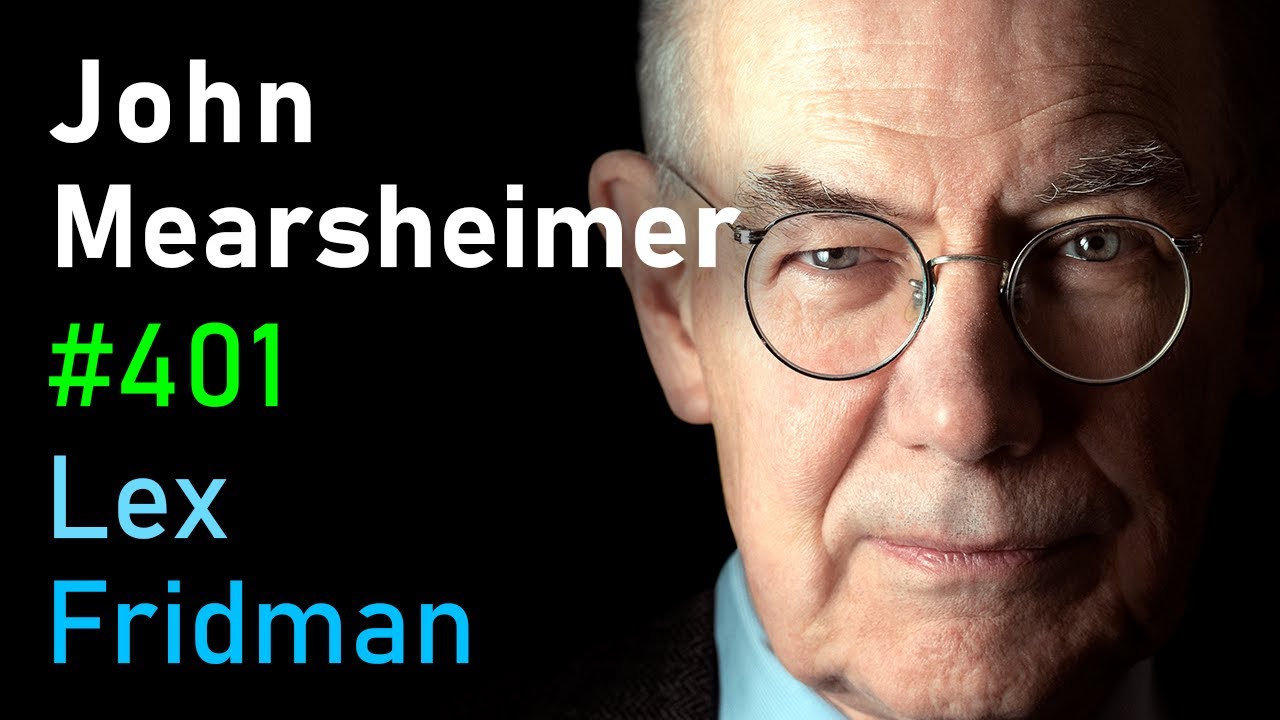
Key Insights
- Mearsheimer claims NATO expansion is the principal cause of the Ukraine war, threatening Russian security interests.
- Mearsheimer argues that Israel's shift to the right and the power of the Israel lobby make a two-state solution unlikely.
- He asserts that economic interdependence won't prevent war if survival is at stake, countering liberal peace theories.
- Mearsheimer believes the U.S. must deter China over Taiwan to maintain its alliances in East Asia.
- He argues that the conflation of anti-Zionism with antisemitism stifles open discourse about Israel.
How the conversation moved
Lex Fridman sets the stage by asking John Mearsheimer to explain the underlying forces driving current global conflicts, particularly focusing on the Ukraine crisis and the Israel-Palestine situation. Mearsheimer begins by outlining his realist perspective, emphasizing that power dynamics, rather than ideological differences, are the primary drivers of international relations. He argues that states are inherently self-interested actors in an anarchic international system, where power, defined by population and wealth, is the ultimate currency. This sets the groundwork for understanding why conflicts arise when states perceive threats to their power or security.
Mearsheimer's main argument centers on the idea that NATO expansion is the principal cause of the Ukraine conflict, challenging the narrative that Putin's actions are purely imperialistic. He provides historical context, explaining how the West's disregard for Russian security concerns, particularly regarding Ukraine's potential NATO membership, has led to the current tensions. Mearsheimer also critiques the liberal belief in economic interdependence as a peacekeeping force, arguing that survival instincts will always override economic ties when a state's security is threatened. This is illustrated by his analysis of the Ukraine conflict, where strategic interests have trumped economic considerations.
Lex doesn't challenge Mearsheimer's framing of NATO's role in the Ukraine conflict directly, though he probes the implications of Mearsheimer's claims on Western foreign policy. The tension arises when Mearsheimer discusses the Israel-Palestine conflict, arguing that the Israel lobby's influence on U.S. policy makes a two-state solution unlikely. This perspective is contentious, as it challenges the conventional view of U.S.-Israel relations and the feasibility of peace in the region. Mearsheimer's assertion that anti-Zionism is often conflated with antisemitism further complicates the discourse, as it suggests that critical discussions are being stifled by political pressures.
The conversation concludes with Mearsheimer reflecting on the strategic importance of Taiwan in U.S.-China relations. He argues that the U.S. must adopt a deterrence strategy to prevent Chinese expansion, emphasizing that a failure to defend Taiwan could undermine U.S. alliances in East Asia. This pivot to U.S.-China relations highlights the broader theme of great power competition, suggesting that the dynamics of power and security will continue to shape global politics. The discussion leaves open questions about the future of these conflicts and the role of international institutions in managing them, underscoring the complexity of navigating a multipolar world.
Surprising moments
In-depth
NATO and Ukraine
- Mearsheimer claims NATO expansion led to the Ukraine conflict.
- He argues Russia's security concerns were underestimated by the West.
- Putin's initial troop numbers were insufficient for a full conquest of Ukraine.
Israel-Palestine Conflict
- Mearsheimer argues Israel's political shift rightward hinders a two-state solution.
- The Israel lobby significantly influences U.S. policy, aligning it with Israeli interests.
- He critiques the use of military force as a solution to Palestinian resistance.
Economic Interdependence and War
- Mearsheimer argues survival trumps economic ties in preventing war.
- He critiques liberal theories that propose economic interdependence ensures peace.
U.S.-China Relations
- Mearsheimer emphasizes Taiwan's strategic importance for U.S. alliances.
- He advocates for a deterrence strategy to prevent Chinese expansion.
Anti-Zionism and Antisemitism
- Mearsheimer argues conflating anti-Zionism with antisemitism stifles discourse.
- He claims this limits critical discussions necessary for balanced foreign policy.
Notable Quotes
In the international system, there’s no higher authority, so if you get into trouble and you dial 911, there’s nobody at the other end.
Still open
- Mearsheimer questions whether a meaningful peace agreement in Ukraine is possible, predicting a frozen conflict instead.
- He wonders if the U.S. can maintain its alliances in East Asia without a strong deterrence strategy against China.