New Lex Fridman Insight: John Vervaeke: Meaning Crisis, Atheism, Religion & the Search for Wisdom
Sent June 11, 2026
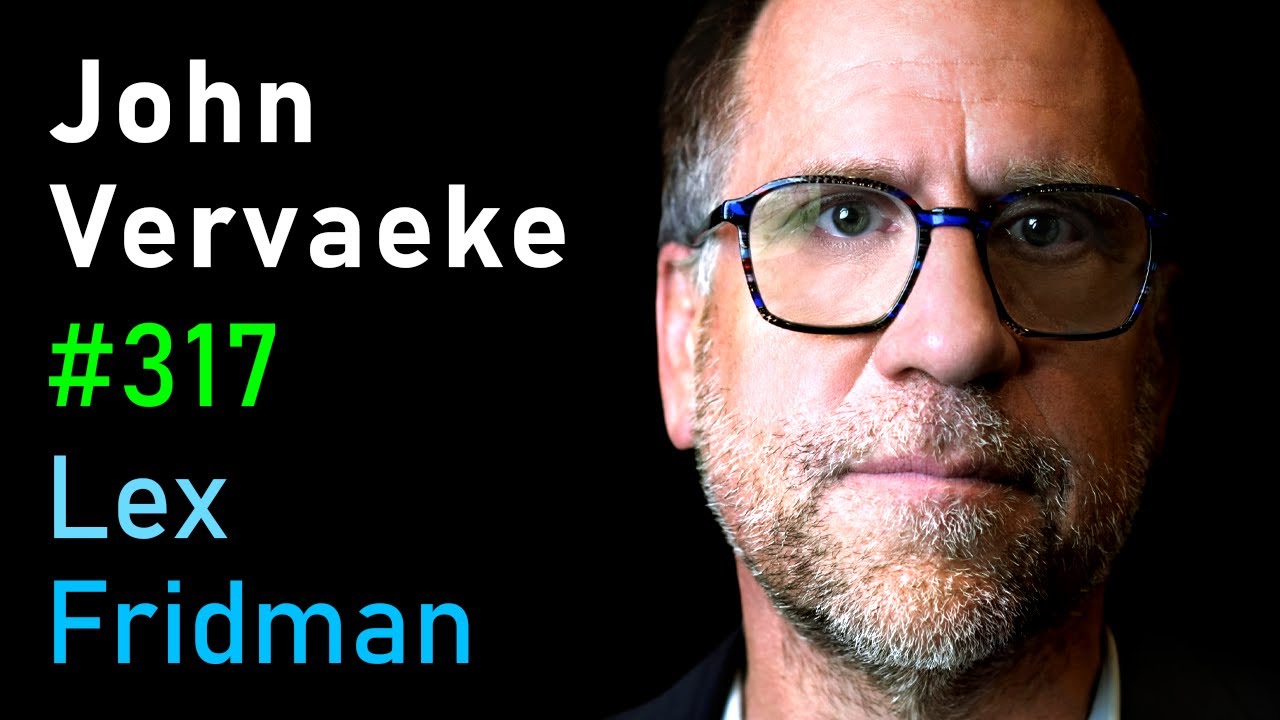
Key Insights
- John Vervaeke argues that the meaning crisis stems from the loss of wisdom traditions and the rise of secularism.
- Distributed cognition enhances problem-solving but doesn't equate to collective consciousness or intelligence.
- Vervaeke describes 'nontheism' as rejecting both theism and atheism, focusing on sacredness beyond a personal deity.
- Flow states require a balance where challenges slightly exceed skills, leading to optimal performance and insights.
How the conversation moved
Lex Fridman opens the conversation by framing the central question around the meaning crisis, its historical roots, and its impact on modern life. John Vervaeke responds by arguing that the crisis is exacerbated by the decline of traditional wisdom sources and the rise of secularism, which has left many without a framework for meaning. He emphasizes the importance of connectedness to things that have value beyond personal concerns, suggesting that the loss of these connections contributes significantly to the current crisis.
Vervaeke presents his main argument that distributed cognition enhances problem-solving but does not equate to collective consciousness or intelligence. He provides evidence by discussing how group dynamics can improve reasoning task success rates, yet he distinguishes this from the idea of a 'zombie agency' or a unified group mind. He further elaborates on the transformative theory of truth, which posits that systems self-correct and converge on deeper understandings of reality, integrating subjective and objective truths.
Lex challenges Vervaeke's dismissal of romantic notions of meaning, suggesting that such 'romantic bullshit' might be the essence of life. Vervaeke pushes back, arguing for a more grounded understanding of meaning as a transjective relationship between the subjective and objective. This tension highlights the differing perspectives on whether meaning is inherent or constructed, with Vervaeke advocating for a relational view that transcends individual or universal attribution.
The conversation pivots to explore the potential for new forms of meaning-making in a post-religious context, with Vervaeke introducing the concept of 'nontheism.' He describes this as a rejection of both theism and atheism, focusing instead on sacredness beyond a personal deity. This approach allows for spiritual exploration without the constraints of traditional religious dogma, offering a framework for meaning that is both flexible and profound. The discussion concludes with the exploration of flow states, emphasizing their role in enhancing performance and personal development.
Surprising moments
In-depth
Meaning Crisis
- The meaning crisis is linked to the decline of traditional wisdom sources.
- Secularism has exacerbated the struggle for meaning in modern life.
Consciousness and Cognition
- Distributed cognition aids problem-solving but isn't collective consciousness.
- Consciousness should be seen as both a state and an action.
Nontheism and Religion
- Nontheism rejects both theism and atheism, focusing on sacredness beyond a deity.
- This approach allows for spiritual exploration without traditional constraints.
Flow States
- Flow states require challenges that slightly exceed skills for optimal performance.
- These states enhance learning and personal development.
Notable Quotes
The universe doesn't care about your personal narrative.
Still open
- Vervaeke questions whether the current scientific worldview can adequately address the wisdom famine without traditional religious frameworks.