New Lex Fridman Insight: Julia Shaw: Criminal Psychology of Murder, Serial Killers, Memory & Sex
Sent May 30, 2026
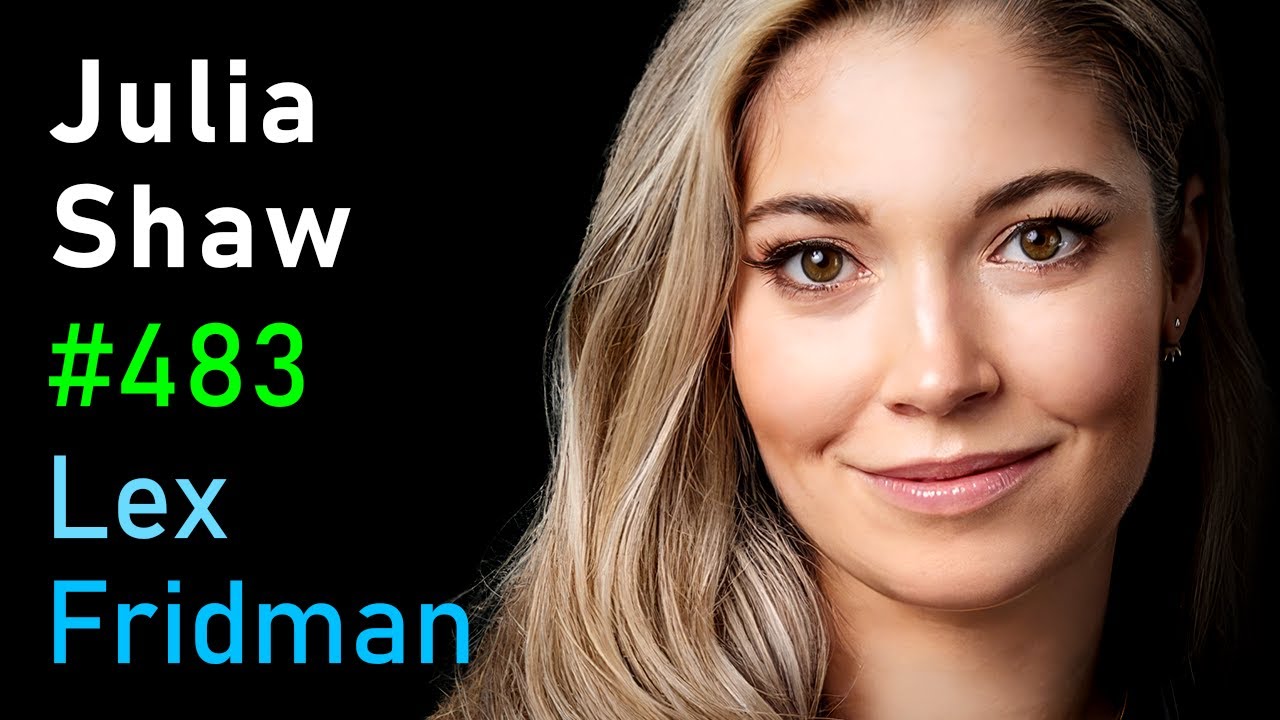
Key Insights
- 70% of men and over 50% of women have fantasized about murder, showing its commonality.
- Police officers are no better than chance at detecting lies, challenging their perceived expertise.
- Recidivism for homicide is only 1-3%, lower than for other crimes like fraud.
- The Kinsey Scale shows most people fall between exclusively heterosexual or homosexual.
- False memories are normal and can be easily implanted, as shown in Shaw's study.
How the conversation moved
The conversation begins with Julia Shaw discussing the prevalence of murder fantasies, highlighting that 70% of men and over 50% of women have had such thoughts. Shaw frames this as a common aspect of human psychology rather than an indication of inherent evil. She introduces the concept of the dark tetrad, which includes traits like psychopathy and narcissism, existing on a continuum rather than as binary traits. Shaw argues that understanding these traits requires empathy, even towards those labeled as evil, to better understand the psychological and social factors leading to harmful behaviors.
Shaw presents evidence that police officers, despite their confidence, are no better than chance at detecting lies. This challenges the perceived expertise of law enforcement in deception detection, which has significant implications for the criminal justice system. Shaw also discusses the complexities of empathy-focused treatments for psychopathy, noting that such treatments might enable individuals to fake empathy, complicating rehabilitation efforts. Her insights draw from her interest in criminal psychology, influenced by high-profile cases like Robert Pickton.
Despite the compelling evidence Shaw provides, Lex doesn't challenge her framing of empathy as a tool for understanding evil. The conversation lacks direct pushback on the potential risks of over-empathizing with harmful individuals. However, Shaw's assertion that empathy should extend to those labeled as evil could be contentious, as it challenges conventional views of justice and punishment. This moment highlights a tension between understanding and accountability, which remains unresolved in the discussion.
The conversation shifts to the societal perceptions of sexuality and relationships, with Shaw discussing the Kinsey Scale and the complexities of non-traditional relationships. She argues that most people fall somewhere between exclusively heterosexual or homosexual, challenging binary views of sexual orientation. Shaw also touches on the ease of implanting false memories, as demonstrated in her research, which has implications for both legal contexts and AI interactions. The discussion concludes with Shaw emphasizing the importance of integrating social sciences into technology development to address complex human issues effectively.
Surprising moments
In-depth
Murder and Criminal Psychology
- Murder fantasies are common, challenging perceptions of evil.
- Recidivism rates for murder are low, questioning justice system alignment.
Lie Detection and Empathy
- Police struggle with lie detection, impacting criminal justice.
- Empathy complicates psychopathy treatments, affecting rehabilitation.
Sexuality and Relationships
- The Kinsey Scale shows sexual orientation as a spectrum.
- Non-traditional relationships are increasingly accepted.
Memory and False Memories
- False memories are a normal process, affecting legal contexts.
- AI can distort memories, impacting perception of truth.
Environmental Crime
- Social pressure enables unethical corporate practices.
- Environmental crimes are significant and measurable from space.
Notable Quotes
The question is, why we don’t do those things, rather than why we do do those things, quite often.
Still open
- Shaw questions whether empathy-focused treatments for psychopathy might enable individuals to fake empathy, complicating rehabilitation.
- The conversation raises the unresolved issue of how societal perceptions of non-traditional relationships impact individuals' mental health and social acceptance.