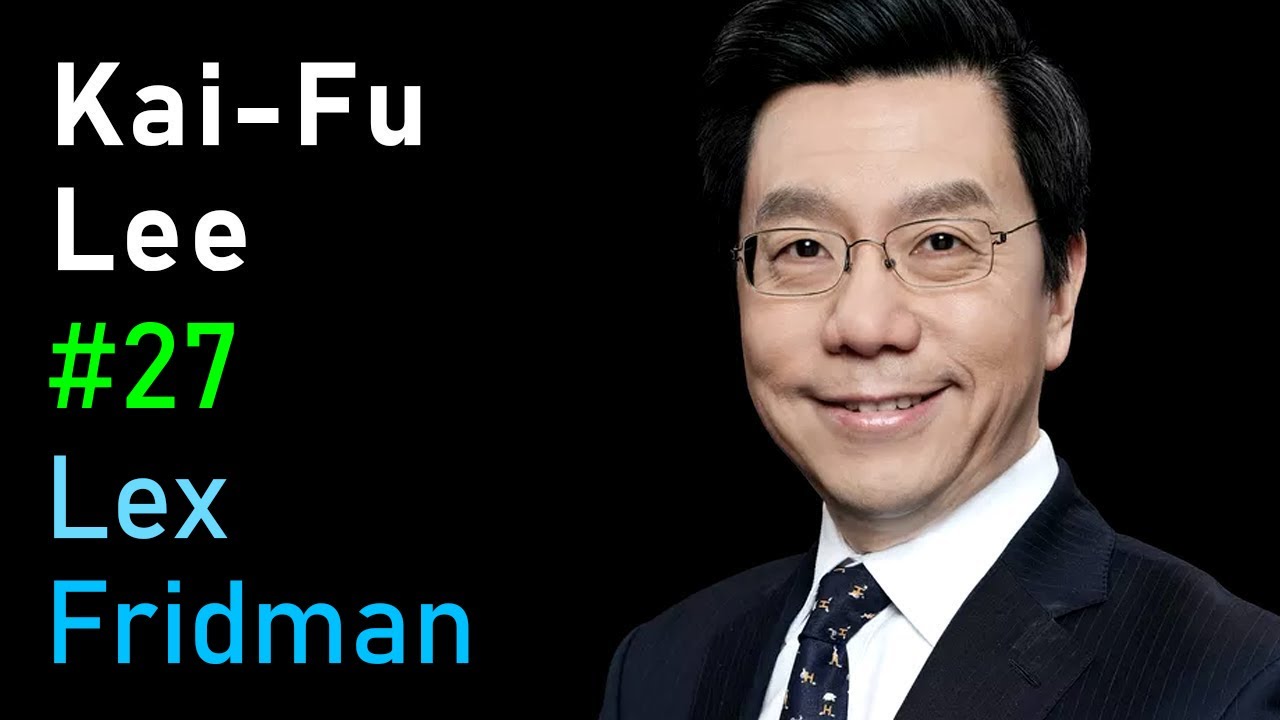
New Lex Fridman Insight: Kai-Fu Lee: AI Superpowers - China and Silicon Valley
Sent June 11, 2026
Key Insights
- Chinese AI engineers excel in execution due to a focus on data handling, while Americans prioritize innovation and algorithms.
- China's entrepreneurial ecosystem has surpassed the U.S. in creating companies valued between $50 to $300 billion.
- AI is projected to create $16 trillion in global value over the next 11 years, but infrastructure investment is crucial for realizing this potential.
- Routine white-collar jobs are at high risk of automation, with 50% to 80% potentially displaced.
- Kai-Fu Lee emphasizes the importance of balancing work and family after reflecting on his cancer experience.
How the conversation moved
The episode opens with Kai-Fu Lee discussing the contrasting approaches of Chinese and American AI engineers. He emphasizes that Chinese engineers excel in execution due to their focus on data handling, whereas American engineers prioritize innovation and algorithm development. This sets the stage for a broader discussion on how these cultural differences shape the global AI landscape, with Lee highlighting the strengths and weaknesses of each approach.
Lee argues that China's entrepreneurial ecosystem has evolved significantly, surpassing the U.S. in creating companies valued between $50 to $300 billion. He attributes this to the Chinese government's support for entrepreneurship through infrastructure development and guiding funds. Lee provides examples of innovative Chinese companies like WeChat and TikTok, which have emerged as leaders in their fields, challenging the perception of China as merely a copycat nation.
Lex Fridman does not explicitly challenge Lee's assertions about China's rise in entrepreneurship and AI, though the potential counter-argument could be the sustainability of such growth given geopolitical tensions and ethical concerns. Lee also touches on the risk of job displacement due to AI, mentioning that routine white-collar jobs are particularly vulnerable. He stresses the need for retraining programs to mitigate these effects, pushing back against the idea that universal basic income alone is sufficient.
The conversation concludes with Lee reflecting on his personal journey after surviving cancer, emphasizing the importance of balancing work and family. He shares his realization that accomplishments mean little when facing mortality, advocating for a more balanced lifestyle. This personal insight serves as a poignant reminder of the broader societal need to reevaluate priorities in the face of rapid technological advancement. The episode leaves open questions about the long-term implications of AI on society and the global economy.
Surprising moments
In-depth
Cultural Differences in AI Approaches
- Chinese engineers focus on data execution, Americans on innovation.
- Sinovation Ventures focuses on Chinese high-tech investments.
- Chinese education emphasizes memorization, aiding execution but hindering innovation.
China's Entrepreneurial Surge
- China surpasses the U.S. in creating high-value companies.
- Government supports entrepreneurship through infrastructure and guiding funds.
- Chinese companies like WeChat and TikTok lead in innovation.
AI's Economic Impact and Job Displacement
- AI could create $16 trillion in value globally.
- Routine white-collar jobs are at high risk of automation.
- Infrastructure investment is crucial for AI's potential.
Personal Reflections on Work-Life Balance
- Lee reflects on work-life balance after cancer.
- He emphasizes the importance of family over work.
- The AI startup landscape requires more than technical expertise.
Notable Quotes
The Chinese tradition is about excellence, dedication, and results.
Still open
- Kai-Fu Lee questions whether retraining programs will be implemented in time to address job displacement due to automation.
- The potential for AI to exacerbate international conflict over technology and resources remains unresolved.