New Lex Fridman Insight: Karl Friston: Neuroscience and the Free Energy Principle
Sent June 11, 2026
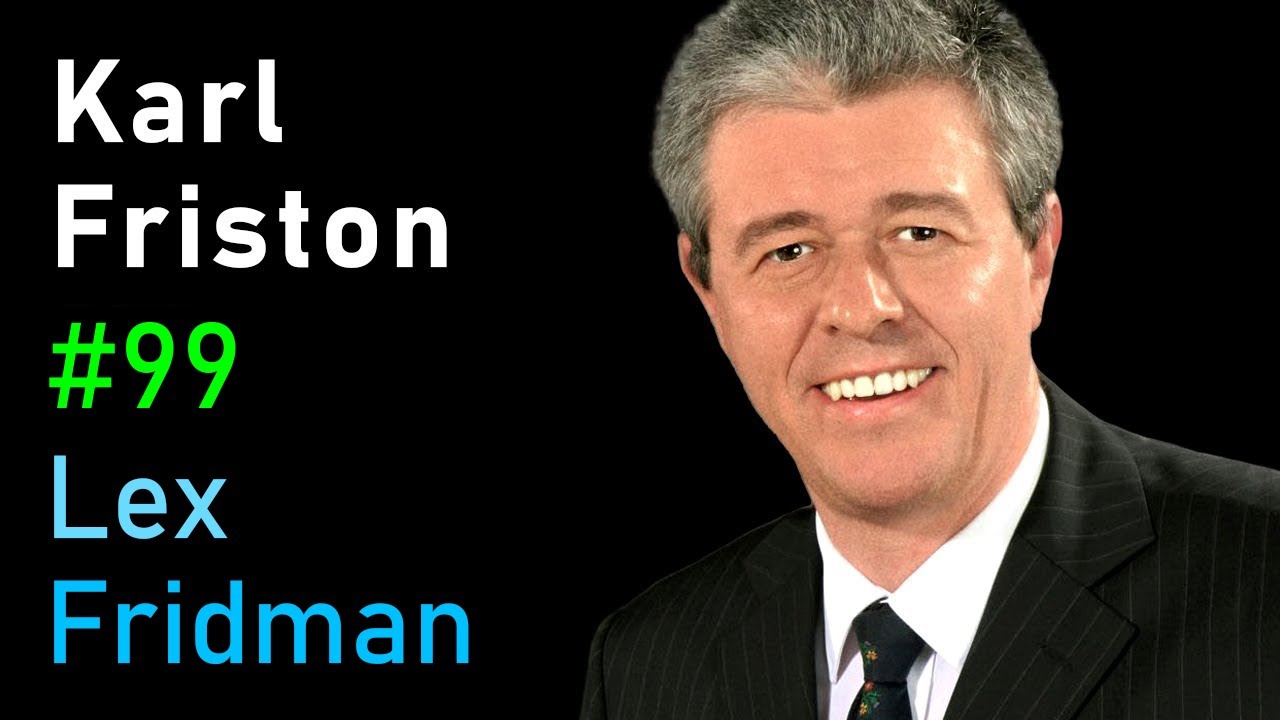
Key Insights
- Carl Friston's free energy principle posits that living systems minimize prediction errors to maintain existence.
- Hierarchical and sparse brain connectivity is key to understanding its complex functions, as revealed by advanced imaging techniques.
- Friston suggests that movement is the only way living systems can change the universe, distinguishing them from non-living entities.
- Brain-computer interfaces currently have limited bandwidth, operating at bits per second, which restricts complex interactions.
How the conversation moved
Lex Fridman opened the conversation by framing the central question around understanding the brain's complexity and the role of the free energy principle in neuroscience. Carl Friston began by discussing the hierarchical and sparse connectivity of the brain, emphasizing the importance of understanding these structures to grasp the brain's complex functions. He highlighted the role of advanced imaging techniques, such as high field MRI, in revealing these intricate details, which are crucial for understanding how the brain operates as a computational entity.
Friston's main argument revolved around the free energy principle, which posits that living systems minimize prediction errors to maintain their existence. He explained that this principle could be seen as a hypothesis of natural selection, offering a unifying theory for understanding biological systems. Friston also discussed the importance of generative models in self-aware artifacts, which need to account for the presence of similar entities in their environment, necessitating a sense of self.
While the conversation was rich in detail, there was a notable absence of direct pushback from Lex Fridman on Friston's claims. However, a potential point of contention could be the practical applicability of the free energy principle in everyday neuroscience, as Friston's ideas often challenge conventional approaches by proposing a more theoretical framework. Lex did not explicitly challenge this, leaving room for further exploration of how these theories can be operationalized in practical settings.
The discussion concluded with an exploration of the limitations of current brain-computer interfaces, which Friston noted operate at bits per second, highlighting a significant technological gap. This pivoted the conversation towards the future potential of BCIs and the challenges that need to be overcome to achieve seamless integration with the brain. The conversation ended on an open note, suggesting that while the free energy principle provides a compelling theoretical framework, its practical implications and applications remain an area ripe for future research.
Surprising moments
In-depth
Brain Connectivity
- Friston emphasizes hierarchical and sparse connectivity in the brain.
- High field MRI reveals detailed brain structures.
- Connectivity decreases with distance between brain regions.
Movement and Life
- Movement is essential for changing the universe.
- Nonrandom movement indicates a living system.
- Complexity of planning distinguishes conscious beings.
Free Energy Principle
- Living systems minimize prediction errors to maintain existence.
- The principle is a hypothesis of natural selection.
- Generative models are essential for self-aware artifacts.
Brain-Computer Interfaces
- BCIs have limited bandwidth, operating at bits per second.
- Current BCIs are insufficient for complex brain interactions.
Notable Quotes
If you commit to a view of the brain as a machine that's performing a form of inference and representing things, that level of understanding is necessarily cast in terms of probability densities and ensemble densities, distributions.
Still open
- What are the practical implications of the free energy principle in neuroscience?
- How can current brain-computer interfaces overcome their bandwidth limitations?