New Lex Fridman Insight: Katherine de Kleer: Planets, Moons, Asteroids & Life in Our Solar System
Sent June 11, 2026
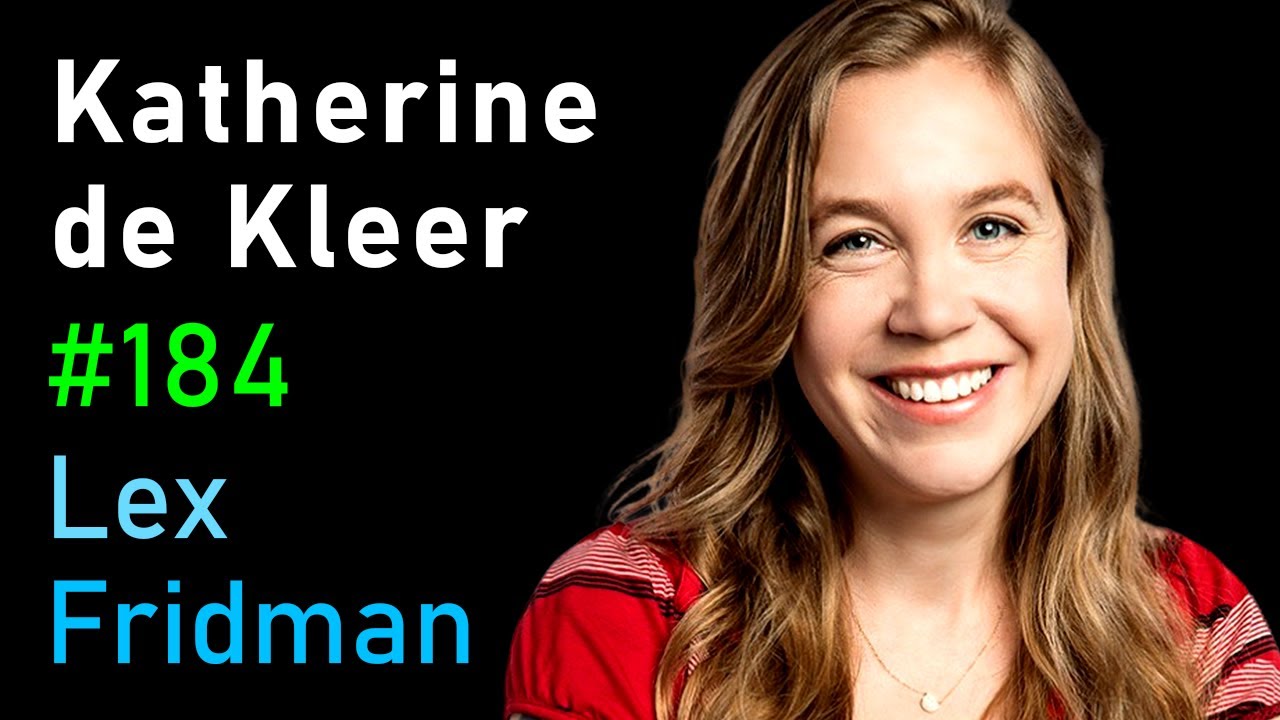
Key Insights
- Io's volcanic activity is driven by tidal heating, making it the most volcanically active body in the solar system.
- Asteroids offer insights into the solar system's formation, but their unpredictable paths pose potential threats to Earth.
- Oumuamua's unusual shape and acceleration challenge existing theories, sparking debate over its origins.
- Europa and Enceladus may harbor life due to subsurface oceans interacting with rock, driven by tidal forces.
- Mars colonization faces significant challenges, including harsh environments and radiation, requiring innovative solutions.
How the conversation moved
The host begins by framing the conversation around the complexities of defining celestial bodies in our solar system, using the reclassification of Pluto as a pivotal example. Catherine Duclir emphasizes the arbitrary nature of such classifications, suggesting that scientific interest should not be limited by labels. The discussion broadens to include the Kuiper Belt's influence on planetary definitions and the historical reclassification of Ceres, illustrating the evolving nature of astronomical understanding.
Duclir then shifts focus to Io, highlighting its status as the most volcanically active body in the solar system due to tidal heating. This phenomenon, caused by gravitational interactions, not only drives Io's geological activity but also potentially makes subsurface oceans on moons like Europa habitable. The conversation underscores the importance of studying these processes to understand planetary evolution and the potential for life beyond Earth.
Despite the compelling insights, the conversation lacks explicit pushback from the host, leaving certain assumptions unchallenged. For instance, while Duclir discusses the potential for life on Europa and Enceladus, the host does not question the feasibility of current exploration technologies or the limitations of remote sensing. This absence of pushback leaves some scientific claims without critical examination, though the episode does explore the broader implications of these findings.
The discussion concludes with a pivot to the challenges of Mars colonization, where Duclir outlines the environmental and logistical hurdles that must be overcome. The conversation touches on innovative solutions, such as insect farming for sustenance, and the unique geological features of Earth, like plate tectonics, that are absent on other planets. This segment highlights the necessity of interdisciplinary approaches to space exploration, leaving open questions about humanity's readiness to become a multi-planetary species.
Surprising moments
In-depth
Planetary Classification
- Pluto's reclassification highlights the complexities of defining planets.
- The Kuiper Belt's discovery prompted a reevaluation of planetary criteria.
- Ceres' classification history reflects evolving understanding of celestial bodies.
Volcanism and Tidal Heating
- Io's volcanism is driven by tidal heating from gravitational interactions.
- Tidal heating could make subsurface oceans on Europa habitable.
- Io's volcanic activity surpasses Earth's in volume and intensity.
Asteroids and Planetary Defense
- Asteroids provide insights into solar system formation.
- Asteroid impacts pose potential threats to Earth.
- Statistical analysis is often used to study asteroid compositions.
Oumuamua and Scientific Skepticism
- Oumuamua's shape and acceleration challenge existing theories.
- Hypotheses include it being a nitrogen ice shard or a failed solar system remnant.
- Scientific skepticism is crucial in evaluating alien origin claims.
Life on Moons
- Europa's subsurface ocean interacts with rock, potentially supporting life.
- Enceladus' geysers allow for direct sampling of ocean material.
- Tidal forces drive geological activity on these moons.
Mars Colonization Challenges
- Mars' environment and radiation pose significant colonization challenges.
- Innovative solutions like insect farming are considered for food sources.
- Earth's unique tectonic activity is not found on other planets.
Notable Quotes
I just personally don't care. My level of interest in something has nothing to do with what it's classified as.
Still open
- Catherine Duclir questioned the feasibility of current exploration technologies for studying subsurface oceans on moons like Europa.