New Lex Fridman Insight: Lee Cronin: Controversial Nature Paper on Evolution of Life and Universe
Sent May 30, 2026
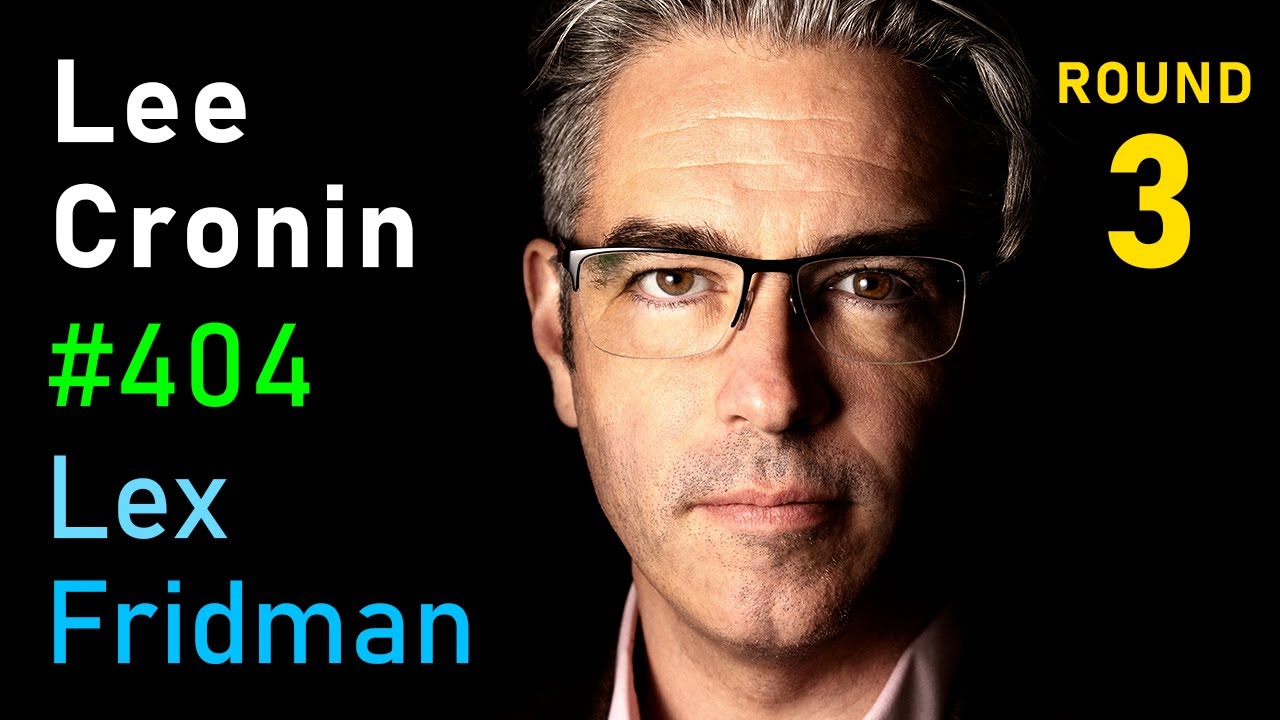
Key Insights
- Lee Cronin's assembly theory posits that the complexity of an object is determined by its assembly index, which captures the minimum steps needed to recreate it.
- Cronin argues that life on Mars can be detected by identifying molecules with a molecular weight over 350 and more than 15 fragments, indicating biological origins.
- Cronin challenges the notion that physics alone can explain life's emergence, asserting a disconnect between physics and biology.
- Assembly theory suggests that time is fundamental, opposing deterministic views of the universe's future.
- Cronin claims the probability of AGI doom is 0%, arguing that intelligence and decision-making are uniquely human.
How the conversation moved
The host introduces the episode with a focus on Lee Cronin's controversial Nature paper, which proposes assembly theory as a framework for understanding the complexity of life and the universe. Cronin begins by explaining the assembly index, a measure of complexity based on the minimum steps required to recreate an object. This index, he argues, can be applied across various domains, from biology to technology, providing a new lens through which to view evolution and selection processes.
Cronin's main argument centers on the limitations of physics in explaining life's emergence, suggesting that a disconnect exists between physics and biology. He presents evidence from his assembly theory, which posits that complex objects' assembly is contingent on prior work done in the causal chain. This theory challenges the notion that life can arise solely from physical laws, emphasizing the need for interdisciplinary approaches to understanding life's origins.
Despite the compelling nature of Cronin's arguments, the conversation lacks significant pushback from the host. However, Cronin himself pushes back against conventional wisdom, particularly the idea that physics alone can account for life's emergence. He also challenges deterministic views of the universe, arguing that time is fundamental and creativity arises from the universe's non-deterministic nature. This self-pushback adds depth to the discussion, though it leaves some areas, like the practical applications of assembly theory, underexplored.
The conversation concludes with Cronin's bold claim that the probability of AGI doom is 0%, emphasizing the unique nature of human intelligence and decision-making. This assertion, along with his views on time and creativity, suggests a paradigm shift in understanding intelligence and life's role in the universe. While the discussion opens new avenues for exploration, it also leaves open questions about the broader implications of assembly theory and its potential impact on fields beyond biology and physics.
Surprising moments
In-depth
Assembly Theory and Complexity
- Assembly theory measures complexity through the assembly index, indicating the steps needed to recreate an object.
- The theory applies to various domains, including biology, language, and technology.
- Assembly theory challenges traditional complexity measures by focusing on causal chains.
Detecting Life on Mars
- Cronin proposes using mass spectrometry to identify complex molecules as indicators of life.
- Molecules with a molecular weight over 350 and more than 15 fragments suggest biological origins.
Physics and Biology in Life's Emergence
- Cronin argues that physics alone cannot explain the emergence of life.
- He highlights a disconnect between physics and biology, suggesting a need for interdisciplinary approaches.
Time and Determinism
- Cronin suggests time is fundamental, opposing deterministic views of the universe.
- He argues that creativity and novelty arise from the universe's non-deterministic nature.
AGI Doom and Human Intelligence
- Cronin claims the probability of AGI doom is 0%, emphasizing human intelligence's uniqueness.
- He argues that intelligence and decision-making are uniquely human.
Notable Quotes
My biggest fear in a way is that life is everywhere, but we’ve become infinitely more lonely because of our scaffolding in that commentorial space.
Still open
- Cronin questioned whether the assembly theory could be practically applied to detect life on Mars, leaving its feasibility open for future exploration.
- The conversation leaves open the question of how assembly theory might integrate with existing biological and physical theories to provide a comprehensive understanding of life's origins.