New Lex Fridman Insight: Leslie Kaelbling: Reinforcement Learning, Planning, and Robotics
Sent June 11, 2026
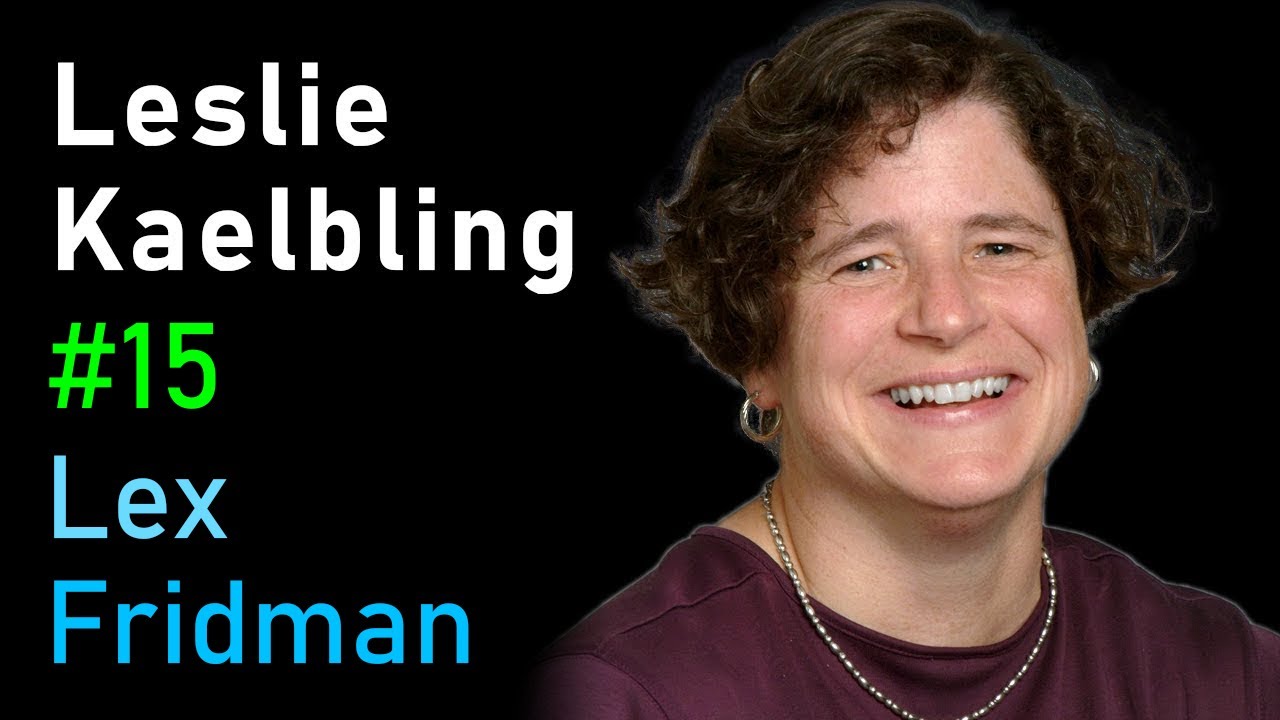
Key Insights
- Leslie Kaelbling transitioned from philosophy to AI, leveraging symbolic systems to bridge the two fields.
- Abstraction and Markov Decision Processes (MDPs) are crucial for managing complexity and uncertainty in AI systems.
- Hierarchical planning in AI allows for breaking down long-term goals into manageable tasks, aiding robotic reasoning.
- Leslie founded the Journal of Machine Learning Research to address high costs and access issues in academic publishing.
- Engineering intelligent robots requires balancing introspection programming with training large neural networks.
How the conversation moved
The episode begins with Leslie Kaelbling reflecting on her academic journey from philosophy to AI, emphasizing how her background in symbolic systems has informed her work in robotics and AI. She outlines the philosophical underpinnings that continue to influence AI research, particularly in areas like belief and knowledge, which are crucial for developing intelligent systems. This sets the stage for a broader discussion on the evolution of AI from its early days focused on cybernetics to its current state, which increasingly mirrors human-like intelligence.
Kaelbling then delves into the technical aspects of AI, particularly the role of abstraction and Markov Decision Processes (MDPs) in managing complexity and uncertainty. She explains how these tools help reduce the state space and horizon in complex problems, making them more tractable for AI systems. The conversation also touches on Partially Observable Markov Decision Processes (POMDPs), which address the challenge of incomplete information, highlighting the need for approximations in optimal planning.
Despite the depth of the discussion, there was a notable lack of pushback from the host, Lex Fridman, on Kaelbling's assertions. This absence of challenge leaves some claims, such as the undecidability of optimal planning for POMDPs, without exploration of potential counterarguments or alternative perspectives. The conversation could have benefited from a deeper examination of these claims, perhaps questioning the feasibility of implementing such complex models in real-world scenarios.
The episode concludes with Kaelbling discussing the founding of the Journal of Machine Learning Research, highlighting issues with the current academic publishing model. She critiques the pressure on students to publish frequently, which she believes undermines long-term, deep research. Kaelbling argues for a future in AI that balances algorithm engineering with the careful design of objective functions, emphasizing the importance of value alignment. This pivot to publishing and research culture underscores her commitment to fostering an environment conducive to meaningful scientific progress.
Surprising moments
In-depth
Philosophy and AI
- Leslie Kaelbling's background in philosophy informs her approach to AI.
- Symbolic systems serve as a bridge between philosophical concepts and AI.
- Philosophical questions about belief and knowledge are relevant to AI research.
Abstraction and Markov Decision Processes
- Abstraction reduces complexity in AI problem-solving.
- MDPs model uncertainty in AI, while POMDPs handle incomplete information.
- Optimal planning for POMDPs often requires approximations.
Hierarchical Planning and Robotics
- Hierarchical planning divides long-term goals into manageable tasks.
- Temporal hierarchy helps manage long execution tasks in robotics.
- Understanding perception is more complex than planning in AI.
Academic Publishing in AI
- Leslie founded the Journal of Machine Learning Research to address publishing issues.
- The journal operates as an open access platform, challenging traditional models.
- Current publishing models discourage long-term, deep research.
Engineering Intelligent Robots
- Balancing introspection programming with neural networks is key in robotics.
- The optimal combination of learning and not learning is crucial for robotics.
Notable Quotes
I think that there are important questions still about what you can do with a machine and what you can't and so on.
Still open
- Leslie Kaelbling questioned whether robots could be behaviorally indistinguishable from humans, raising philosophical issues about internal distinctions.
- Kaelbling expressed uncertainty about what structures could be built into AI systems to enhance learning efficiency.