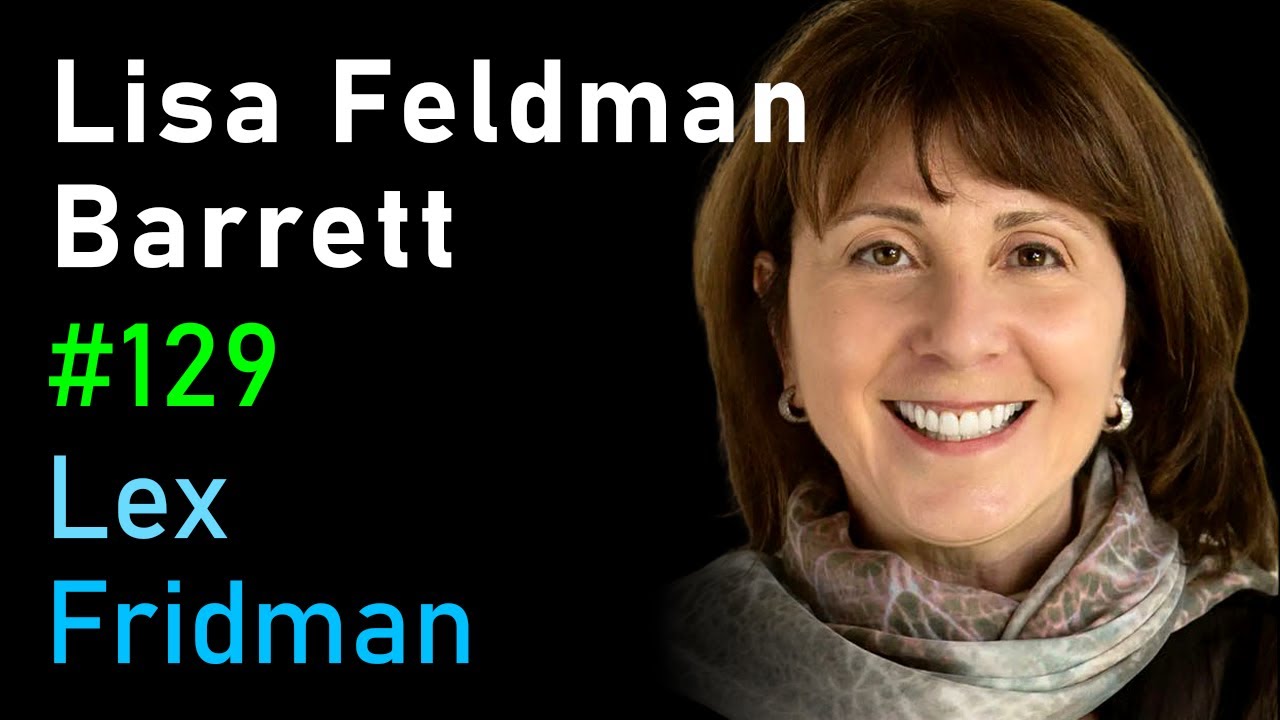
New Lex Fridman Insight: Lisa Feldman Barrett: Counterintuitive Ideas About How the Brain Works
Sent June 11, 2026
Key Insights
- The human brain's size is typical for a primate, challenging the notion of its exceptionalism.
- Emotions are constructed from past experiences rather than being innate reflexes.
- The triune brain model is misleading and not supported by evolutionary neuroscience.
- Social interactions can regulate nervous systems, akin to mental telepathy.
- Neurons use both digital and analog signals, with noise influencing information processing.
How the conversation moved
The episode begins with Lisa Feldman Barrett challenging the notion that the human brain is exceptional due to its size. She argues that the human brain's size is typical for a primate of our size and uses this to question anthropocentric views of intelligence. Barrett suggests that the evolution of intelligence is stochastic, implying that if intelligent life were to evolve again, it might not resemble current life forms. This sets the stage for a broader discussion on the uniqueness of human cognition and the factors that contribute to it.
Barrett's primary argument is that emotions are constructed from past experiences rather than being innate reflexes. She explains that the brain's executive control network is always active, selecting responses based on prior experiences, which challenges the traditional view of emotions as hardwired circuits. This perspective aligns with her broader view that the brain's functions are dynamic and context-dependent, rather than fixed. Barrett uses this framework to critique existing models of emotion and cognition, suggesting a more fluid understanding of these processes.
The conversation takes a critical turn when Barrett addresses the triune brain model, which suggests a layered structure of the brain. She argues that this model is misleading and not supported by evolutionary neuroscience, pointing out that it was popularized despite being debunked. This moment of pushback highlights the tension between popular neuroscience narratives and scientific evidence, encouraging a reevaluation of widely accepted models. Although Lex did not challenge this directly, the discussion invites listeners to question other entrenched beliefs about the brain.
The episode concludes by exploring the impact of social interactions on mental states, likening communication to a form of mental telepathy. Barrett emphasizes that humans uniquely use language to influence each other's nervous systems, which has profound implications for understanding social dynamics and mental health. The conversation also touches on the role of neurons' analog communication and noise in processing information, suggesting a potential link to free will. This final discussion ties back to the episode's theme of challenging conventional wisdom about the brain, leaving open questions about the implications of these insights.
Surprising moments
In-depth
Human Brain and Evolution
- The human brain is not larger than expected for a primate of our size.
- Intelligent life could evolve differently if it started over, as evolution is stochastic.
Constructed Nature of Emotions
- Emotions are constructed from past experiences, not innate reflexes.
- The executive control network is always active, selecting responses based on past experiences.
Critique of the Triune Brain Model
- The triune brain model is inaccurate and misleading.
- This model suggests a layered brain structure that doesn't align with evolutionary neuroscience.
Impact of Social Interactions
- Humans use language to regulate each other's nervous systems.
- Social interactions can have profound effects on mental states.
Neural Communication and Noise
- Neurons communicate through digital and analog signals.
- Noise plays a crucial role in information processing and potentially free will.
Notable Quotes
I think the answer is probably no, right? There's just so much about evolution that is stochastic and driven by chance.
Still open
- Barrett questions whether the triune brain model has any remaining utility despite its inaccuracies.
- The conversation leaves open the implications of neurons' analog communication and noise on theories of free will.