New Lex Fridman Insight: Lisa Feldman Barrett: Love, Evolution, and the Human Brain
Sent June 11, 2026
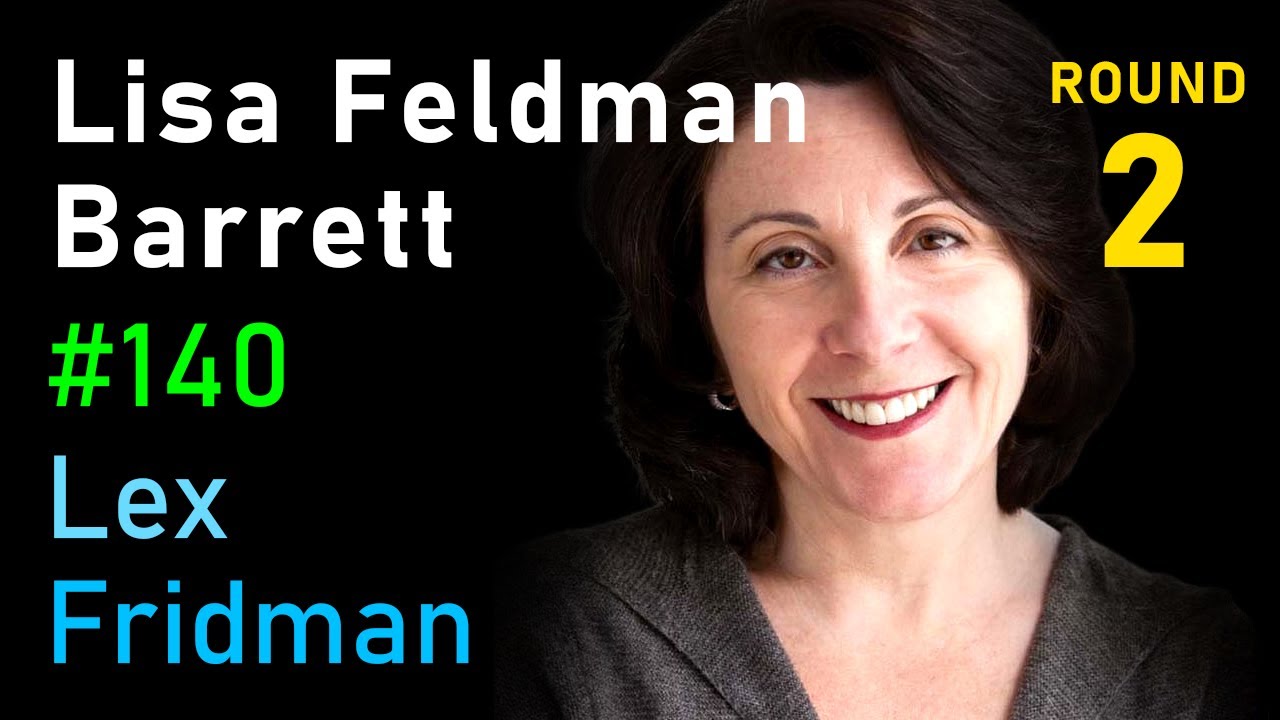
Key Insights
- Lisa Feldman Barrett met her husband through personal ads, receiving over 80 responses in 24 hours, showcasing early internet dating dynamics.
- Human brains are not uniquely large relative to body size; their distinctiveness lies in the cerebral cortex's complexity, not size.
- Barrett argues that cultural constructs, not universal truths, shape our perception of distinct thoughts and feelings.
- The evolution of brains and senses in animals was driven by predation pressures during the Cambrian period.
- Barrett challenges the notion of love at first sight, emphasizing that true love involves understanding and accepting flaws.
How the conversation moved
The conversation began with Lisa Feldman Barrett sharing a personal story about how she met her husband through personal ads, which set the stage for a broader discussion on human relationships and the dynamics of early internet dating. This anecdote highlighted the gender imbalance and academic dominance in such platforms, reflecting societal norms of the early 90s. The host framed this as a segue into exploring the complexities of human nature and relationships, setting up Barrett's insights into the duality of human behavior, capable of both kindness and violence.
Barrett's main argument centered on the idea that human nature is inherently complex, with cultural constructs significantly influencing our perception of emotions and behaviors. She provided evidence from historical and contemporary examples, such as the varied societal responses to pandemics, to illustrate how cultural norms shape behaviors. Barrett also discussed the evolution of the human brain, noting that while human brains are not uniquely large, their complexity lies in the cerebral cortex, challenging common assumptions about brain size and cognitive superiority.
The host did not explicitly challenge Barrett's views, but there was a notable moment of tension when Barrett pushed back against the romanticized notion of love at first sight. She argued that true love involves understanding and accepting a partner's flaws, which contradicts popular cultural narratives. This pushback highlighted a critical examination of societal beliefs about love, urging listeners to reconsider their perceptions of romantic relationships.
The conversation concluded with Barrett discussing the evolution of brains and senses in animals, emphasizing the role of predation pressures during the Cambrian period in shaping biological development. This segment underscored the importance of environmental factors in evolutionary processes, providing a broader context for understanding human and animal evolution. The discussion left open questions about the future of scientific inquiry into consciousness and the impact of cultural constructs on human behavior, inviting further exploration into these complex topics.
Surprising moments
In-depth
Human Relationships
- Lisa Feldman Barrett met her husband through personal ads, receiving over 80 responses in 24 hours.
- The imbalance in gender and professions in early internet dating reflects societal norms.
- Barrett and her husband exchanged 100 emails in two days before speaking on the phone.
Human Brain and Evolution
- Human brains are not uniquely large; their complexity lies in the cerebral cortex.
- Evolutionary pressures during the Cambrian period drove the development of brains and senses.
- The probability of evolution leading to the same set of creatures if Earth were reset is low.
Cultural Constructs and Emotions
- Cultural constructs, not universal truths, shape our perception of distinct thoughts and feelings.
- Cultural norms influence societal responses to challenges like pandemics.
- The idea of being oneself can be problematic, serving as an excuse for unproductive behavior.
Love and Consciousness
- Barrett challenges the notion of love at first sight, emphasizing understanding and acceptance.
- Research indicates that true love involves accepting faults rather than idealizing partners.
- Understanding consciousness requires different scientific questions and approaches.
Notable Quotes
I was spending probably 16 hours a day in the lab because it was my first year as an assistant professor and there's a lot to do.
Still open
- Barrett questioned whether current scientific approaches are adequate for understanding complex phenomena like consciousness.
References & Resources
- The Social Animal by Elliot Aronson — Search
- The Triple Helix by Richard Lewontin — Search
- Biology as Ideology by Richard Lewontin — Search
- How Emotions Are Made by Lisa Feldman Barrett — Search
- Seven and a Half Lessons About the Brain by Lisa Feldman Barrett — Search
- Naming the Mind by Kurt Danziger — Search
- The Beak of the Finch by Jonathan Weiner — Search
- At Large and At Small by Anne Fadiman — Search