New Lex Fridman Insight: Luís and João Batalha: Fermat's Library and the Art of Studying Papers
Sent June 11, 2026
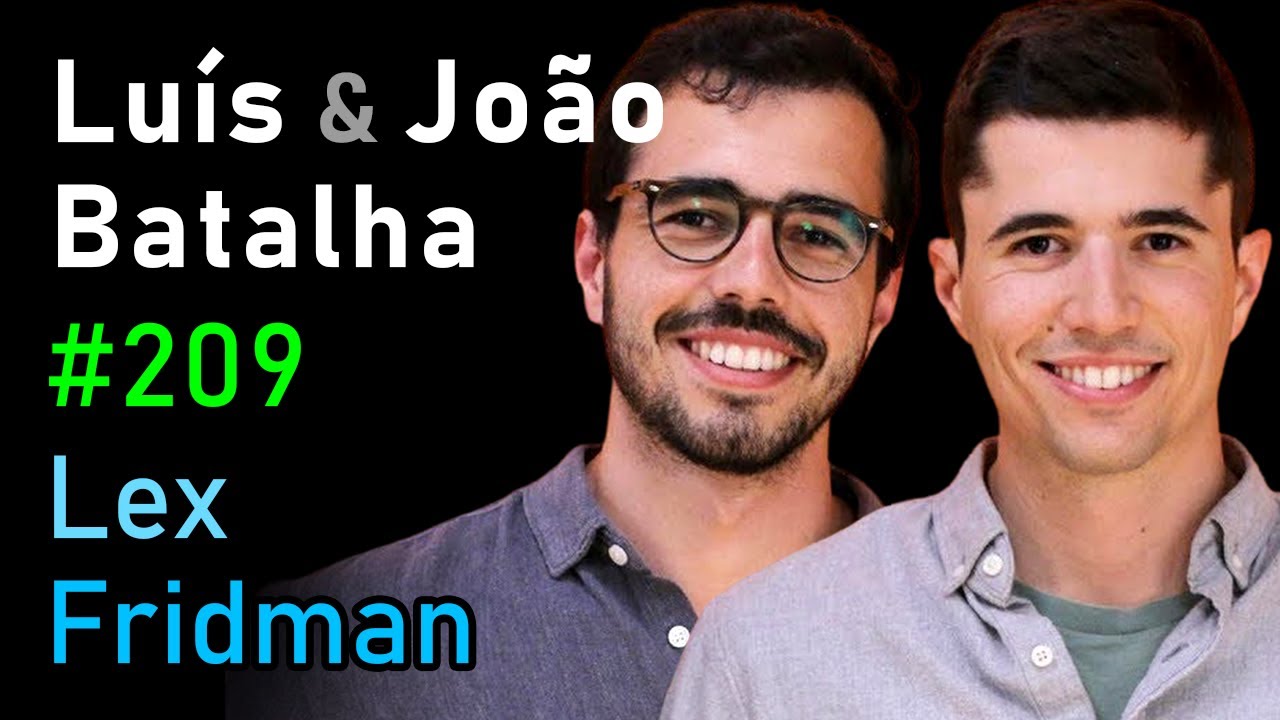
Key Insights
- 70% of research articles are behind paywalls, limiting access to scientific knowledge.
- Dijkstra's shortest path algorithm was conceived in 20 minutes without pen or paper, showcasing mental limits.
- Only 2% of biology papers are preprints, highlighting slow adoption in the field.
- Perelman rejected prestigious awards, emphasizing principles over recognition in mathematics.
- The peer review process can lock content for up to three years, delaying dissemination.
How the conversation moved
The episode opens with a discussion on the accessibility of scientific papers, highlighting the fact that over 70% of research articles are behind paywalls. Lex Fridman and his guests, Luis and Joao Batalla, argue that this restricts the free dissemination of scientific knowledge, which is contrary to the fundamental principles of science. They discuss how this paywall system benefits journals financially while limiting access to valuable research, sparking a conversation about the necessity of open access to scientific literature.
The conversation then shifts to the personal stories behind scientific discoveries, such as Dijkstra's development of the shortest path algorithm in just 20 minutes without pen or paper. This anecdote serves as an example of the mental limits humans can reach in problem-solving. The guests also explore the lesser-known aspects of famous scientists like Newton, whose interests in alchemy and the Bible add depth to his scientific persona. These stories emphasize the importance of understanding the context and personal journeys behind scientific achievements.
Despite the insightful discussion, there is little pushback from Lex Fridman on the guests' views. The conversation flows smoothly without significant challenges to the guests' perspectives. However, the episode does touch on the slow adoption of preprints in biology, noting that only 2% of papers in the field appear as preprints first. This highlights a tension between traditional journal practices and the need for faster dissemination of research, a point that could have been further explored.
The episode concludes with a focus on the principles of mathematics and recognition, discussing Grigori Perelman's rejection of prestigious awards like the Fields Medal and the Clay Prize. Perelman's decision underscores a commitment to intellectual integrity over public accolades, challenging the academic focus on awards and recognition. The conversation also critiques the peer review process, which can lock content for up to three years, delaying the dissemination of knowledge and underscoring the importance of platforms like arXiv for sharing research quickly.
Surprising moments
In-depth
Scientific Publishing Challenges
- 70% of research articles are behind paywalls, limiting access to scientific knowledge.
- The peer review process can lock content for up to three years, delaying dissemination.
- Only 2% of biology papers are preprints, highlighting slow adoption in the field.
Personal Stories Behind Discoveries
- Dijkstra's shortest path algorithm was conceived in 20 minutes without pen or paper, showcasing mental limits.
- Newton's interests in alchemy and the Bible add depth to his scientific persona.
Mathematics and Recognition
- Perelman rejected prestigious awards, emphasizing principles over recognition in mathematics.
- The Soviet system allowed mathematicians to focus on pure mathematics without monetary distractions.
Notable Quotes
The benefit versus the cost of all papers being free to read is obvious and the fact that they're not free goes against everything science should stand for, which is the free dissemination of ideas that educate and inspire.
Still open
- What are the implications of Perelman's rejection of awards for the broader academic community?
- How can the peer review process be reformed to expedite the dissemination of scientific research?
References & Resources
- The Gans paper by Ian Goodfellow — Search
- Cedric Villani's book by Cedric Villani — Search
- Polymath project by Tim Gowers — Search
- BioRxiv — Search
- My Observations at Trinity by Enrico Fermi — Search
- Bitcoin: A Peer-to-Peer Electronic Cash System by Satoshi Nakamoto — Search
- The Dyson Sphere by Freeman Dyson — Search
- The Martian by Andy Weir — Search
- Game of Thrones by George R.R. Martin — Search
- Moneyball by Michael Lewis — Search