New Lex Fridman Insight: Matt Botvinick: Neuroscience, Psychology, and AI at DeepMind
Sent June 11, 2026
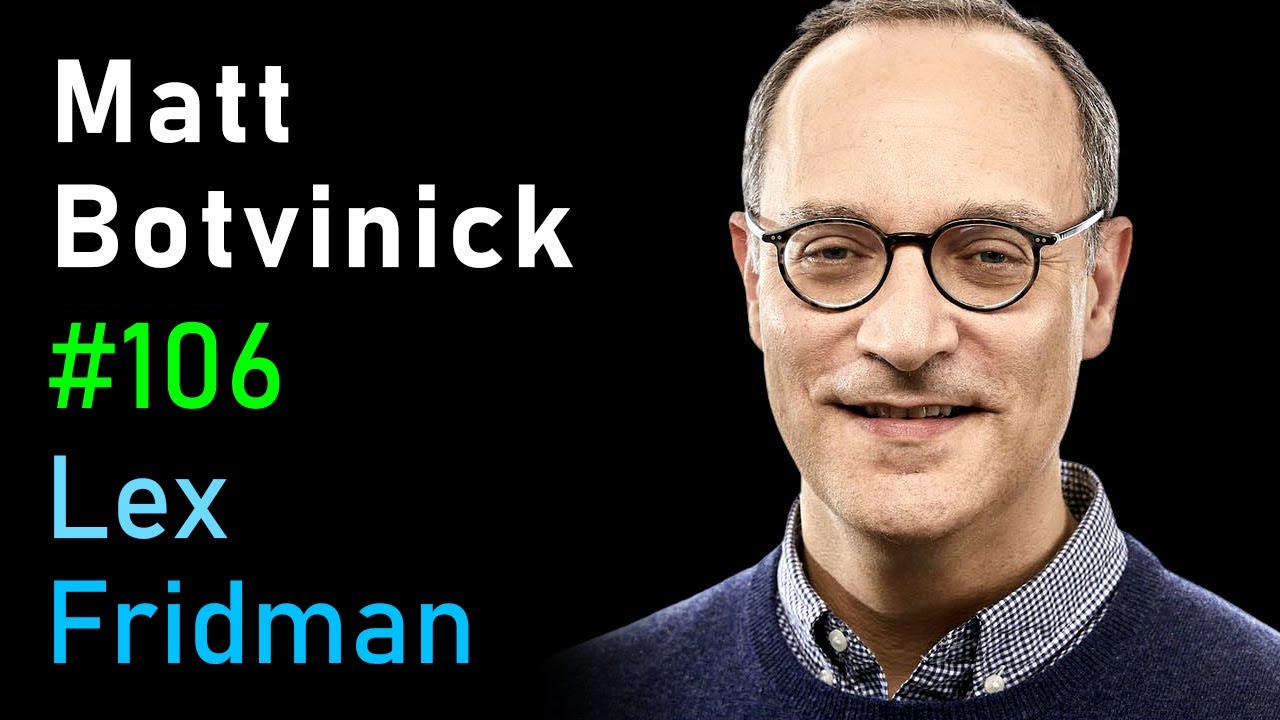
Key Insights
- Meta learning in AI can emerge spontaneously in recurrent neural networks, creating new learning algorithms from network dynamics.
- Dopamine's role in reinforcement learning mirrors temporal difference learning, suggesting a neural basis for AI techniques.
- AI systems need to embody both ability and warmth to be fully accepted by humans, according to Susan Fisk's research.
- The prefrontal cortex supports flexible behavior by overriding habitual actions, highlighting its role in cognitive control.
- AI development should focus on enhancing human autonomy and improving quality of interactions without manipulation.
How the conversation moved
The episode begins with Matt Botvinick discussing the intersection of neuroscience and psychology, highlighting the brain's role in producing behavior. He argues that while we understand the brain at a high level, detailed neuronal mechanisms remain elusive. Botvinick emphasizes the importance of studying the brain's purpose, which he believes is fundamentally linked to behavior and learning. This sets the stage for exploring how neuroscience can inform psychological understanding and vice versa, bridging the gap between the two fields.
Botvinick introduces the concept of meta learning, where one learning algorithm gives rise to another, particularly in recurrent neural networks. He explains that this phenomenon can occur spontaneously, leading to the emergence of new learning algorithms from network dynamics. This idea is supported by examples of how the prefrontal cortex supports reinforcement learning through its activation patterns. Botvinick's insights suggest that AI systems can develop complex learning behaviors autonomously, advancing the field of artificial intelligence.
Despite the compelling narrative, there is a lack of explicit pushback from Lex Fridman on Botvinick's claims. However, the conversation does touch on the potential challenges of designing AI systems that can embody human-like warmth and ability, as highlighted by Susan Fisk's research. This raises questions about the feasibility of creating AI that can truly understand and interact with humans on a meaningful level, suggesting a tension between current AI capabilities and human expectations.
The conversation concludes with a discussion on the future of AI development, emphasizing the importance of designing systems that enhance human autonomy and improve interaction quality. Botvinick notes that AI should not just focus on worst-case scenarios but also consider the potential for positive outcomes. The episode ends on a hopeful note, with Botvinick expressing excitement about the scientific challenges and opportunities in developing AI that can exhibit flexibility and warmth, akin to human intelligence.
Surprising moments
In-depth
Neuroscience and AI
- Neuroscience and AI can inform each other, creating a virtuous cycle of knowledge.
- Dopamine's role in reinforcement learning parallels AI's temporal difference learning.
- AI techniques can be validated by finding neural analogs in brain functions.
Meta Learning
- Meta learning occurs when one learning algorithm creates another.
- Recurrent neural networks can spontaneously develop new learning algorithms.
- The prefrontal cortex supports reinforcement learning through memory retention.
Human-Agent Interaction
- AI needs to embody ability and warmth for societal acceptance.
- Designing AI to enhance human autonomy is crucial.
- Human-agent interaction is essential for AI systems learning from experience.
Notable Quotes
To me, the point of neuroscience is to study what the brain is for.
Still open
- What would it mean for an AI system to truly understand human wants and needs, as discussed by Matt Botvinick?
- How can AI systems be designed to embody both ability and warmth, as suggested by Susan Fisk's research?
References & Resources
- Memory Augmented Neural Networks by Unknown — Search
- The Prefrontal Cortex as a Meta Reinforcement Learning System by Unknown — Search
- Dopamine and Temporal Difference Learning by Naochit et al. — Search
- Enlightenment Now by Steven Pinker — Search
- Parallel Distributed Processing by David E. Rumelhart, James L. McClelland — Search
- The Man Who Mistook His Wife for a Hat by Oliver Sacks — Search
- Mind in the Making by Luria — Search