New Lex Fridman Insight: Matt Walker: Sleep
Sent June 11, 2026
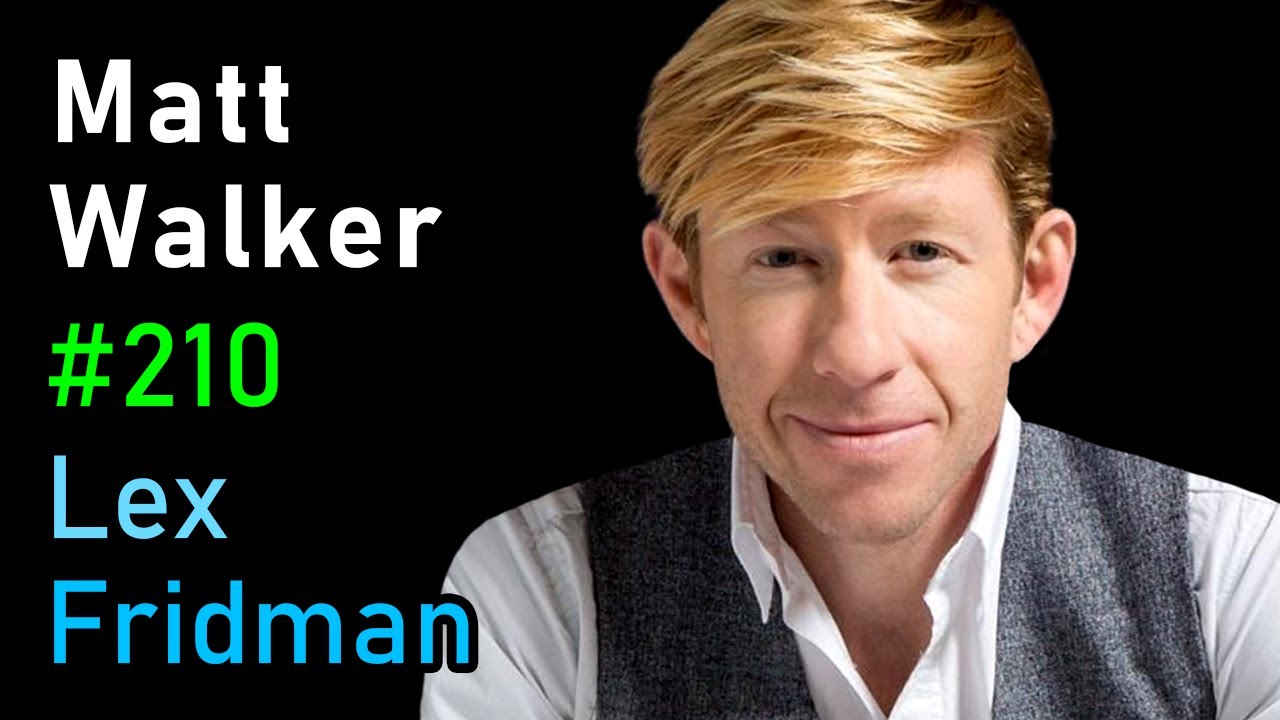
Key Insights
- Caffeine can reduce deep sleep by 10-30%, akin to aging the brain by 15 years.
- Sleep deprivation increases coronary artery calcification risk by 300% when sleep is under six hours.
- REM sleep aids in creative problem-solving, with historical examples like Mendeleev's periodic table.
- Drowsiness detection in driving should use multiple signals, not just eye movement.
- Micro sleeps, where brain cells sleep while awake, pose significant dangers like traffic accidents.
How the conversation moved
The host introduced the episode by highlighting the pervasive issue of sleep deprivation and its implications on health and society. Matthew Walker, a sleep scientist, shared his journey into sleep research, initially sparked by his study of anesthesia and its impact on consciousness. He noted the profound effects of sleep on brain function, especially in relation to dementia, which led him to focus on measuring brain activity during sleep. Walker emphasized the fundamental question of why we sleep, a query that has eluded many researchers and has now shifted to understanding sleep's physiological benefits.
Walker argued that sleep is not merely a passive state for energy conservation but an active process crucial for various biological functions. He provided evidence that sleep is present in all studied species, underscoring its evolutionary significance despite apparent disadvantages. Walker debunked the energy conservation hypothesis, presenting sleep as an active state necessary for brain function and health. He highlighted the dangers of micro sleeps and the need for improved drowsiness detection in driving, suggesting a multi-signal approach combining eye movement, steering angle, and pedal pressure.
The conversation encountered tension when discussing the trade-offs between passion and sleep deprivation. Walker pushed back against the notion that sacrificing sleep for passion is inherently wrong, emphasizing personal choice and the need for balance. He cited historical figures like Churchill and Edison, who had unconventional sleep patterns, to illustrate that while some individuals may thrive with less sleep, the majority face significant health risks. Lex didn't challenge Walker's framing here, though the obvious counter-position would be the long-term health consequences of chronic sleep deprivation.
The discussion concluded with strategies for improving sleep quality, such as maintaining regular sleep patterns, using meditation, and considering therapy over sleeping pills. Walker noted that Cognitive Behavioral Therapy for Insomnia (CBTI) is effective for treating insomnia, offering lasting benefits without the side effects of medication. The conversation also touched on the impact of caffeine on sleep, with Walker recommending limiting intake and timing consumption to avoid disrupting sleep. The episode wrapped up with a reflection on the broader implications of sleep on creativity, memory, and emotional well-being.
Surprising moments
In-depth
Sleep and Health
- Caffeine reduces deep sleep by 10-30%, aging the brain by 15 years.
- Sleep deprivation increases coronary artery calcification risk by 300%.
- REM sleep aids in creative problem-solving, with historical examples.
Driving and Sleep
- Drowsiness detection should use multiple signals, not just eye movement.
- Micro sleeps pose significant dangers like traffic accidents.
Notable Quotes
If sleep doesn't serve an absolutely vital function or functions, then it's the biggest mistake the evolutionary process has ever made.
Still open
- Walker questioned whether the benefits of sacrificing sleep for passion outweigh the health risks, noting it's a personal choice.